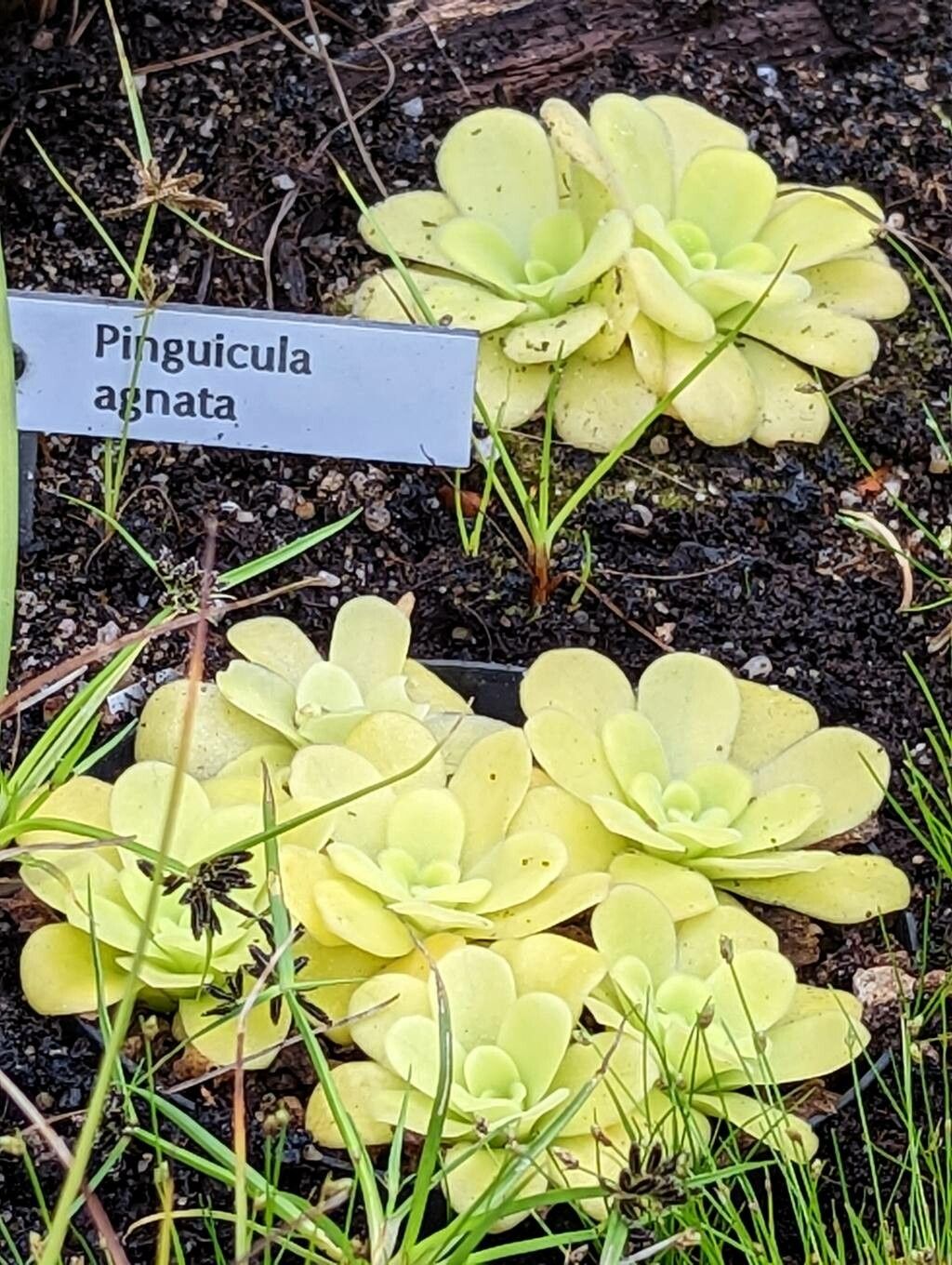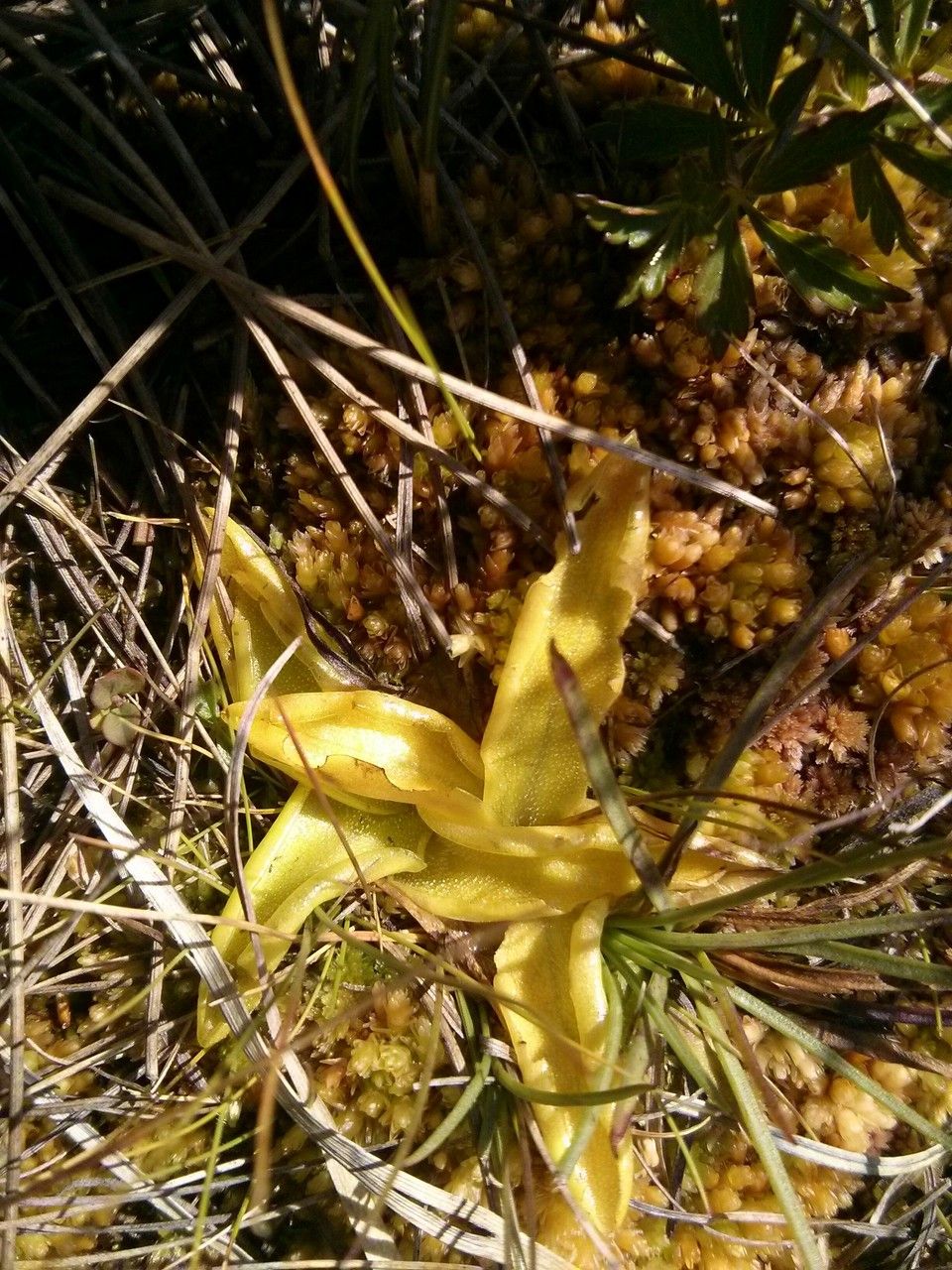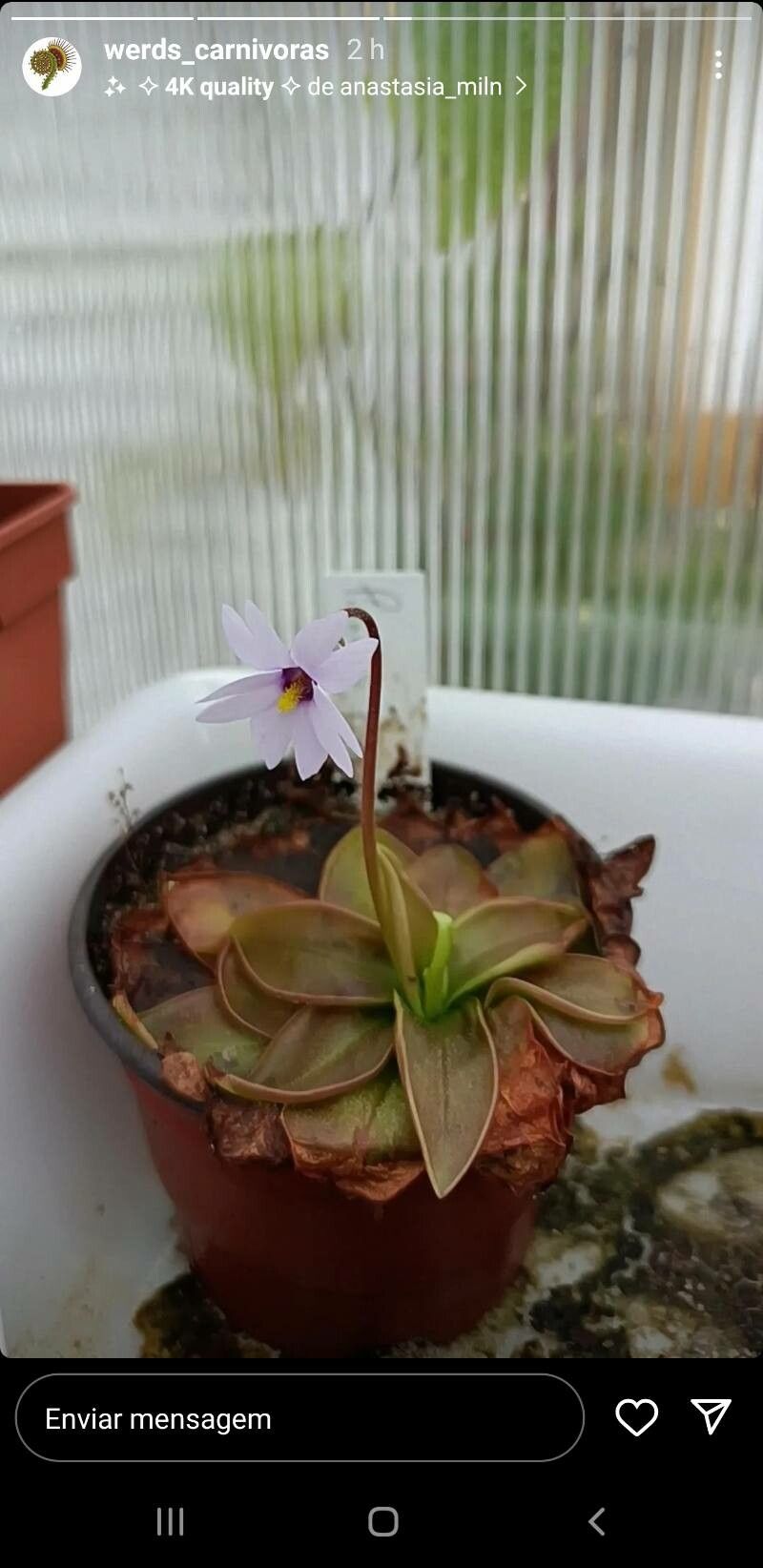
Pinguicula planifolia, commonly known as the butterwort, is a carnivorous plant that belongs to the Lentibulariaceae family. This intriguing plant is native to Mexico and Central America, where it thrives in damp environments such as bogs, swamps, and wetlands.
The butterwort features a rosette of flat leaves covered in glandular hairs that secrete a sticky substance to trap insects. These leaves are green with purple veins and can grow up to 10 cm in length.
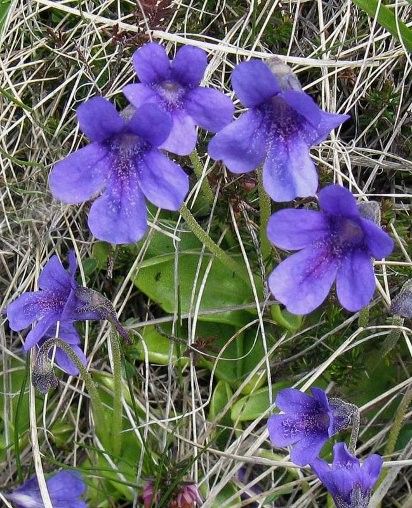
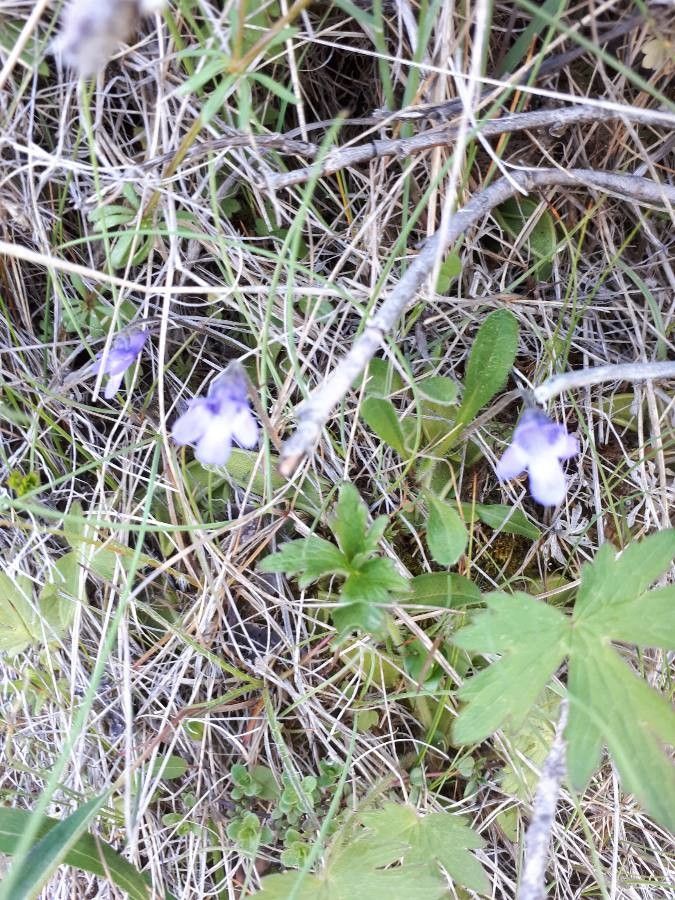
During the spring or summer months, Pinguicula planifolia produces small white or purple flowers on long stalks that rise above the rosette of leaves. Each flower has five fringed petals, adding to the plant’s unique charm.
As an insectivorous plant, Pinguicula planifolia derives its nutrients by trapping insects on its sticky leaves, supplementing its nutrient intake beyond what photosynthesis alone provides.
When cultivated, Pinguicula planifolia requires moist soil with good drainage and bright but indirect sunlight to thrive. It can be propagated through leaf cuttings or by dividing mature plants.
Overall, Pinguicula planifolia is an intriguing carnivorous plant species, renowned for its unique appearance and insect-trapping abilities. Its distinctive characteristics make it a popular choice among collectors of exotic plants around the world.
Botanical profile.
- Genus
- Pinguicula
- Family
- Lentibulariaceae