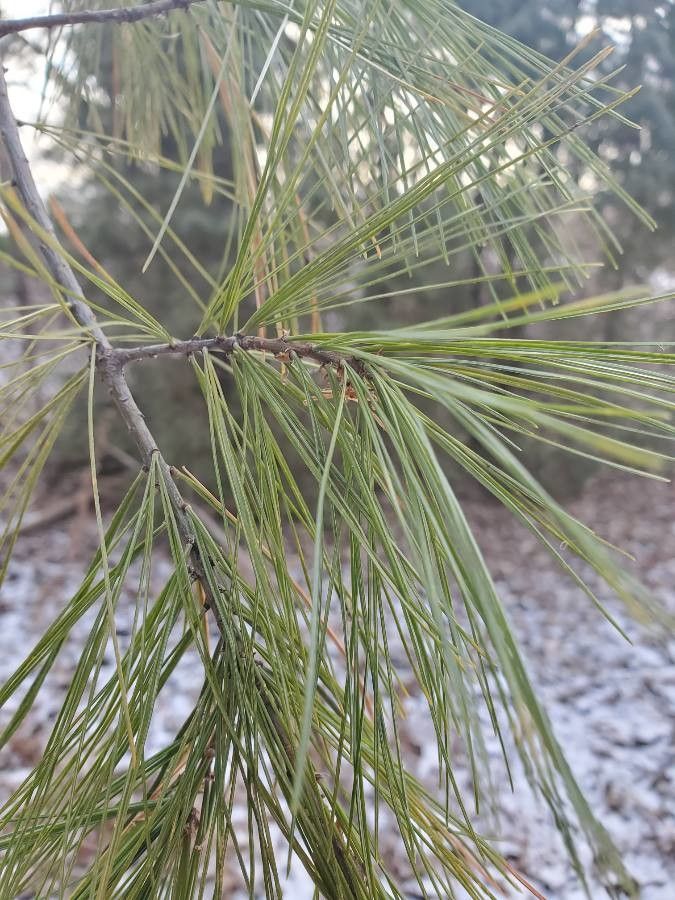
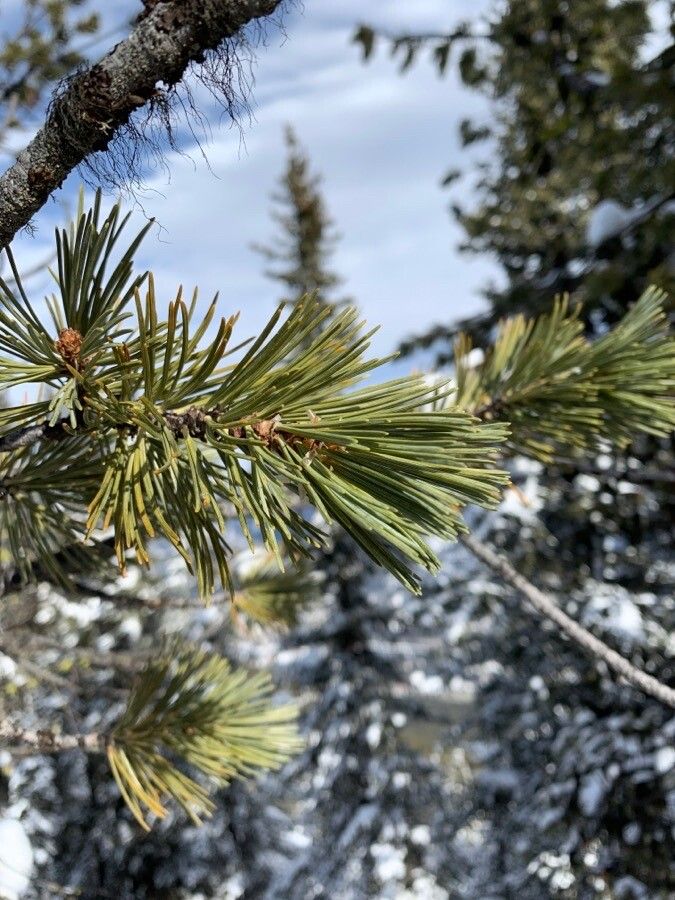
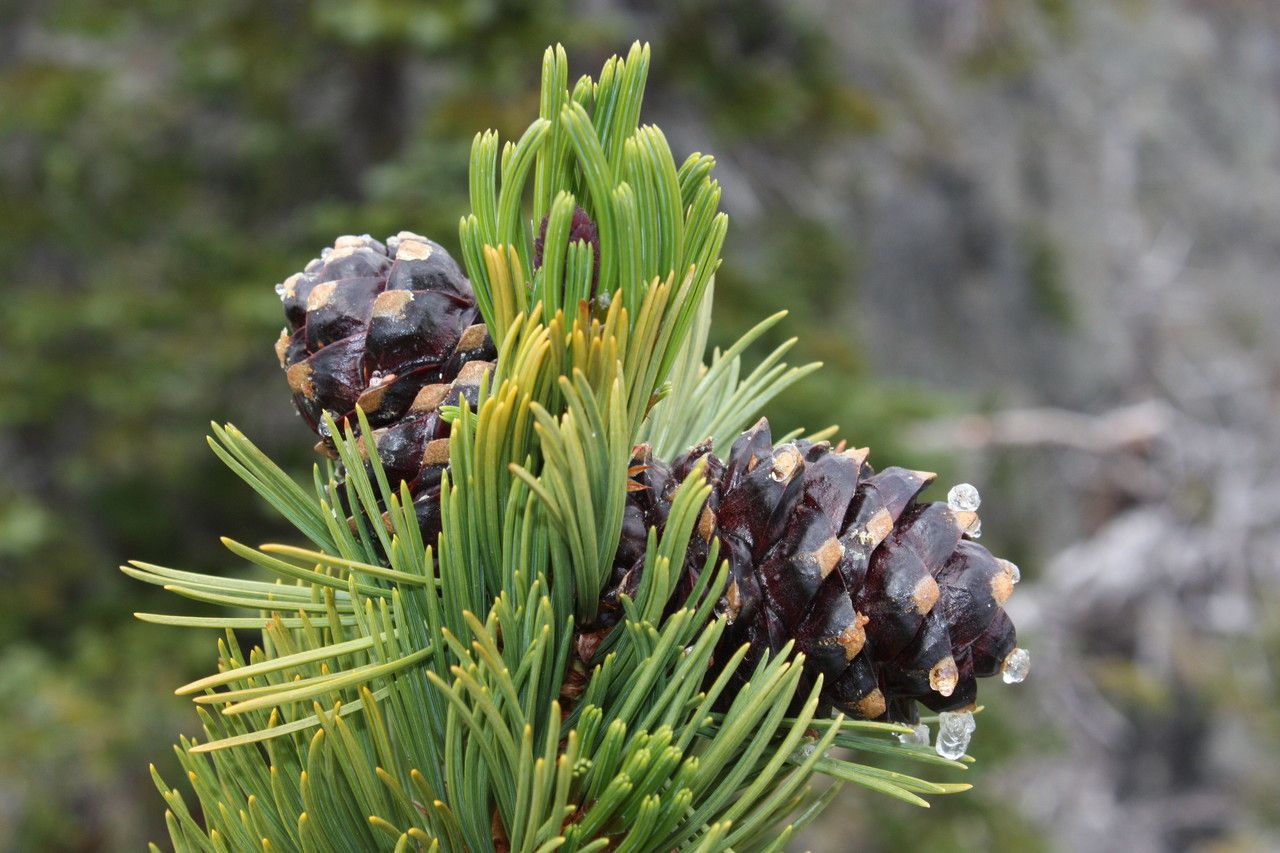
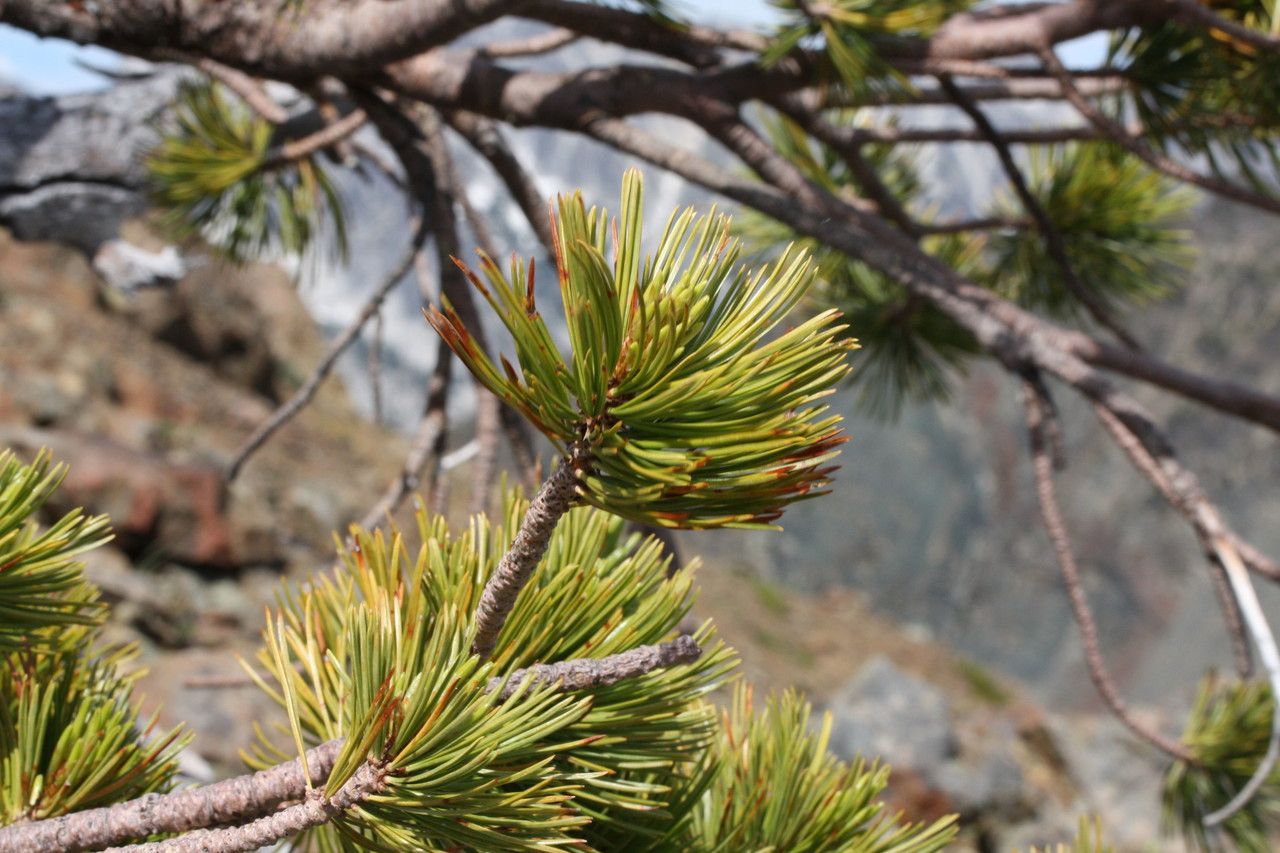
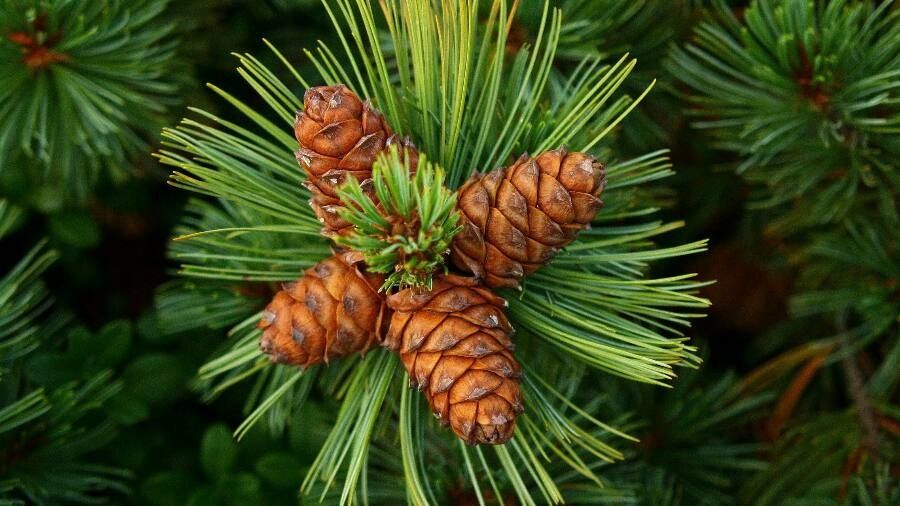
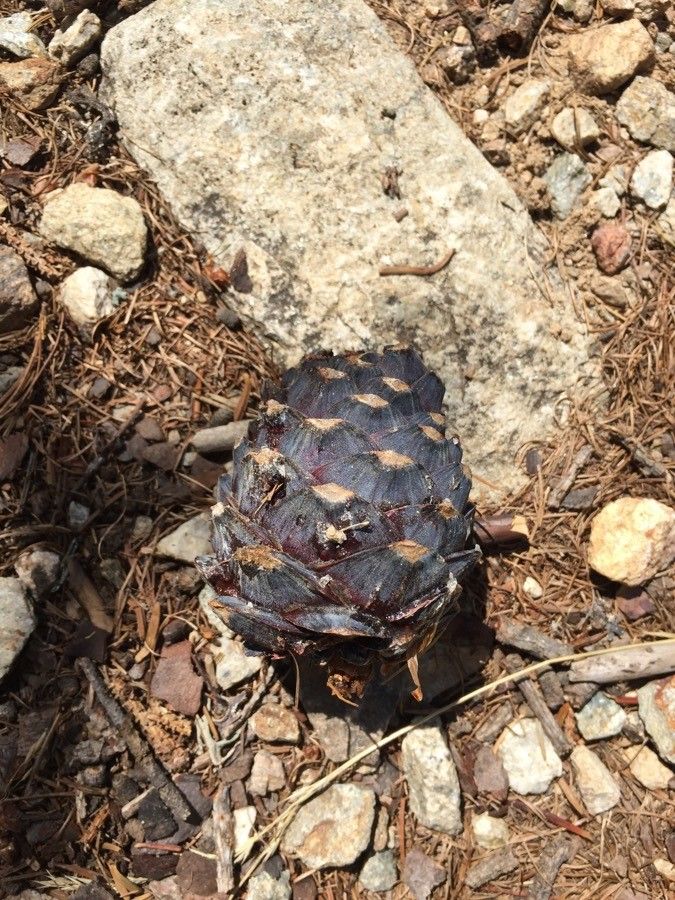
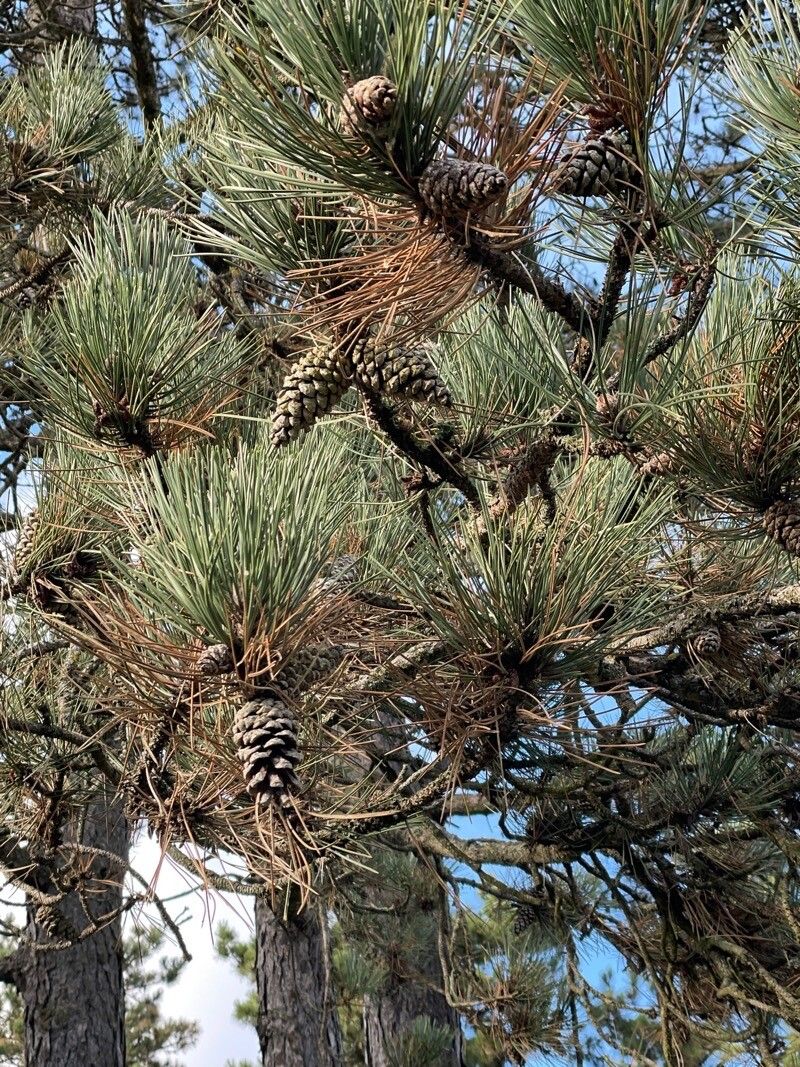
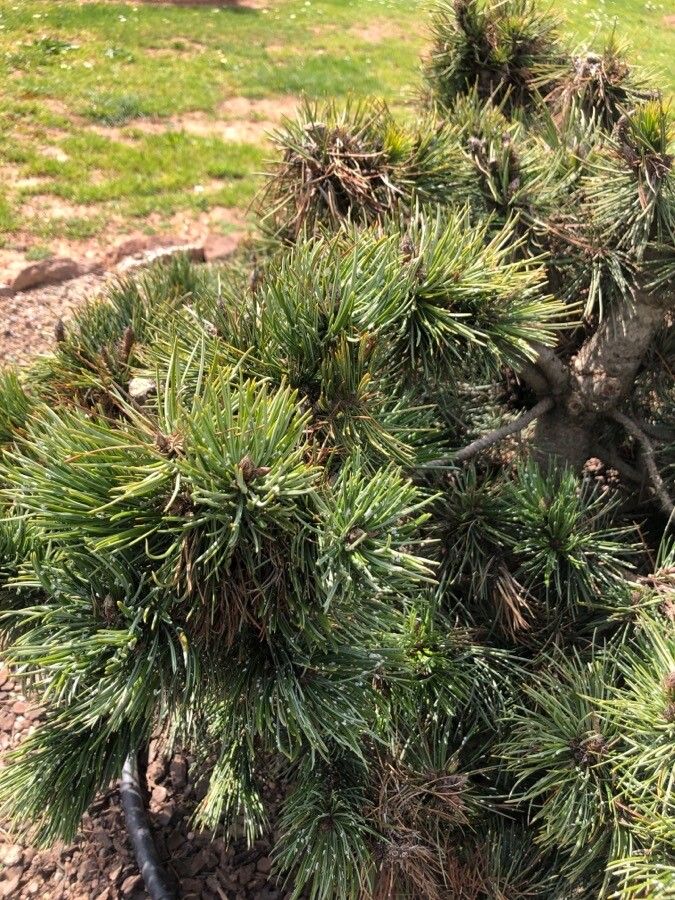
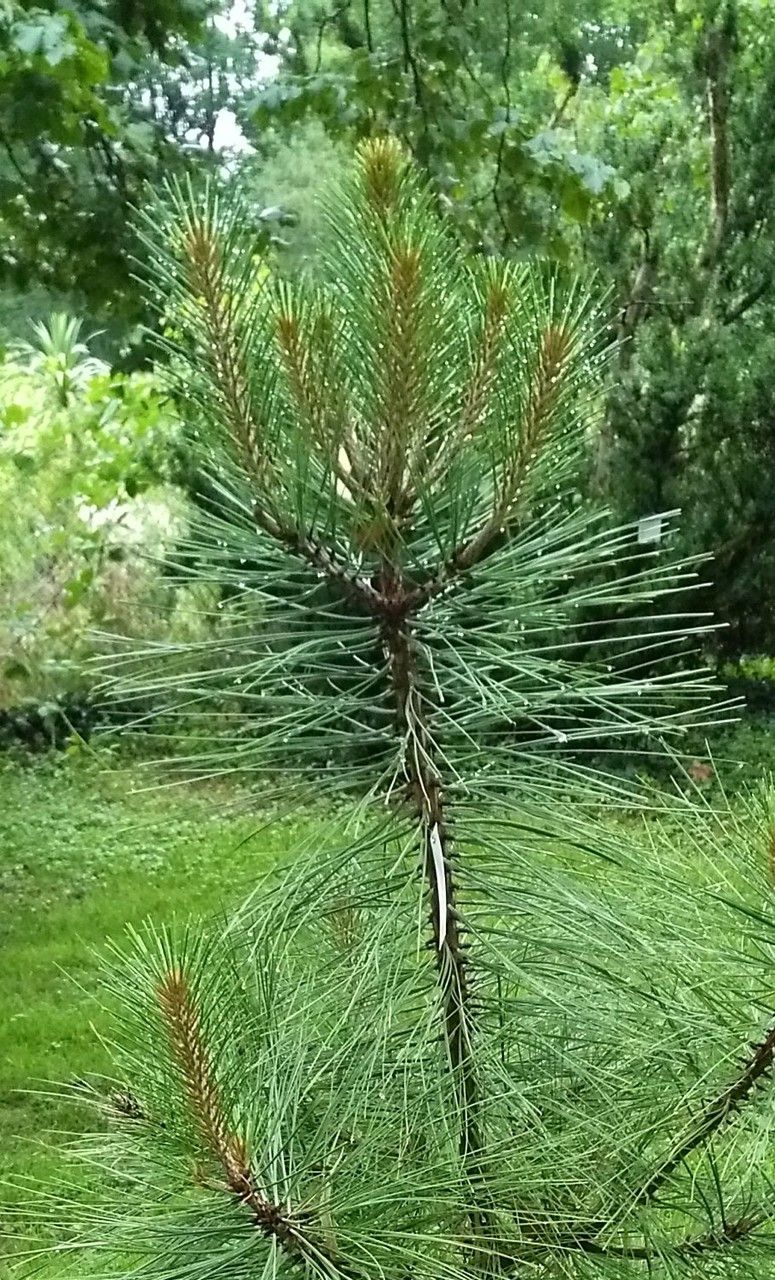
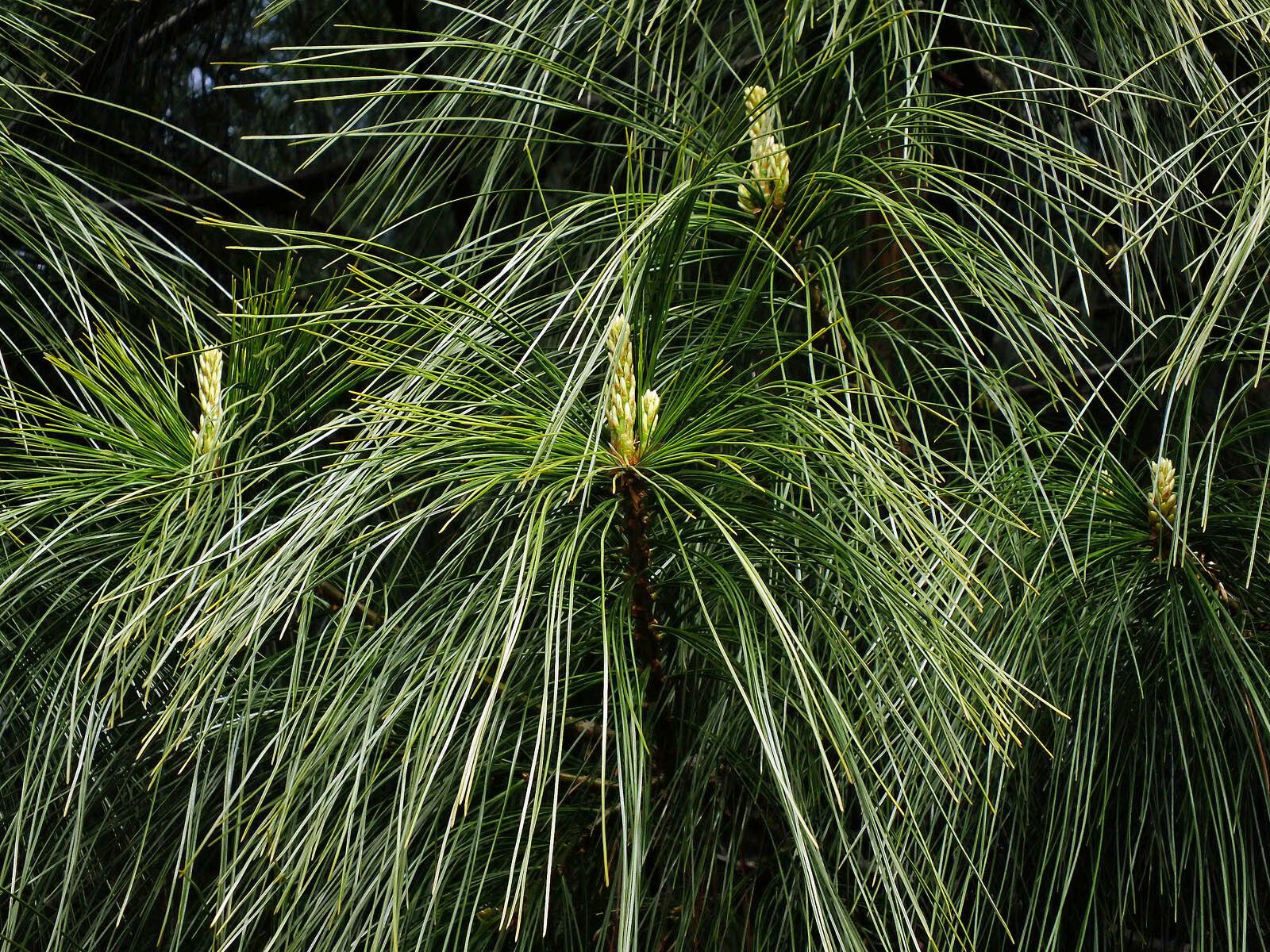
Pinus albicaulis, known by the common names whitebark pine, white bark pine, white pine, pitch pine, scrub pine, and creeping pine, is a conifer tree native to the mountains of the western United States and Canada, specifically subalpine areas of the Sierra Nevada, Cascade Range, Pacific Coast Ranges, and Rocky Mountains. It shares the common name "creeping pine" with several other plants. The whitebark pine is typically the highest-elevation pine tree found in these mountain ranges and often marks the tree line. Thus, it is often found as krummholz, trees growing close to the ground that have been dwarfed by exposure. In more favorable conditions, the trees may grow to 29 meters (95 ft) in height.
Whitebark pine is highly disease-resistant and is generally not susceptible to illnesses. Regarding care, this species is fairly low-maintenance. When grown outdoors it needs little watering, and larger specimens usually do not require pruning. Smaller plants, however, should be pruned after they finish blooming. Whitebark pine is suitable for anyone with an outdoor area, such as a garden or deck, and does not demand much hands-on care experience.
How to keep Pinus Albicaulis.
Light
Whitebark pine does best when exposed to sunlight all day. A common tree in the wild, it grows well with ample light and can survive without any shade. Longer exposure supports healthy growth. However, continuous exposure with no shade can stress the plant, harming its health and growth.
Water
Whitebark pine, native to mountainous regions, is well-adapted to occasional dry spells and needs watering every 1 to 2 weeks. Being an evergreen, it conserves water in its needles, which makes it ideal for outdoor growth. It also benefits from natural precipitation patterns.
Temperature
Whitebark pine is native to habitats with temperatures between 32 and 77°F (0 to 25°C). It prefers cooler climates but can tolerate warmer conditions. Seasonal adjustments may be necessary during hot summers.
Fertilizer
Whitebark pine has specific nutrient needs and does not require heavy fertilization. Spring is the best time to apply fertilizer for optimal growth. Providing nutrients enhances its health, strengthens resistance to pests and diseases, and helps sustain its long lifespan.
Pruning
Whitebark pine is a resilient tree that thrives at high altitudes. To minimize the risk of disease, it is best to prune it from early to late winter, concentrating on removing any dead or damaged branches. Minimal shaping is recommended to preserve the tree's natural form, which helps improve airflow and supports its overall vigor for long-term survival.
Botanical profile.
- Plant Type
- Tree
- Life Cycle
- Perennial
- Genus
- Pinus
- Family
- Pinaceae
- Hardiness Zone
- 3
- Mature Height
- 28.96 m
- Mature Spread
- 3.05 m to 6.1 m
- Leaf Color
- Green
- Leaf Type
- Evergreen
- Flower Color
- Purple, Red
- Flower Size
- 4.06 cm to 7.62 cm
- Bloom Time
- Early summer, Mid summer
- Planting Time
- Spring, Autumn
- Harvest Time
- Late summer, Early fall, Mid fall
Other names.
Reader questions.
What's the most effective way to water my Whitebark pine tree?
Watering your Whitebark pine tree is a simple task. To do this, you can use your garden hose to slowly soak the soil. This is the best method for mature trees, as they may require a lot of water. However, smaller trees can be watered with a watering can or another smaller tool. It's important to avoid overhead watering, as too much moisture on the leaves can cause disease, especially in young trees.
Why is it necessary to put fertilizer on my Whitebark pine?
To ensure healthy growth, it's recommended to fertilize Whitebark pine in the spring. Since the plant has a long lifespan, it requires support. Adding nutrients to the soil not only improves the plant's health but also helps it resist pests and diseases that can hinder growth and lifespan.
What are the sunlight requirements for plants?
Plants have varying sunlight requirements that can be broadly categorized into full sun and partial sun. Full sun means the plant should receive above 6 hours of sunlight daily, whereas partial sun is about 3-6 hours of sunlight. It's important to observe the movement of sunlight through your garden to select the perfect spots that offer a good balance of light and shade, ensuring your plants' well-being.
What is the native environment and temperature range for Whitebark pine?
Whitebark pine is native to environments that typically experience temperatures ranging from 32 to 77°F (0 to 25°C). It prefers cooler climates but is capable of adapting to warmer conditions. Due to its preference for cooler temperatures, in hot summers, making seasonal adjustments for the plant may be necessary. It's highly cold-tolerant and doesn't usually require additional frost protection during winter. However, it is recommended to water the plant generously before the first freeze during autumn to keep the soil moist throughout winter and early spring, aiding in drought and water scarcity prevention.
What should I do if I give too much or too little water to my Whitebark pine?
Overwatering can be caused by poor soils, especially if the soil doesn't drain well. When this happens to a Whitebark pine, the plant will start to decline. To fix this, you can either improve the soil's drainage or move the plant to a better location. If your Whitebark pine is in a pot, you might need to use looser soil and a container that allows for better drainage. Overwatering can also lead to diseases, so it's important to treat them right away. On the other hand, if your Whitebark pine is underwatered, the solution is simple: water it more often and it will recover. To tell if your plant is overwatered, check the foliage, especially the new growth. If it's discolored or easily breaks, it's a sign of too much moisture. Standing water or slow drainage also indicate overly moist soil. Underwatered Whitebark pine trees will have sparse brown leaves. Consider recent rainfall or high temperatures if you see these symptoms.
When should I fertilize my Whitebark pine tree?
The growing medium may not always provide sufficient nutrients for healthy growth. However, Whitebark pine is unique compared to garden annuals and perennials because it doesn't need a lot of additional nutrients. The optimal time to fertilize Whitebark pine is in the spring, before new growth emerges.
How does full sun exposure affect the growth of Whitebark Pine?
Whitebark Pine, known botanically as Pinus albicaulis, flourishes best when exposed to full sunlight throughout the day. This tree, often found in the wild, thrives under generous daylight, managing survival without shade. Prolonged exposure to sunlight promotes healthy growth. However, if the tree is exposed to sunlight without any shade for too extended a period, it can experience stress, adversely affecting its health and growth.
How does Whitebark pine respond to low temperatures?
Whitebark pine shows remarkable tolerance to low temperatures and is capable of surviving winters where temperatures do not fall below -35°C. Despite its cold tolerance, if temperatures drop below this threshold, there may not be any immediately noticeable changes during winter. However, in spring, it's possible for the branches to become brittle and dry, with no new shoots emerging. To address this, it's recommended to prune away any dead branches that have failed to produce new leaves.
How often do I need to water my Whitebark pine tree?
A mature Whitebark pine tree is very low-maintenance when it comes to watering. It can survive on rainfall alone and only needs watering about once a week during the hottest months of the year. In other seasons, you may not need to water it at all. The only exception is if you have recently planted a new tree, in which case regular watering is necessary to help the roots establish. Just remember that Whitebark pine does not like standing water, so it's better to err on the side of underwatering rather than overwatering.
When is it not a good idea to add fertilizer to my Whitebark pine tree?
While monthly or weekly fertilization benefits many plants, Whitebark pine is an exception. This plant does not need excessive nutrients as they can actually harm it, leading to decline. It's best to only apply fertilizer in the spring and refrain from doing so in the summer, fall, and winter. Avoid adding any fertilizer or organic matter during those seasons.
What role does artificial lighting play for indoor plants?
Indoor plants require adequate lighting for optimal growth, especially when natural sunlight is insufficient, like during winter or in less sunny spaces. Artificial lighting, such as LED lights, provides a vital solution by offering the necessary wavelengths of light. For full sun plants, about 30-50 watts per square foot of artificial light is needed; partial sun plants require 20-30 watts per square foot, and full shade plants need 10-20 watts per square foot. The artificial light source should be placed 12-36 inches above the plant, mimicking natural sunlight. The duration should also mirror natural daylight hours, typically 8-12 hours of light per day, depending on the plant species.
What should I do if Whitebark pine experiences high temperatures?
Whitebark pine struggles with high temperatures, particularly when they exceed 25°C, which can lead to significant leaf drop or, in severe cases, the death of the plant. To help the plant in such conditions, trim away sunburned and dried parts and consider moving the plant to a location with better shade from the midday and afternoon sun. Utilizing a shade cloth can also be effective. Additionally, watering the plant in the morning and evening to maintain soil moisture can mitigate the heat's effects.