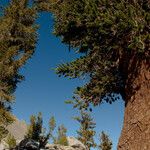
Pinus balfouriana
Foxtail pine · Foxtailed Pine
Description
Source: leafsnapPinus balfouriana, the foxtail pine, is a rare high-elevation pine that is endemic to California, United States. It is closely related to the Great Basin and Rocky Mountain bristlecone pines, in the subsection Balfourianae.
Care Guide
💧 Water Every 2 weeks
The foxtail pine, adapted to mountainous regions, thrives in moderate moisture conditions and typically needs watering every 1 to 2 weeks. As an evergreen, it can retain water in its needles, which is essential for withstanding dry periods and highlights its resilience in different climate zones.
☀️ Light Full sun
The foxtail pine comes from open habitats, like sunny meadows and forest margins, where there is plenty of light. It performs best in full sun but can tolerate partial sun, adjusting well to different light conditions.
What are the sunlight requirements for Foxtail pine (Pinus balfouriana)?
Foxtail pine, known botanically as Pinus balfouriana, thrives under specific sunlight conditions. For optimal growth, it requires full sun, which is defined as receiving more than 6 hours of sunlight daily. However, it can also tolerate partial sun, meaning it can grow with about 3-6 hours of sunlight each day. It's important to observe the way sunlight moves through your garden over the day. This observation helps in choosing the perfect spots that ensure a generous balance between light and shade, beneficial for the well-being of your Foxtail pine.
🌡️ Temperature 5–32.2°C
The foxtail pine, which can be found naturally at very high elevations, is used to hot days and chilly nights. This makes it harder to sleep during the hot summer nights at lower elevations. Place this kind of tree in an area with afternoon shadow to aid in this, allowing for cooler nighttime temperatures. Normal levels of humidity are ideal for foxtail pine trees.
What is the botanical name of the Foxtail pine?
The botanical name of the Foxtail pine is Pinus balfouriana.
💨 Humidity
🪴 Soil 6-7
🌱 Fertilizer
Foxtail pine has specific nutrient needs and does not require heavy fertilization. Spring is the best time to fertilize for optimal growth. Supplying nutrients improves its health, increases its resistance to pests and diseases, and supports its long lifespan.
🪴 Pot & Repot Every 12 months
✂️ Pruning
Foxtail pine trees benefit from being pruned in early spring. This is the best time to remove dead or damaged branches and to enhance air circulation and light access. Thinning out overcrowded areas helps maintain the tree's shape and reduces the risk of disease. Pruning during the dormant season minimizes sap loss, promoting healthy growth and preserving the foxtail pine's unique appearance.
🌿 Propagating
🐛 Diseases & pets
☠️ Toxicity
The dried foxtail top extracts accounted for the majority of the harmful effects, with lower levels coming from the fresh tops and roots. The extracts' phytotoxicity was influenced by soil texture. In Setaria, eight chemical compounds that are known to be phytotoxins were discovered in foxtail leaf extracts but not in soil samples beneath the leaves.
Characteristics
- Plant Type
- Tree
- Life Cycle
- Perennial
- Genus
- Pinus
- Family
- Pinaceae
- Hardiness Zone
- 4-8
- Mature Height
- 10.06 m to 20.12 m
- Mature Spread
- 4.88 m to 7.92 m
- Leaf Color
- Dark Green
- Leaf Type
- Evergreen
- Bloom Time
- Early summer, Mid summer
- Planting Time
- Spring, Summer, Autumn
- Harvest Time
- Late summer, Early fall, Mid fall
- Native Area
- North America