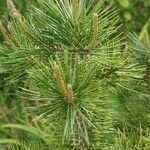
Pinus cembroides
Pinyon pine · Mexican nut pine · Mexican pinyon · Mexican stone pine · Nut Pine
Description
Source: leafsnapPinus cembroides, also known as pinyon pine, Mexican pinyon, Mexican nut pine, and Mexican stone pine, is a pine in the pinyon pine group, native to western North America. It grows in areas with low levels of rainfall and its range extends southwards from Arizona, Texas and New Mexico in the United States into Mexico. It typically grows at altitudes between 1,600 and 2,400 metres (5,200 and 7,900 ft). It is a small pine growing to about 20 m (66 ft) with a trunk diameter of up to 50 cm (20 in). The seeds are large and form part of the diet of the Mexican jay and Abert's squirrel. They are also collected for human consumption, being the most widely used pine nut in Mexico. This is a common pine with a wide range and the International Union for Conservation of Nature has rated its conservation status as being of "least concern".
🎭 Optimism, Sympathy
Care Guide
💧 Water
The Mexican pinyon is well-suited to arid environments, thriving with minimal moisture and showing exceptional drought tolerance. It typically needs watering only every one to two weeks. In outdoor settings, the Mexican pinyon is appreciated for its resilience to varying levels of rainfall and its ability to thrive in different climate zones with infrequent watering.
How should I water my Mexican pinyon tree?
Watering your Mexican pinyon tree is a simple task. You can easily do this by using your garden hose to slowly soak the soil. For larger trees, the garden hose is the best tool as they require a lot of water. However, smaller trees can be watered using a watering can or other smaller tools. It is important to avoid overhead watering as this can cause disease, especially in younger trees.
What should I do if I give my Mexican pinyon tree too much water or too little?
Overwatering your Mexican pinyon can happen if the soil doesn't drain well. If this is the case, you can improve drainage by amending the soil or moving the plant to a better location. If you have your Mexican pinyon in a pot, you might need to repot it with looser soil and a container that drains well. Overwatering can also lead to diseases, so it's important to treat them promptly. If your Mexican pinyon is underwatered, the solution is simple: water it more frequently. This will help the plant recover and become healthy again. To determine if your Mexican pinyon is overwatered, look at the foliage, especially the new growth. If it's discolored or easily breaks, it might be suffering from too much moisture. Another sign is if you see standing water or slow drainage in the plant's growing area. If your Mexican pinyon is underwatered, the leaves may become sparse and brown. Consider if there has been excessive rain or consistently high temperatures as possible causes.
How often do I need to water my Mexican pinyon tree?
A mature Mexican pinyon is drought tolerant and can survive on rainfall alone. During the hottest months, you may need to water it once a week, but in other seasons, watering may not be necessary. The only exception is for newly planted trees, which should be watered regularly to help the roots establish. However, it is crucial to avoid overwatering, as Mexican pinyons do not tolerate standing water. When unsure, it is better to not water the tree rather than risk overwatering.
How much water does my Mexican pinyon tree require?
During the height of summer, watering your Mexican pinyon is necessary. Generally, it requires around one inch of water per week. However, this amount may vary depending on rainfall. If it has rained one inch or more, you can skip watering your Mexican pinyon. Additionally, newly planted Mexican pinyons need more water during the establishment period. During the first few growing seasons, it is recommended to water them once every one to two weeks.
How do I water my Mexican pinyon tree throughout the different seasons?
The Mexican pinyon tree requires the most water during the summer months when it's hottest. If there's no rain, water the plant about once per week during this time. However, it can often survive without water during other times of the year. In spring and fall, you might need to give it some water if it's exceptionally hot, but this is rare. Unlike many other plants, the Mexican pinyon doesn't fully hibernate in winter, so it continues to grow even in the coldest months. Nevertheless, the water requirements during winter remain low because the cool temperatures don't cause the soil to dry out quickly.
☀️ Light Full sun
Whitebark pine does best when exposed to sunlight all day. A common tree in the wild, it grows well with ample light and can survive without any shade. Longer exposure supports healthy growth. However, continuous exposure with no shade can stress the plant, harming its health and growth.
What are the sunlight requirements for Mexican pinyon?
Mexican pinyon requires a wide range of light for optimal growth, generally thriving in full sunlight with more than 6 hours of sunlight daily. It can survive in partial sun, which means about 3-6 hours of sunlight, but its health may be compromised with suboptimal light exposure. Throughout its different growth stages, the plant adapts variably to light conditions, reflecting its natural habitat preferences. Both excessive and insufficient light can disrupt its development, potentially causing harm. To ensure the plant's happiness, it's important to observe how sunlight moves through your garden, selecting locations that offer the right balance of light and shade.
How can artificial lighting supplement natural sunlight for Mexican pinyon?
Indoor Mexican pinyon plants may require artificial lighting to support optimal growth, especially when natural sunlight is insufficient, such as in winter or less sunny spaces. Artificial lights, like LED lights, can be tailored to provide specific wavelengths necessary for the plant's needs. Full sun plants should have 30-50W/sq ft of artificial light, partial sun plants require 20-30W/sq ft, and full shade plants need 10-20W/sq ft. The light source should be placed 12-36 inches above the plant to simulate natural sunlight, and the duration of exposure should mimic natural daylight hours, typically 8-12 hours per day.
What symptoms indicate insufficient or excessive sunlight in Mexican pinyon?
Symptoms of light deficiency in Mexican pinyon include smaller new leaves, leggy or sparse growth, faster leaf drop, slowed or stopped growth, and lighter-colored or irregularly patterned new leaves. Excessive sunlight can lead to chlorosis (leaves losing their green color), sunscald (damaged leaves or stems from intense exposure), leaf curling (as a defense mechanism to minimize surface area), wilting (due to loss of turgor pressure and increased water loss), and leaf scorching (brown, dry edges on leaves). These changes signal the plant's struggle with its light environment and need for adjustment.
What are some solutions to address poor lighting conditions for Mexican pinyon?
To manage poor lighting conditions for Mexican pinyon, gradually acclimatize it to receive at least 6 hours of direct sunlight daily, if possible, by moving it closer to a south-facing window or using artificial light sources such as a desk or ceiling lamp for at least 8 hours daily. For outdoor plants, progressively relocate them to sunnier spots to prevent shock. If physical obstructions block sunlight, consider pruning or transplanting smaller plants to brighter locations. Remember that affected parts might not recover, but new growth will benefit from improved light exposure.
🌡️ Temperature 0–32.2°C
Whitebark pine is native to habitats with temperatures between 32 and 77°F (0 to 25°C). It prefers cooler climates but can tolerate warmer conditions. Seasonal adjustments may be necessary during hot summers.
What are the ideal temperature conditions for Mexican pinyon?
Mexican pinyon thrives in temperatures ranging from 41 to 89.6 °F (5 to 32 °C). This plant originates from climates with significant temperature fluctuations, making it adaptable to various temperature conditions. It has a strong cold resistance, eliminating the need for special frost protection measures in most winter conditions. However, in climates where winter temperatures may drop below -25°C, it is recommended to protect the plant from cold by wrapping the trunk and branches with insulation materials such as non-woven fabric or cloth. Additionally, watering the plant abundantly before the first freeze in autumn to keep the soil moist can help prevent drought and water scarcity during the colder months.
How does low temperature affect Mexican pinyon, and what are the solutions?
Mexican pinyon is highly cold-tolerant, ideally remaining above 5°C. In winters, keeping it above -20°C is suggested. Should temperatures fall below -25°C, while the plant may not exhibit immediate distress, the branches can become brittle and dry by spring, failing to produce new shoots. The remedy for this includes pruning away the dead branches in spring to encourage new growth and revitalize the plant.
What impact does high temperature have on Mexican pinyon, and how can it be mitigated?
During the hot summer months, it is advisable to keep Mexican pinyon's environment below 32°C to prevent stress. Temperatures exceeding 35°C can cause the leaves to lighten in color, with the tips becoming dry, withered, and the plant becoming susceptible to sunburn. To mitigate these effects, remove sunburned and dried-up sections of the plant, relocate it to a shaded area or use a shade cloth to protect it from the intense midday and afternoon sun. Ensuring the plant is watered in the morning and evening will help keep the soil moist and the plant healthy.
💨 Humidity
🪴 Soil 5-6
🌱 Fertilizer
Whitebark pine has specific nutrient needs and does not require heavy fertilization. Spring is the best time to apply fertilizer for optimal growth. Providing nutrients enhances its health, strengthens resistance to pests and diseases, and helps sustain its long lifespan.
Why do I have to put fertilizer on my Mexican pinyon tree?
Adding nutrients to the soil in the spring is important for the healthy growth of Mexican pinyon, a plant with a long lifespan. By doing so, you will also support the plant and improve its ability to resist pests and diseases that can hinder its growth or reduce its lifespan.
When should I put fertilizer on my Mexican pinyon?
The growing medium may not provide sufficient nutrients for healthy growth, but Mexican pinyon requires fewer extra nutrients compared to garden annuals and perennials. To fertilize Mexican pinyon, the best time is in spring before new growth emerges.
When is the wrong time to fertilize my Mexican pinyon?
Mexican pinyon is a plant that doesn't need regular fertilization. Unlike other plants that benefit from monthly or weekly fertilization, too much fertilizer can harm Mexican pinyon and cause it to die back. It's best to only apply fertilizer in the spring and avoid adding any in the summer, fall, and winter seasons.
What kind of fertilizer does my Mexican pinyon tree need?
When choosing fertilizer for your Mexican pinyon plant, consider its age. Although this type of plant does not need excessive nutrients, using a balanced plant food can still promote healthy root development and growth. Avoid fertilizers with high nitrogen contents.
How can I fertilize my Mexican pinyon tree?
To properly fertilize Mexican pinyon, remember that both the timing and method are crucial. Apply the fertilizer in the spring, at the base of the plant, taking care to avoid the trunk. If using granulated fertilizer, cover the pellets with a thin layer of soil to ensure effective absorption into the soil.
🪴 Pot & Repot Every 12 months
✂️ Pruning
The Mexican pinyon is a drought-tolerant conifer known for its edible seeds and dense foliage. For optimal health, prune it between early and late winter. During pruning, remove any dead branches and thin out crowded areas to enhance air circulation. Light pruning is recommended to maintain the tree's shape, while heavy pruning should be avoided to prevent stress.
🌿 Propagating
🐛 Diseases & pets
☠️ Toxicity
Characteristics
- Plant Type
- Tree
- Life Cycle
- Perennial
- Genus
- Pinus
- Family
- Pinaceae
- Hardiness Zone
- 3
- Mature Height
- 28.96 m
- Mature Spread
- 3.05 m to 6.1 m
- Leaf Color
- Green
- Leaf Type
- Evergreen
- Flower Color
- Purple, Red
- Flower Size
- 4.06 cm to 7.62 cm
- Bloom Time
- Early summer, Mid summer
- Planting Time
- Spring, Autumn
- Harvest Time
- Late summer, Early fall, Mid fall