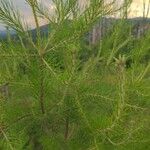
Pinus glabra
Spruce pine · Poor Pine · Walter pine · Bottom white pine · Cedar pine
Description
Source: leafsnapPinus glabra, commonly known as the spruce pine, is a species of pine tree native to the southeastern United States. Typically reaching a height of 20-30 meters, it has a conical shape with dense foliage. The dark green needles grow in bundles of two and measure around 10-15 cm in length. The spruce pine is notable for its adaptability to various soil types and growing conditions. It can thrive in wet or dry soils, as well as sandy or clay soils. This adaptability makes it an ideal choice for reforestation projects or landscaping. The wood from the spruce pine is highly valued for its strength and durability, making it popular in construction, particularly for flooring and furniture making. In addition to its practical uses, Pinus glabra holds cultural significance among Native American tribes, who have used various parts of the tree for medicinal purposes, such as treating respiratory ailments. Overall, Pinus glabra is an important species both ecologically and economically, thanks to its adaptability and versatility.
Care Guide
💧 Water Every 7 days
Spruce pine flourishes in humid subtropical areas, needing consistent moisture but not waterlogged soil. Water the plant every 1-2 weeks to maintain even soil moisture. Since it is an evergreen, spruce pine requires regular hydration to support its year-round growth and keep its needles healthy, especially when grown outdoors.
☀️ Light Full sun
Spruce pine prospers when exposed to intense, uninterrupted sunlight for most of the day. Native to areas with clear skies, its health and development benefit from these lighting conditions. Sunlight is important throughout its various growth stages. However, too little or too much light can affect its normal physiological functions.
What are the sunlight requirements for Spruce Pine?
Spruce Pine requires strong sunlight for the majority of the day to thrive, originating from habitats with clear skies which enhance its health and growth. It is vital for the plant in various growth stages, though a lack or excess of sunlight can affect its normal physiological processes. The plant needs full sun, which is above 6 hours of sunlight, or partial sun, about 3-6 hours of sunlight. It's important to watch how sunlight moves through your garden, selecting spots that offer the perfect balance of light and shade for the plants, ensuring their happiness.
How can artificial lighting support Spruce Pine growth indoors?
Indoor Spruce Pine plants require adequate lighting for optimal growth, especially when natural sunlight is insufficient. Artificial lights, such as LED lights which can be customized to provide specific wavelengths needed by plants, are a vital solution. Full sun plants need 30-50W/sq ft of artificial light, partial sun plants 20-30W/sq ft, and full shade plants 10-20W/sq ft. The light source should be placed 12-36 inches above the plant to mimic natural sunlight, and the duration should mimic the length of natural daylight hours, with most plants needing 8-12 hours of light per day.
What are the symptoms of light deficiency or excess in Spruce Pine?
Spruce Pine can exhibit symptoms due to light deficiency or excess, including smaller new leaves, leggy or sparse growth, faster leaf drop, slower or halted growth, lighter-colored new leaves, chlorosis, sunscald, leaf curling, wilting, and leaf scorching. These symptoms indicate the plant's struggle with suboptimal lighting or overexposure to sunlight, impacting its health and growth. Solutions involve gradually increasing light exposure and using artificial lighting if needed.
How should I address light-related issues in Spruce Pine?
To optimize Spruce Pine growth with light, gradually move plants to sunnier locations each week to achieve at least 6 hours of direct sunlight daily. Use south-facing windows or artificial lights for indoor plants. Outdoors, adapt plants to sunlight by moving them to a sunnier spot each week to avoid sunburn. To reduce obstructions, prune trees blocking sunlight or transplant smaller plants to sunnier, well-drained locations during their dormant period. It's crucial to acknowledge parts of the plant affected by insufficient sunlight may not recover, but new growth should be healthy.
🌡️ Temperature 15–35°C
Spruce pine is fairly adaptable to heat, able to tolerate higher temperatures and larger temperature fluctuations. In hot weather, attention should be paid to watering and providing adequate shade to avoid sunburn. Conversely, spruce pine is not very cold-tolerant; it can endure some cold, but overly low temperatures can cause frost damage.
What is the botanical name of the Spruce pine?
The botanical name of the Spruce pine is Pinus glabra.
💨 Humidity normal (40-60%)
This plant will thrive in moderate humidity, which is probably the level in your home. However, misting it a few times a week can be very beneficial. Make sure the room has good ventilation.
🪴 Soil 4-6
🌱 Fertilizer
Spruce pine has specific nutrient needs and does not require heavy fertilization. Fertilizing in spring is best for promoting optimal growth. Providing nutrients enhances its health, strengthens resistance to pests and diseases, and helps sustain a long lifespan.
🪴 Pot & Repot
✂️ Pruning
Spruce pine benefits from strategic pruning conducted during the period from early to late winter. Begin by removing any dead or diseased branches to improve air circulation and reduce the risk of pathogens. Next, thin out crowded areas to allow better sunlight penetration, which supports healthier growth. This approach helps maintain the tree's shape and size, resulting in an aesthetically pleasing appearance.
🌿 Propagating
🐛 Diseases & pets
☠️ Toxicity
Characteristics
- Plant Type
- Tree
- Life Cycle
- Perennial
- Genus
- Pinus
- Family
- Pinaceae
- Hardiness Zone
- 7-10
- Mature Height
- 9.14 m to 18.29 m
- Mature Spread
- 7.62 m to 11.89 m
- Leaf Color
- Green
- Leaf Type
- Evergreen
- Flower Color
- Brown, Red
- Flower Size
- 2.54 cm to 7.62 cm
- Bloom Time
- Early spring, Mid spring
- Planting Time
- Spring, Autumn
- Harvest Time
- Late summer, Early fall, Mid fall