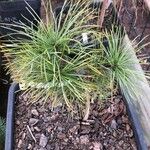
Pinus koraiensis
Korean pine · Chinese pinenut · Channamu · White pine
Description
Source: leafsnapPinus koraiensis, commonly known as Korean pine, is a species of pine tree native to northeastern Asia. This slow-growing evergreen tree can reach up to 30 meters in height and 1 meter in diameter. The bark is dark brown and scaly, while its needles are long and slender, measuring up to 15 centimeters in length. The Korean pine produces large, oval-shaped cones that can measure up to 15 centimeters long. These cones contain edible seeds, which are commonly used for cooking or eaten raw as a snack. The wood of the Korean pine is highly valued for its strength and durability. It has been used for centuries in construction, furniture making, and paper production. Korean pines grow best in well-drained soils with plenty of sunlight. They can tolerate cold temperatures down to -40°C but do not thrive in hot or dry climates. Overall, Pinus koraiensis plays an important ecological role by providing habitat for various wildlife species such as birds and squirrels. It also contributes significantly to the economy through its timber production industry.
Care Guide
💧 Water Every 7 days
The Korean pine, native to cold regions, is moderately drought-tolerant and adapts well to irregular watering. Water the plant every 1-2 weeks, letting the soil dry slightly between waterings. Ideally suited for outdoor environments, the Korean pine thrives in cooler climates, where natural precipitation often provides sufficient moisture.
☀️ Light Full sun
The korean pine prefers abundant light but tolerates moderate shade, showing its resilience. It naturally occurs in areas that receive generous sunshine. Its light needs stay consistent at every stage of growth. Excessive or insufficient light can harm its health and impede its growth.
What are the sunlight requirements for Korean Pine?
Korean pine, scientifically known as Pinus koraiensis, thrives in environments that offer abundant sunlight, displaying its resilience by also being able to tolerate moderate shade. Its need for sunlight is consistent throughout its different stages of growth, thriving in full sun conditions, which is defined as receiving over 6 hours of sunlight a day, but it can also survive in partial sun, with about 3-6 hours of sunlight. It's important to note that too much or too little light can adversely affect the pine's health, leading to growth issues.
How does a lack of sunlight affect Korean Pine?
When Korean pine does not receive sufficient sunlight, it may exhibit several symptoms indicating light deficiency. These symptoms include smaller new leaves, leggy or sparse growth, faster leaf drop, slower or no new growth, lighter-colored new leaves, chlorosis (leaves turning yellow), sunscald, leaf curling, wilting, and leaf scorching. These symptoms showcase the plant's struggle in suboptimal lighting conditions, affecting its ability to perform photosynthesis effectively and maintain healthy growth.
Can artificial lighting be used for Korean Pine and how?
Yes, artificial lighting can be utilized for Korean pine, especially for indoor plants when natural sunlight is insufficient, such as during winter or in less sunny spaces. LED lights are recommended due to their ability to provide specific wavelengths needed by plants. For full sun plants, 30-50W per square foot of artificial light is needed; for partial sun plants, 20-30W per square foot; and for full shade plants, 10-20W per square foot. The light source should be placed 12-36 inches above the plant, mimicking natural sunlight, and it's advisable to mimic the length of natural daylight hours, typically 8-12 hours of light per day.
Are there solutions for augmenting sunlight exposure for Korean Pines?
To improve sunlight exposure for Korean Pine, several strategies can be implemented. For indoor plants, gradually moving them to sunnier locations each week to achieve at least 6 hours of direct sunlight daily is advisable. Using a south-facing window and keeping curtains open during the day maximizes sunlight exposure. Artificial lighting can also be considered, keeping lamps on for at least 8 hours daily, or investing in plant grow lights. For outdoor plants, gradually moving them to spots with the best sunlight and avoiding drastic changes in light intensity to prevent sunburn is essential. Pruning trees that obstruct sunlight or transplanting smaller plants to sunnier locations with good drainage can also greatly benefit the plants. It's important to note that some parts of the plant affected by insufficient light might not recover, but new growth should be healthy with improved light conditions.
🌡️ Temperature 0–32.2°C
Korean pine is highly adaptable to a range of climatic conditions, whether facing scorching summers or chilly winters. Still, it requires a specific temperature range for optimal growth. If temperatures become too high, the plant is vulnerable to heat and humidity stress, which can cause it to die. In areas where temperatures get close to the lower limit of its cold tolerance, insulating measures should be used to protect the plant.
What is the botanical name of the Korean pine?
The botanical name of the Korean pine is Pinus koraiensis.
💨 Humidity
🪴 Soil 5-6
🌱 Fertilizer
Korean pine has particular nutrient needs and does not require heavy fertilization. Spring is the best time to apply fertilizer for optimal growth. Supplying nutrients enhances its health, increases its resistance to pests and diseases, and supports its long lifespan.
🪴 Pot & Repot Every 12 months
✂️ Pruning
The Korean pine is a tall, evergreen tree. For optimal health, prune it in the winter by removing dead branches and thinning crowded areas to improve air circulation. Be careful not to over-prune, as this can stress the tree. Using the right timing and techniques will encourage healthy growth and enhance the Korean pine's natural shape.
🌿 Propagating
🐛 Diseases & pets
☠️ Toxicity
Characteristics
- Plant Type
- Tree
- Life Cycle
- Perennial
- Genus
- Pinus
- Family
- Pinaceae
- Hardiness Zone
- 3-7
- Mature Height
- 9.14 m to 12.19 m
- Mature Spread
- 4.57 m to 6.1 m
- Leaf Color
- Green, Blue, White
- Leaf Type
- Evergreen
- Flower Color
- Yellow, Green, Brown
- Flower Size
- 7.62 cm to 15.24 cm
- Bloom Time
- Late spring, Early summer
- Planting Time
- Spring, Summer, Autumn
- Harvest Time
- Late summer, Early fall, Mid fall
- Native Area
- Russia, Japan, Koppen, South Korea, China