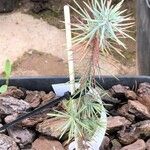
Pinus longaeva
Great Basin bristlecone pine · Ancient pine · Intermountain bristlecone pine · Western bristlecone pine · Bristlecone Pine
Description
Source: leafsnapPinus longaeva (commonly referred to as the Great Basin bristlecone pine, intermountain bristlecone pine, or western bristlecone pine) is a long-living species of bristlecone pine tree found in the higher mountains of California, Nevada, and Utah. Methuselah is a bristlecone pine that is 4,854 years old and has been credited as the oldest known living non-clonal organism on Earth. To protect it, the exact location of this tree is kept secret. In 1987, the bristlecone pine was designated one of Nevada's state trees.
🎭 Optimism, Sympathy
Care Guide
💧 Water
The Great Basin bristlecone pine is well-suited to high-altitude, arid environments and is highly drought-tolerant. It thrives on minimal moisture, requiring watering only every one to two weeks. This makes it an excellent choice for outdoor cultivation in water-conservative regions. With its remarkable longevity and resilience in dry soil, the Great Basin bristlecone pine is a model of water efficiency among plants.
☀️ Light Full sun
For optimal growth, the great basin bristlecone pine favors sites with intense sunlight and can moderately tolerate areas with somewhat less light. This preference comes from the clear-sky conditions of its native habitat. Excessive or insufficient sun exposure can impair its growth condition and overall vitality.
What are the sun requirements for the Great Basin Bristlecone Pine?
The Great Basin Bristlecone Pine requires full sun, defined as more than 6 hours of sunlight a day, but it can also grow in partial sun, receiving about 3-6 hours of sunlight daily. It is essential to observe the movement of sunlight through your garden to select the ideal locations that offer a balance of light and shade, ensuring the well-being of your plants.
What are the essential growing conditions for the Great Basin Bristlecone Pine?
For optimal growth, the Great Basin Bristlecone Pine prefers locations with intense sunlight, replicating its native, clear-skied habitat. However, it can moderately adapt to areas with less sunlight. Both overexposure and inadequate sun exposure can negatively affect its growth and vitality. When natural sunlight is insufficient, especially during winter or in darker spaces, artificial lighting such as LED lights can provide the necessary wavelengths of light. The amount of artificial light needed varies depending on the plant's needs, with full sun plants requiring 30-50W/sq ft, partial sun plants needing 20-30W/sq ft, and full shade plants requiring 10-20W/sq ft.
What symptoms indicate that the Great Basin Bristlecone Pine is getting inadequate sunlight?
The Great Basin Bristlecone Pine may show several symptoms if it does not receive enough sunlight, including smaller new leaves, leggy or sparse growth, premature leaf drop, slower or halted growth, paler new leaves, and conditions like chlorosis, sunscald, leaf curling, wilting, and leaf scorching. These symptoms highlight the plant's struggle under suboptimal lighting conditions, pointing towards a need for better light exposure.
How can you improve the light conditions for a Great Basin Bristlecone Pine?
To improve light conditions for a Great Basin Bristlecone Pine, gradually increase its exposure to sunlight by moving it to a sunnier spot each week, aiming for at least 6 hours of direct sunlight daily. For indoor plants, utilizing a south-facing window or artificial grow lights for at least 8 hours a day can significantly help. Outdoors, ensure to adapt the plant gradually to avoid sunburn. If natural light is blocked by obstructions like trees, consider pruning to enhance sunlight penetration. For smaller plants, relocating them during their dormant period to a sunnier location with good drainage might be beneficial.
🌡️ Temperature 5–25°C
Great basin bristlecone pine is a hardy plant native to areas with fluctuating temperatures, thriving between 41 and 77 °F (5 to 25 ℃). Seasonal adjustments may include reducing watering during winter months because of the lower temperatures.
What are the ideal temperature conditions for Great Basin Bristlecone Pine?
Great Basin Bristlecone Pine thrives in variable temperatures, ideally ranging from 41 to 77 °F (5 to 25 °C). This hardy plant adapts well to seasonal changes, requiring reduced watering during the colder winter months. Additionally, it is highly cold-tolerant and does not necessitate extra frost protection measures. To prepare for winter, it's advised to water the plant generously before the first freeze in autumn, ensuring the soil remains moist and enters a frozen state which helps prevent drought and water scarcity throughout winter and early spring.
How does Great Basin Bristlecone Pine respond to low temperatures?
Great Basin Bristlecone Pine is extremely cold-tolerant and can withstand winter temperatures down to -30°C. If temperatures fall below this threshold, the plant may not show immediate damage during winter. However, come spring, the branches may become brittle and dry, and the tree might not produce new shoots. The recommended solution for such damage is to prune away any dead branches in the spring to encourage new growth.
What should I do if my Great Basin Bristlecone Pine is exposed to high temperatures?
Great Basin Bristlecone Pine struggles in high temperatures, particularly when the mercury rises above 25°C, leading to significant leaf drop, and in severe cases, the plant may wither and die. To mitigate damage from high temperatures, trim away sunburned or dried-up parts of the plant. Relocate the plant to a spot that offers shade during the intense midday and afternoon sun, or use a shade cloth to provide some protection. Ensure the soil remains moist by watering the plant in the morning and evening.
💨 Humidity
🪴 Soil 6-8
🌱 Fertilizer
Great basin bristlecone pine has particular nutrient needs and does not require heavy fertilization. Fertilizing in spring is best for encouraging optimal growth. Supplying nutrients enhances its health, raises its resistance to pests and diseases, and helps preserve its long lifespan.
🪴 Pot & Repot Every 12 months
✂️ Pruning
The Great Basin bristlecone pine is known for its resilience, but it requires careful pruning to thrive. The best time to prune is during its dormant period, from early to late winter. Focus on removing dead or damaged branches to promote healthy growth, and be cautious to avoid heavy pruning. This careful approach offers several benefits: it improves airflow, reduces the risk of disease, and enhances the tree's structure, all of which support its overall health and longevity.
🌿 Propagating
🐛 Diseases & pets
☠️ Toxicity
Characteristics
- Plant Type
- Tree
- Life Cycle
- Perennial
- Genus
- Pinus
- Family
- Pinaceae
- Hardiness Zone
- 4-5
- Mature Height
- 4.88 m to 14.94 m
- Mature Spread
- 11.89 m
- Leaf Color
- Green
- Leaf Type
- Evergreen
- Flower Color
- Yellow, Green, Brown
- Flower Size
- 3.05 cm to 6.35 cm
- Bloom Time
- Early summer, Mid summer
- Planting Time
- Spring
- Harvest Time
- Late summer, Early fall, Mid fall
- Native Area
- Utah to Nevada and E. California