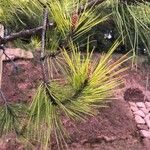
Pinus massoniana
Masson pine · Masson's pine · Chinese red pine · Southern red pine · Chinese pine
Description
Source: leafsnapPinus massoniana (English: Masson's pine, Chinese red pine, horsetail pine; Chinese: 馬尾松) is a species of pine, native to Taiwan, a wide area of central and southern China, and northern Vietnam.
🌳 The Japanese black pine can uniquely adjust to and flourish in sandy soils and areas exposed to salt spray, making it an important species in coastal regions where such conditions can endanger other plants. Its toughness makes it suitable for landscaping and also provides a potential resource for studying plant resilience and adaptation in challenging ecosystems. Additionally, it could play a key role in the future in restoring and stabilizing threatened coastal ecosystems.
🎭 Optimism, Sympathy
Care Guide
💧 Water
The Chinese red pine is adapted to low-moisture environments and only needs watering every 1-2 weeks, highlighting its drought tolerance. As a native plant to regions with variable water availability, it efficiently stores water. When cultivating this pine outdoors, take into account the seasonal rainfall to guide your irrigation schedule. This will help ensure optimal growth without the risk of overwatering.
☀️ Light Full sun
Japanese black pine grows best in places that receive sunlight for most of the day. Native to regions with abundant sun, these trees perform best when given plenty of light. Too much or too little light usually does not harm its health.
What are the sunlight requirements for Chinese red pine?
Chinese red pine thrives in environments that provide full sun, which means it requires above 6 hours of sunlight daily to maintain its health and vitality. However, it can also adapt to partial sun conditions, receiving about 3-6 hours of sunlight. It's crucial to observe how sunlight moves through your garden to find spots that offer an ideal balance of light and shade, ensuring the plants' growth and well-being.
What are the essentials for growing a healthy Chinese red pine?
The growth and vitality of the Chinese red pine are heavily dependent on adequate sunlight exposure. It performs best when it receives sunlight for the major part of the day but can tolerate intermittent shadows. Artificial lighting can be a viable solution for indoor plants, especially when natural sunlight is insufficient. LED lights are recommended for their ability to provide the specific wavelengths needed by the plants. Depending on the type of plant (full sun, partial sun, or full shade), the wattage per square foot and duration of exposure will vary to mimic natural daylight hours as closely as possible, usually ranging from 8-12 hours per day.
What are the important symptoms of inadequate light exposure in Chinese red pine?
When Chinese red pine receives inadequate light, it may display several symptoms indicating poor health. These include the emergence of smaller new leaves compared to older ones, leggy or sparse growth, faster leaf drop, delayed or ceased growth, and symptoms of light overexposure like chlorosis, sunscald, leaf curling, wilting, and leaf scorching. These signs reflect the plant's struggle with adapting to insufficient or excessive sunlight, impacting its overall health and appearance.
What solutions can aid Chinese red pine’s growth in terms of sunlight exposure?
Optimize sunlight exposure for Chinese red pine by gradually moving plants to locations with at least 6 hours of direct sunlight, using south-facing windows for indoor plants, and utilizing artificial light when natural light is lacking. For outdoor plants, transitioning them slowly to sunnier spots while preventing sudden exposure shifts helps avoid sunburn. Additionally, reducing obstructions that block sunlight and transplanting smaller plants to sunnier areas during their dormant periods can significantly improve their health. It's important to note that parts of the plant damaged by insufficient sunlight may not recover, but new growth should be healthier with improved light conditions.
🌡️ Temperature 15–35°C
Japanese black pine is native to temperate regions and performs best in temperatures between 59 and 95 °F (15 and 35 °C). Seasonal variations can influence its growth, so adjustments to accommodate changing temperatures may be required.
What is the native temperature range for Chinese red pine, and how does it affect its growth?
Chinese red pine (Pinus massoniana) thrives best in areas where the temperature ranges from 50 to 95 °F (10 to 35 °C). This temperature range is optimal for its growth, and seasonal adjustments in temperature should involve gradual shifts within this range to ensure the plant maintains good health. Due to its strong cold resistance, special frost protection measures are generally not necessary. However, if winter temperatures are expected to drop below -25°C, it's important to protect the plant by wrapping its trunk and branches with materials like non-woven fabric or cloth, and watering it abundantly before the first freeze in autumn to prevent drought and water scarcity during winter and early spring.
What are the symptoms and solutions for Chinese red pine in low temperature conditions?
In low temperature conditions, Chinese red pine shows remarkable cold tolerance, thriving best when the temperature remains above 10°C. During winter, keeping the temperature above -15°C is advisable. If temperatures fall below -25°C, the plant might not show immediate changes, but its branches can become brittle and dry by spring, with no new shoots emerging. The solution for these symptoms includes pruning away any dead branches that have failed to produce new leaves in the spring, to promote healthy growth and recovery.
What are the symptoms and solutions for Chinese red pine in high temperature conditions?
During the summer, it is crucial to ensure that Chinese red pine's temperature does not exceed 35°C. Exposing the plant to temperatures above 38°C can lead to symptoms such as lighter colored leaves, dry and withered tips, and an increased susceptibility to sunburn. To alleviate these symptoms, trim away the sunburned and dried parts of the plant. Additionally, moving the plant to a shaded location or using a shade cloth for protection against the midday and afternoon sun can be beneficial. Keep the soil moist by watering in the morning and evening.
💨 Humidity
🪴 Soil 5-6
🌱 Fertilizer
Japanese black pine has specific nutrient needs and does not require heavy fertilization. Spring is the best time to apply fertilizer for optimal growth. Supplying nutrients enhances its health, increases its resistance to pests and diseases, and helps preserve its long lifespan.
🪴 Pot & Repot 2-3 years
When repotting Japanese black pine, select a pot 1–2 inches (2.5–5.1 cm) larger with ample drainage. Use a well-draining potting mix. Repot in spring or fall, ensuring the root ball sits slightly lower than the rim of the flower pot. Water thoroughly after repotting and place it in a warm spot with indirect sunlight.
✂️ Pruning
To ensure the thriving growth of the Chinese red pine, it is important to carefully prune it from early to late winter. Focus on removing dead branches and shaping the tree during this time. Pruning during the tree's dormant phase encourages healthy regrowth, helps prevent pest infestations, and enhances the tree's appearance. Always use clean, sharp tools for effective pruning.
🌿 Propagating
🐛 Diseases & pets
☠️ Toxicity
Characteristics
- Plant Type
- Tree
- Life Cycle
- Perennial
- Genus
- Pinus
- Family
- Pinaceae
- Hardiness Zone
- 8-10
- Mature Height
- 39.93 m
- Mature Spread
- 3.66 m to 6.1 m
- Leaf Color
- Green
- Leaf Type
- Evergreen
- Flower Color
- Yellow, Orange, Gold
- Flower Size
- 2.54 cm to 7.62 cm
- Bloom Time
- Early summer, Mid summer
- Planting Time
- Spring, Autumn
- Harvest Time
- Mid summer, Late summer, Early fall
- Native Area
- Koppen, Japan, South Korea