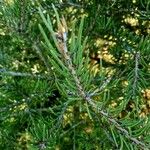
Pinus monophylla
Nut Pine · One-leaf pine · One-leaf pinyon · Single-leaf pinyon · Singleleaf pinyon
Description
Source: leafsnapPinus monophylla, commonly known as the single-leaf pinyon or piñon pine, is a species of pine tree native to the western United States and Mexico. This slow-growing evergreen can reach heights of up to 20 meters and is characterized by a distinctive rounded crown. The needles of Pinus monophylla are long and slender, measuring up to 6 cm in length, and are unique because each fascicle contains only one needle. The single-leaf pinyon is crucial for wildlife, providing food for a variety of animals such as birds, squirrels, chipmunks, and bears. The seeds of Pinus monophylla are also edible for humans and are commonly used in traditional Native American cuisine. Pinus monophylla thrives best in dry climates with well-drained soils, such as rocky slopes or sandy plains. It can withstand extreme temperatures, ranging from -40°C to 40°C, making it an ideal plant for arid regions. The wood of Pinus monophylla is highly valued by woodworkers for its durability and attractive grain patterns, and it is commonly used for furniture making and construction purposes. Overall, Pinus monophylla plays a significant ecological role within its native range while also providing valuable resources for humans.
🌳 The seeds of singleleaf Pinyon are a traditional food for Indigenous peoples and are rich in fats and proteins. The trees are also valued for their quality wood, used in fine carpentry and craftwork. Although not widely commercialized, the plant has potential as a source of essential oils and natural dyes, providing a sustainable option for various industries.
Care Guide
💧 Water Every 7 days
The singleleaf pinyon, which originates from arid regions, is highly drought-tolerant and requires watering only once every 1-2 weeks. Typically grown outdoors, this evergreen conifer benefits from deep, infrequent watering to mimic the sporadic rainfall of its native habitat.
☀️ Light Full sun
The singleleaf Pinyon does best when it gets sunlight for most of the day. Native to habitats with abundant sun exposure, it has adapted to take full advantage of those conditions for optimal growth and health. Its tolerance for low light is limited, and prolonged shade can hinder its growth and vitality.
What are the sunlight requirements for Singleleaf Pinyon?
Singleleaf Pinyon requires full sun exposure, meaning it thrives best when it receives more than 6 hours of sunlight daily. It originates from habitats that are exposed to ample sunlight, where it has adapted to utilize such conditions for optimal growth and health. However, it has a limited tolerance for low light conditions, and prolonged periods of shade can impede its growth and vitality. Understanding the movement of sunlight through your garden is crucial, and selecting locations with the right balance of light and shade will ensure your plants' happiness.
How can artificial lighting be used for Singleleaf Pinyon indoors?
When natural sunlight is insufficient for Singleleaf Pinyon, especially in winter or in less sunny spaces, artificial lighting can be a vital solution to provide enough light for optimal growth. Indoor plants benefit from artificial lighting, which promotes faster, healthier growth. It's recommended to choose LED lights for their ability to provide specific wavelengths needed for plant growth. Full sun plants should have 30-50W/sq ft, partial sun plants 20-30W/sq ft, and full shade plants 10-20W/sq ft. The light source should be placed 12-36 inches above the plants, mimicking natural sunlight, and ensuring plants receive 8-12 hours of light per day.
What symptoms indicate Singleleaf Pinyon is not getting enough light?
Symptoms of insufficient light for Singleleaf Pinyon include smaller new leaves compared to mature ones, leggy or sparse growth, faster leaf drop, slower or halted growth, lighter-colored new leaves indicating a lack of chlorophyll and nutrients, chlorosis leading to yellowing leaves, sunscald showing as pale or necrotic spots on leaves, leaf curling as a defense mechanism against extreme sunlight, wilting from loss of turgor pressure, and leaf scorching marked by brown, dry edges on leaves. These symptoms showcase how critical proper sunlight is to the plant's health.
What solutions are there for Singleleaf Pinyon experiencing light-related issues?
To address light-related issues in Singleleaf Pinyon, consider the following solutions: For indoor plants, gradually move them to sunnier locations until they get at least 6 hours of direct sunlight daily. Utilize a south-facing window and keep curtains open during the day or use artificial light if the plant is large or not easily movable, keeping a lamp on for at least 8 hours daily. For outdoor plants, carefully transition them to sunnier spots weekly, avoiding drastic changes that cause sunburn. Reducing obstructions such as pruning trees can help, and for smaller plants, consider transplanting during their dormant period to a location with more sunlight and good drainage. Note that parts of the plant affected by insufficient sunlight might not recover, but new growth following increased light exposure should be healthy.
🌡️ Temperature 10–32.2°C
Singleleaf Pinyon is a plant that does best in temperatures from 50 to 90 °F (10 to 32 °C). Native to regions with a moderately warm climate, this species favors mild temperatures. Its environment should be adjusted to replicate these conditions across the seasons.
What are the ideal temperature conditions for Singleleaf Pinyon?
Singleleaf Pinyon thrives in temperatures ranging from 50 to 90 °F (10 to 32 °C). It is native to regions with moderately warm climates and prefers mild temperatures throughout different seasons. While it has strong cold resistance and special frost protection measures are usually not necessary, care should be taken when winter temperatures are expected to drop below -25°C, implementing cold protection by wrapping the trunk and branches. Additionally, abundant watering before the first freeze in autumn is recommended to keep the soil moist, helping to prevent drought and water scarcity during the winter and early spring.
How does Singleleaf Pinyon react to low temperatures, and what solutions are recommended?
Singleleaf Pinyon is cold-tolerant and performs best in temperatures above 10°C, but it should be kept above -15°C during winter. If temperatures fall below -25°C, while the plant may not show immediate damage in winter, the branches can become brittle and dry by spring, leading to a lack of new shoots. The solution is to prune away any dead branches that have failed to produce new leaves in the spring.
What should be done if Singleleaf Pinyon is exposed to high temperatures?
During the summer, it's essential to ensure that the temperature around Singleleaf Pinyon remains below 32°C. Exposure to temperatures above 35°C can cause the leaves to lighten in color, and tips can become dry and withered, increasing the plant's susceptibility to sunburn. To mitigate these effects, trim away sunburned and dried parts of the plant, relocate it to a shaded area or use shade cloth to protect it from midday and afternoon sun. Additionally, watering the plant in the morning and evening can help keep the soil appropriately moist.
💨 Humidity
🪴 Soil 6-6
🌱 Fertilizer
Singleleaf Pinyon has specific nutrient needs and does not require heavy fertilization. Fertilizing in spring is the best time to encourage optimal growth. Providing nutrients improves its health, increases resistance to pests and diseases, and helps preserve its long lifespan.
🪴 Pot & Repot
✂️ Pruning
The Singleleaf Pinyon, known for its unique single needles, grows at a slow rate. To ensure its health, prune it during its dormant period from early to late winter, focusing on removing any dead or diseased branches. Avoid heavy pruning to prevent stress to the tree. Make clean, angled cuts to promote good health and minimize the risk of disease. For more detailed guidance, refer to gardening resources.
🌿 Propagating
🐛 Diseases & pets
☠️ Toxicity
Characteristics
- Plant Type
- Tree
- Life Cycle
- Perennial
- Genus
- Pinus
- Family
- Pinaceae
- Hardiness Zone
- 6-8
- Mature Height
- 46 cm to 61 cm
- Mature Spread
- 46 cm to 61 cm
- Leaf Color
- Green, Gray
- Leaf Type
- Evergreen
- Flower Color
- Yellow, Green, Brown
- Bloom Time
- Late spring, Early summer
- Planting Time
- Winter
- Harvest Time
- Mid summer, Late summer, Early fall
- Native Area
- Mexico