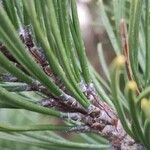
Pinus mugo
Dwarf Mountain-pine · Mugo pine · Scrub mountain pine · Mountain pine · Swiss mountain pine
Description
Source: leafsnapPinus mugo, commonly known as mountain pine or dwarf pine, is a species of coniferous evergreen tree belonging to the Pinaceae family. Native to the mountainous regions of central and southern Europe, it thrives at high altitudes up to 2,500 meters. This plant grows slowly, eventually reaching heights of up to 20 meters and trunk diameters up to 1 meter. The needle-like leaves of Pinus mugo grow in pairs on short shoots. They are dark green and range from 3 to 7 centimeters in length. The plant produces small cones, measuring 2 to 4 centimeters long, with thick scales that protect the seeds inside. Pinus mugo is frequently used as an ornamental plant due to its attractive appearance and its ability to withstand harsh conditions such as cold temperatures, high altitudes, poor soil quality, and drought. Additionally, it is valued for erosion control on steep slopes and for reforestation efforts. The wood from this tree has traditionally been used for fuel and construction due to its durability and resistance to decay caused by insects and fungi. Overall, Pinus mugo is an important species both ecologically, as it provides habitat for various wildlife, and economically, given its various uses.
🌳 Mugo pine is commonly grown in horticulture for decorative use, but its ecological function goes beyond looks. It helps stabilize soil on mountain slopes, prevents erosion, and provides a refuge for wildlife.
🎭 Optimism, Sympathy
Care Guide
💧 Water Every 7 days
The Mugo pine flourishes at high altitudes and requires infrequent watering, as it can tolerate short dry periods. A recommended watering schedule is once every 1-2 weeks, but this should be adjusted according to rainfall, especially when grown outdoors. This approach aligns with the plant's natural ability to adapt to moderate moisture levels.
How should I water my Mugo pine tree?
Watering your Mugo pine is a simple task. To water it, you can use your garden hose to soak the soil slowly. This is especially ideal for mature trees that require a high volume of water. However, for smaller trees, you can use a watering can or another smaller tool. It's important to avoid watering the leaves directly to prevent excessive moisture and potential disease, especially when the tree is young.
What should I do if I give my Mugo pine tree too much water or not enough water?
Poor soils can sometimes lead to overwatering issues in Mugo pines. If the soil does not drain well, it can cause the plant to decline. To remedy this, you can either improve the soil drainage or move the plant to a better location. If you are growing the pine in a pot, you may need to repot it with looser soil for better drainage. Overwatering can also lead to diseases in the plant, which should be treated promptly. On the other hand, underwatered Mugo pines can be revived by increasing watering frequency. To determine if your Mugo pine is overwatered, check the foliage, especially the new growth. Overwatered plants may have discolored or easily breakable new growth. Standing water or slow drainage in the growing area can also indicate excessive moisture. Underwatered Mugo pines will have sparse, brown leaves. Consider recent rain or high temperatures if you notice these symptoms to accurately assess the situation.
How many times should I water my Mugo pine?
A mature Mugo pine tree is drought tolerant and can survive on rainfall alone. It typically only needs to be watered once a week during the hottest months, and may not need watering at all during other seasons. The only exception is if the tree has just been planted, in which case regular watering is needed to establish the roots. When watering, it is important to avoid overwatering, as Mugo pines cannot tolerate standing water.
How much water does my Mugo pine tree need?
During the height of summer, you may need to water your Mugo pine, usually with about one inch of water per week. However, this can vary depending on how much it has rained. If it has rained one inch or more in a week, you don't need to water your Mugo pine. In the first few growing seasons, a newly planted Mugo pine will require more water, typically watering once every one to two weeks for establishment.
How do I give water to my Mugo pine tree in different seasons?
The Mugo pine tree has specific watering needs throughout the year. In the summer, when it's hottest, it requires the most water. In the absence of rainfall, water the plant about once per week. However, during other seasons, such as spring and fall, the plant can often survive without any water, unless the weather is unusually hot. It's worth noting that unlike many plants, the Mugo pine doesn't go into full dormancy in winter. It continues to grow even during the coldest months. However, since the cool temperatures don't cause the soil to dry out quickly, its water requirements during winter remain relatively low.
☀️ Light Full sun
The mugo pine grows best when exposed to plentiful daylight, although it also does well under moderate light. Too much or too little light can harm it: too much can cause sunburn, and too little leaves it without sufficient energy for photosynthesis. Its natural environment is characterized by clear sky conditions that illuminate its growth at every stage.
What are the sunlight requirements for a Mugo Pine?
Mugo Pine requires specific sunlight conditions to thrive. Full sun exposure means the plant should receive above 6 hours of sunlight daily, while partial sun exposure is about 3-6 hours of sunlight. It's essential to watch how sunlight moves through your garden to provide your Mugo Pine with the perfect balance of light and shade, ensuring its health and happiness.
How does the Mugo Pine respond to different lighting conditions?
The Mugo Pine grows best under abundant daylight but can still thrive with moderate light exposure. Too much sunlight can cause sunburn, while insufficient light affects its ability to perform photosynthesis. In its natural habitat, Mugo Pine enjoys conditions with a clear sky, which supports its growth at all stages. When natural sunlight isn't enough, especially in winter or darker spaces, artificial lighting becomes crucial. Indoor Mugo Pines benefit from LED lights or other artificial sources, ensuring they receive 30-50W/sq ft for full sun plants, 20-30W/sq ft for partial sun plants, and 10-20W/sq ft for full shade plants.
What are the common symptoms of inadequate lighting in Mugo Pines?
Mugo Pine shows several symptoms when it doesn't receive optimal lighting, such as smaller new leaves, leggy or sparse growth, faster leaf drop, slower or no new growth, lighter-colored new leaves, chlorosis, sunscald, leaf curling, wilting, and leaf scorching. These symptoms indicate the plant is struggling with either too much or too little light, affecting its overall health.
How can I address lighting issues for my indoor or outdoor Mugo Pine?
To optimize light for your Mugo Pine, gradually acclimate it to a sunnier spot by moving it to a location with more sunlight each week, ensuring it receives at least 6 hours of direct sunlight daily. If moving the plant isn't feasible, particularly for indoor plants, consider using supplemental artificial light, such as a desk lamp or professional grow lights, for at least 8 hours daily. For outdoor plants, be mindful of transitioning them gradually to prevent sunburn. Reducing obstructions, like pruning trees that block sunlight, or transplanting to a sunnier location during the plant's dormant period, can also help in providing adequate sunlight.
🌡️ Temperature 5–35°C
The mugo pine's natural growing conditions include temperatures between 5 and 35℃ (41 and 95℉). It prefers cooler climates and copes with severe winter weather by entering dormancy. During the summer months, it may need some shade or other cooling measures to avoid heat stress.
What are the ideal temperature conditions for Mugo pine?
Mugo pine thrives in a native growth environment with temperatures ranging from 5 to 35°C (41 to 95°F). It prefers cooler conditions and can adapt to harsh winter climates by entering dormancy. During summer, it might need shade or cooling strategies to prevent heat stress. The plant exhibits strong cold resistance and typically does not require special frost protection. However, if temperatures are expected to fall below -30°C, protective measures such as wrapping the trunk and branches with non-woven fabric or cloth are advisable. Additionally, watering the plant abundantly before the first freeze in autumn to keep the soil moist is recommended, helping to prevent drought and water scarcity during winter and early spring.
How does Mugo pine react to low temperature conditions and what are the solutions?
Mugo pine is notably cold-tolerant and performs best at temperatures above 5°C. It should not be exposed to temperatures lower than -25°C. Exposure to temperatures below -30°C might not immediately show damage during winter, but in spring, branches may turn brittle and dry, with no new shoots emerging. The recommended solution for dealing with damage from low temperatures is to prune any dead branches that have not produced new leaves in spring.
How does Mugo pine react to high temperature conditions and what are the solutions?
During the summer, it is important to keep Mugo pine below 35°C. If the temperature exceeds 38°C, the plant's leaves may turn lighter, tips can dry out and wither, increasing susceptibility to sunburn. To mitigate high temperature stress, trim away sunburned and dried parts of the plant, move it to a shaded area or use shade cloth for protection against midday and afternoon sun. Additionally, maintaining soil moisture by watering in the morning and evening is crucial.
💨 Humidity
🪴 Soil 5-6
🌱 Fertilizer
Mugo pine has distinct nutrient needs and does not require heavy fertilization. Spring is the best time to apply fertilizer for optimal growth. Providing nutrients enhances its health, increases its resistance to pests and diseases, and helps maintain its long lifespan.
Why should I put fertilizer on my Mugo pine?
To encourage healthy growth of Mugo pine, it's important to fertilize it in the spring. Keep in mind that this plant has a long lifespan and requires support. Adding nutrients to the soil can also enhance the plant's health, making it more resistant to common pests and diseases that can hinder growth or reduce its lifespan.
When should I add fertilizer to my Mugo pine?
Mugo pine, unlike garden annuals and perennials, doesn't need a lot of extra nutrients to grow healthy. The growing medium may not always provide enough nutrients, but the best time to fertilize Mugo pine is in spring, before new growth starts.
When is it not a good idea to fertilize my Mugo pine?
The Mugo pine is different from other plants when it comes to fertilization. It doesn't need a lot of extra nutrients, so be careful not to overdo it. Apply fertilizer only in the spring and avoid using it during the summer, fall, and winter. Also, avoid adding any organic matter to the soil during these seasons. This will help prevent the Mugo pine from dying back.
I need to know what kind of fertilizer to use for my Mugo pine tree.
When choosing fertilizer for your Mugo pine, consider the age of the plant. Remember, Mugo pines don't need much extra nutrients. Look for a balanced plant food that supports healthy root development and growth, but avoid fertilizers with high nitrogen levels.
How can I make my Mugo pine grow better?
Properly fertilizing Mugo pine is essential, and timing is just as crucial as the method. In the spring, apply the fertilizer near the plant's base, taking care to avoid contact with the trunk. If using a granulated fertilizer, be sure to cover the pellets with a thin layer of soil, as this will help maximize absorption into the soil.
🪴 Pot & Repot 2-3 years
When repotting a Mugo pine, select a pot that is 1-2 inches (2.5–5.1 cm) larger and has ample drainage. Use a well-draining potting mix. Repot in spring or fall, making sure the root ball is slightly lower than the rim of the flower pot. Water thoroughly after repotting and set it in a warm spot with indirect sunlight.
✂️ Pruning
Mugo pine benefits from strategic pruning in late winter to boost its shape and health. Prioritize removing dead branches and thinning out dense areas to improve air circulation. Regular, light maintenance helps maintain a compact form, reduces the risk of disease, and promotes a vigorous, visually appealing plant.
🌿 Propagating
🐛 Diseases & pets
☠️ Toxicity
Characteristics
- Plant Type
- Shrub
- Life Cycle
- Perennial
- Genus
- Pinus
- Family
- Pinaceae
- Hardiness Zone
- 4-9
- Mature Height
- 20.12 m
- Mature Spread
- 6.1 m to 9.14 m
- Leaf Color
- Green
- Leaf Type
- Evergreen
- Flower Color
- Yellow, Green, Red, Gray, Black, Silver
- Flower Size
- 2.54 cm to 7.62 cm
- Bloom Time
- Early summer, Mid summer
- Planting Time
- Spring, Autumn
- Harvest Time
- Mid summer, Late summer