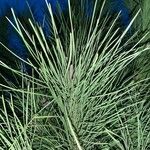
Pinus pinaster
کاج · Maritime pine · Cluster pine · Pinaster pine · Atlantic Maritime Pine
Description
Source: leafsnapPinus pinaster, commonly known as the maritime pine, is a species of pine native to the western Mediterranean region. This fast-growing evergreen can reach heights of up to 30 meters and is characterized by its distinctive reddish-brown bark. The needles, which are long and slender, measure between 10 and 20 cm and are arranged in pairs. The maritime pine is widely cultivated for its timber, used in construction and the production of paper products. Additionally, the tree produces resin, which is utilized in manufacturing varnishes and other industrial products. Beyond its economic value, Pinus pinaster plays a crucial ecological role by providing habitat for various bird and insect species and stabilizing sandy soils along coastal areas to prevent erosion. Historically, the maritime pine has been used medicinally for its anti-inflammatory properties. Its extract has demonstrated antioxidant effects on human cells, potentially offering protection against diseases such as cancer. In summary, Pinus pinaster is an economically and ecologically significant species with potential health benefits, making it a plant worthy of further study.
Care Guide
💧 Water Every 7 days
The maritime pine thrives in well-drained soils and can tolerate moderate drought conditions, requiring watering every 1-2 weeks. As an evergreen typically grown outdoors, it needs careful management of soil moisture to prevent root rot and to keep its needles healthy.
What do I need to do if I give my Maritime pine tree too much or too little water?
Overwatering can be caused by poor soils, particularly if the soil doesn't allow water to drain effectively for your Maritime pine. In this case, you have two options: either improve the soil's drainage by amending it or transplant your Maritime pine to a better location. If your pine is grown in a pot, you may also need to repot it using looser soils that allow for better drainage. Overwatering can lead to plant diseases, which should be treated promptly. To remedy an underwatered Maritime pine, simply increase the frequency of watering, and the plant will recover. To determine if your Maritime pine is overwatered, examine the foliage, especially the new growth. If the plant is suffering from excessive moisture, the new growth may be discolored or prone to breakage. Another indication of overly moist soil is the presence of standing water or sluggish drainage in the plant's growing area. Underwatered Maritime pines will also exhibit symptoms in their foliage, such as sparse, brown leaves. If you notice these symptoms, consider recent excessive rainfall or consistently high temperatures as possible causes. Evaluating these factors will help you make the right judgment.
How much water does my Maritime pine need?
A mature Maritime pine is very low-maintenance when it comes to watering. It can survive solely on rainfall and usually only needs to be watered once a week during the hottest months. However, if you have recently planted a Maritime pine, you should water it regularly to help the roots establish. It's important to avoid overwatering, as Maritime pines do not like standing water. In general, it is better to underwater than to overwater your Maritime pine.
How much water does my Maritime pine tree need?
During the summer, you'll typically need to water your Maritime pine about once a week, giving it about one inch of water. However, this can vary depending on rainfall. If it has rained one inch or more that week, you don't need to water the tree. If you've recently planted a Maritime pine, it will need more water during the establishment period, typically once every one to two weeks for the first few growing seasons.
How often should I give water to my Maritime pine tree during different seasons?
The Maritime pine tree has different watering needs throughout the year. In the summer when it's the hottest, it requires the most water. During this time, you should water it about once a week if there is no rain. However, during the rest of the year, it can often survive without any water. In the spring and fall, there may be a need for some water if the weather is extremely hot, but this is rare. Unlike many other plants, the Maritime pine does not go into full dormancy during the winter. It continues to grow even in the coldest months. However, the water requirements during winter are still low because the cool temperatures do not cause the soil to dry out quickly.
How do I give water to my Maritime pine as it grows?
Young Maritime pine trees require more water compared to established ones. For newly planted trees, watering at least once a week is necessary to keep the soil moist and encourage root development. Once the tree has survived its first growing season, it should be better adjusted to its surroundings and require less water. In normal conditions, you can follow the standard watering instructions for this species, giving supplemental water approximately once per week during the rainless summer months. Aside from these guidelines, there is no need to change your watering habits based on the growth stages of the Maritime pine tree.
☀️ Light Full sun
The maritime pine performs best with abundant sunlight, reflecting its coastal origins where it is used to plenty of light. Too much or too little light can negatively affect its healthy development, influencing its various growth stages. Lower light levels may lead to weaker growth patterns.
What are the sunlight requirements for Maritime pine?
Maritime pine, known botanically as Pinus pinaster, flourishes best when exposed to generous sunlight, emulating its native coastal conditions where it basks in ample sunlight. The plant requires full sun, defined as over 6 hours of sunlight, or partial sun, which is about 3-6 hours of sunlight. It's important to monitor the movement of sunlight through your garden to find spots that offer the right mix of light and shade, ensuring the plants' wellbeing.
How does inadequate light affect Maritime pine growth?
Inadequate lighting can negatively impact the growth of Maritime pine at various stages. Lower exposure to light may lead to weaker growth patterns, characterized by small leaves, leggy or sparse growth, faster leaf drop, slower or no new growth, lighter-colored new leaves, and symptoms such as chlorosis, sunscald, leaf curling, wilting, and leaf scorching. These symptoms indicate the plant's struggle with insufficient sunlight, affecting its ability to produce chlorophyll and essential nutrients.
How can artificial lighting be used for Maritime pine?
When natural sunlight is not available, artificial lighting serves as an essential aid for the growth of indoor Maritime pines, especially in less sunny spaces or during winter. Optimal growth under artificial lighting requires selecting the appropriate type of light, like LED, which can offer specific light wavelengths. Full sun plants need 30-50W/sq ft, partial sun plants require 20-30W/sq ft, and full shade plants need 10-20W/sq ft of artificial light. The light source should be placed 12-36 inches above the plant to mimic natural sunlight, and the duration should replicate natural daylight hours, generally 8-12 hours per day.
What are the solutions for insufficient sunlight for Maritime pine?
To address insufficient sunlight for Maritime pine, gradually relocate the plant to sunnier areas, ensuring it gets at least 6 hours of direct sunlight daily. Utilize a south-facing window and keep curtains open for maximum sunlight. For larger or immovable plants, consider supplemental artificial light, keeping a lamp on for at least 8 hours daily or investing in grow lights. Outdoors, acclimate plants to brighter conditions by gradually moving them to sunnier spots, avoiding sudden light intensity changes to prevent sunburn. For ground plants, reduce sunlight obstructions by pruning or transplanting to sunnier locations during the plant's dormant period for adequate sunlight and drainage.
🌡️ Temperature 0–32.2°C
Maritime pine is native to habitats where temperatures range from 32 to 90°F (0 to 32℃). It grows best within that range. For optimal growth, adjust temperatures seasonally to mimic its natural habitat.
What is the optimal temperature range for Maritime pine?
Maritime pine thrives in environments where temperatures fluctuate between 32 to 90°F (0 to 32°C), ideally reflecting its native habitat's temperature adjustments per season. It is highly cold-tolerant and does not require extra frost protection during winter. To prepare for winter, it is advisable to water the plant generously before the first freeze of autumn to keep the soil moist, which helps prevent drought and water scarcity during winter and early spring.
What are the symptoms and solutions for Maritime pine when exposed to low temperatures?
While Maritime pine is extremely cold-tolerant, maintaining winter temperatures above -35°C is crucial. If temperatures drop below this threshold, there might not be noticeable changes during winter, but the branches could become brittle and dry by springtime, failing to produce new shoots. The solution is to prune away any dead branches that have failed to produce new leaves in spring.
What are the symptoms and solutions for Maritime pine when exposed to high temperatures?
Maritime pine struggles with high temperatures above 32°C, potentially experiencing significant leaf drop or, in severe cases, the entire plant may wither and die. To help the plant cope, trim away sunburned and dried-up parts, move the plant to a shaded location or use a shade cloth to protect it from midday and afternoon sun, and water it in the morning and evening to keep the soil moist.
💨 Humidity
🪴 Soil 5-6
🌱 Fertilizer
Maritime pine has specific nutrient needs and does not require heavy fertilization. Spring is the best time to apply fertilizer to achieve optimal growth. Supplying nutrients improves its health, increases its resistance to pests and diseases, and helps sustain its long lifespan.
Why should I put fertilizer on my Maritime pine tree?
To ensure healthy growth and support the long lifespan of the Maritime pine, it is recommended to fertilize it in the spring. Adding nutrients to the soil not only improves the plant's health but also enhances its ability to resist pests and diseases that can hinder its growth or reduce its lifespan.
When should I put fertilizer on my Maritime pine to make it grow best?
Maritime pine is a unique plant that doesn't need a lot of extra nutrients like garden annuals and perennials. However, sometimes the growing medium may not provide enough nutrients for healthy growth. The ideal time to fertilize Maritime pine is during the spring, just before new growth starts.
When is the best time to not fertilize my Maritime pine?
While some plants benefit from regular fertilization, the Maritime pine is an exception as it does not require excessive nutrients. In fact, using too much fertilizer can actually harm it, leading to decay. To properly nourish the Maritime pine, only apply fertilizer during the spring season and refrain from doing so in the summer, fall, and winter. Additionally, it is important to avoid adding any organic matter to the soil during these seasons.
What kind of fertilizer does my Maritime pine tree need?
When choosing fertilizer for your Maritime pine plant, consider its age. Keep in mind that this type of pine doesn't need excessive nutrients. Opt for a balanced plant food, as it will promote healthy root growth and overall development. However, avoid fertilizers that are high in nitrogen.
How can I help fertilize my Maritime pine?
When fertilizing Maritime pine, it is crucial to consider both the method and timing. Apply the fertilizer to the base of the plant during the spring, making sure to avoid getting any on the trunk. If using granulated fertilizer, cover the pellets with a thin layer of soil to facilitate absorption into the soil.
🪴 Pot & Repot Every 12 months
✂️ Pruning
Maritime pine benefits greatly from pruning between early and late winter. This practice improves the tree's health and structure while reducing sap loss and the risk of disease. Focus on removing dead or overcrowded branches to promote better airflow. Be sure to use clean, sharp tools for precise cuts, which will support vigorous growth and enhance the tree's longevity.
🌿 Propagating
🐛 Diseases & pets
☠️ Toxicity
Characteristics
- Plant Type
- Tree
- Life Cycle
- Perennial
- Genus
- Pinus
- Family
- Pinaceae
- Hardiness Zone
- 3-7
- Mature Height
- 20.12 m to 35.05 m
- Mature Spread
- 7.01 m
- Leaf Color
- Green
- Leaf Type
- Evergreen
- Flower Color
- Yellow, Red, Brown, Orange, Burgundy
- Flower Size
- 7.62 cm to 15.24 cm
- Bloom Time
- Mid spring, Late spring
- Planting Time
- Spring, Summer
- Harvest Time
- Late summer, Early fall, Mid fall
- Native Area
- Italy, Spain, France, Morocco, Portugal