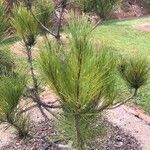
Pinus resinosa
Red pine · American red pine · Canadian red pine · Norway pine · Röd Tall
Description
Source: leafsnapPinus resinosa, known as red pine (also Norway pine in Minnesota), is a pine native to North America.
🌳 Red pine functions as a bioindicator, revealing the quality of the environment where it grows. Foresters and conservationists monitor red pine populations to evaluate ecosystem health and to inform decisions on sustainable forest management.
🎭 Optimism, Sympathy
Care Guide
💧 Water Every 1-2 weeks
Native to the colder climates of North America, the red pine thrives in moderate humidity and is highly tolerant of drought conditions. It needs watering only once every 1-2 weeks and thrives best in cooler temperatures. This makes it an ideal choice for regions with distinct seasonal changes that affect soil moisture.
How do I water my Red pine tree throughout the year?
The Red pine tree requires the most water in the summer, when it's hot. Water it once a week if there is no rain. During other seasons, it can usually survive without any water. In spring and fall, you might need to water it if it's very hot, but this doesn't happen often. Unlike other plants, the Red pine doesn't go dormant in winter, so it keeps growing even in the coldest months. However, it still doesn't need much water in winter because the cool temperatures don't dry out the soil quickly.
How do I water my Red pine as it grows?
Young Red pine trees require more water compared to established ones. During the first year after planting, it is important to water the tree at least once a week to keep the soil moist and encourage root development. After the first growing season, the Red pine should be well-adapted to its new environment and will require less water. Follow the standard watering instructions for this species, providing supplemental water once per week in the summer if there is no rainfall. No other adjustments to watering habits based on growth stages are necessary.
What's the difference in how to water Red pine plants indoors versus outdoors?
The Red pine is typically grown outdoors, but can also be grown indoors in a container as a bonsai plant. Whether grown indoors or outdoors, the water needs of the Red pine are generally the same, with the exception of indoor plants requiring more frequent watering. Indoor plants lack access to rainfall and are often in drier environments, while limited pot size can increase water needs.
☀️ Light Full sun
Red pine grows best in locations where it gets sunlight for most of the day, which promotes healthy growth. It can, however, tolerate moderate sunlight exposure. Its native habitat range suggests it is adaptable to different light conditions. Excessive or inadequate sunlight can restrict its growth.
What are the sunlight requirements for red pine?
Red pine thrives in full sun, requiring more than 6 hours of sunlight daily for optimal growth. It can also tolerate partial sun, with about 3-6 hours of sunlight. The plant's original habitat suggests it can adapt to various light conditions, but both insufficient and excessive sunlight can adversely affect its growth. It's important to observe the movement of sunlight through your garden and choose planting spots that ensure a good balance of light and shade.
How can artificial lighting benefit indoor plants?
Indoor plants that lack sufficient natural sunlight, especially in winter or less sunny spaces, can greatly benefit from artificial lighting. LED lights are recommended for their ability to provide specific wavelengths needed for plant growth. For full sun plants, 30-50W/sq ft of artificial light is advisable, whereas partial sun plants require 20-30W/sq ft, and full shade plants need 10-20W/sq ft. The light source should be placed 12-36 inches above the plant to simulate natural sunlight, and most plants will need 8-12 hours of light per day to thrive.
What are some common symptoms of light deficiency or excess in red pines?
Symptoms of light deficiency in red pines include smaller new leaves, leggy or sparse growth, faster leaf drop, slower or no new growth, lighter-colored or chlorotic new leaves. Excess sunlight can cause chlorosis, sunscald, leaf curling, wilting, and leaf scorching. These symptoms either indicate inadequate light, hindering the plant's ability to photosynthesize and grow, or excessive sunlight, which can damage the plant's tissues and reduce overall health.
What solutions can help overcome light-related issues for indoor and outdoor plants?
To address light-related issues, gradually moving plants to sunnier locations can help. Indoors, place plants near a south-facing window or use artificial lighting for at least 8 hours daily to mimic natural sunlight. Outdoors, it's crucial to avoid sudden changes in light intensity and gradually adapt the plants to sunnier spots to prevent sunburn. Removing obstructions and, if possible, transplanting smaller plants to sunnier areas with good drainage are effective strategies for ground-planted trees. Remember, while parts of the plant affected by insufficient sunlight may not recover, new growth should be healthy following these adjustments.
🌡️ Temperature 0–32.2°C
The native growth environment for red pine indicates a temperature range of 0–32 ℃ (32–90 ℉). However, the species can tolerate winter lows down to −40 ℃ (−40 ℉). In summer, the trees prefer a warm, temperate climate. Adjust temperatures seasonally to grow healthy red pine plants.
What is the native growth temperature range for red pines?
The native growth environment for red pines suggests they thrive in a temperature range of 0-32°C (32-90°F). Despite this, red pines are highly capable of tolerating lower temperatures, even down to -40°C (-40°F) during the winter months. During summer, they prefer a warm and temperate climate. It's important to adjust the temperature accordingly in different seasons to ensure the healthy growth of red pine plants.
Do red pines require any frost protection measures during winter?
Red pines are highly cold-tolerant and do not require additional frost protection measures during winter. However, it is beneficial to water the plant generously before the first freeze of autumn. This practice helps the soil remain moist as it enters a frozen state, which prevents drought and water scarcity for the plant during the winter and early spring months.
What happens if red pines are exposed to temperatures below -35°C?
Red pines are extremely cold-tolerant, but they should ideally not be exposed to temperatures below -35°C. While there may not be any noticeable changes during the winter, the branches can become brittle and dry come springtime. Additionally, no new shoots will emerge. To mitigate any damage, it's recommended to prune away any dead branches that have failed to produce new leaves in spring.
How do red pines react to high temperatures?
Red pines are not tolerant of high temperatures. Exposure to temperatures beyond 32°C can result in significant leaf drop and, in severe cases, the entire plant may wither and die. To help the plant survive under such conditions, it's advised to trim away the sunburned and dried-up parts. Move the plant to a location that provides shade during the midday and afternoon sun or use a shade cloth to offer protection. Keeping the soil moist by watering in the morning and evening is also beneficial.
💨 Humidity
🪴 Soil 5-6
🌱 Fertilizer
Red pine has specific nutrient needs and does not require heavy fertilization. The best time to fertilize for optimal growth is in spring. Providing nutrients enhances its health, strengthens its resistance to pests and diseases, and helps maintain its long lifespan.
🪴 Pot & Repot Every 12 months
✂️ Pruning
Winter pruning is ideal for red pine trees, as it focuses on removing dead or diseased branches, thinning out excess growth, and shaping the canopy. Performing this practice during the dormant season helps reduce stress on the tree, improves air circulation, and supports overall health, thus lowering the risk of disease. Be sure to consult local guidelines for pruning techniques that are appropriate for your region's conditions.
🌿 Propagating
🐛 Diseases & pets
☠️ Toxicity
Characteristics
- Plant Type
- Tree
- Life Cycle
- Perennial
- Genus
- Pinus
- Family
- Pinaceae
- Hardiness Zone
- 3-7
- Mature Height
- 20.12 m to 35.05 m
- Mature Spread
- 6.1 m to 7.92 m
- Leaf Color
- Green, Yellow
- Leaf Type
- Evergreen
- Flower Color
- Yellow, Orange
- Bloom Time
- Late spring, Early summer
- Planting Time
- Spring, Summer, Autumn, Winter
- Harvest Time
- Mid summer, Late summer, Early fall