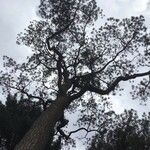
Pinus serotina
Marsh pine · Pocosin pine · Pond pine
Description
Source: leafsnapPinus serotina, commonly known as the pond pine or marsh pine, is a coniferous tree species native to the southeastern United States. It typically thrives in wetland habitats such as swamps, bogs, and riverbanks. The tree can grow up to 30 meters tall and features a straight trunk with a narrow crown. The needles of Pinus serotina are long and slender, measuring between 15-25 cm in length. They are arranged in bundles of three and exhibit a dark green color. The cones produced by this species are also notably long, reaching up to 20 cm, and have thick scales that protect the seeds inside. Pinus serotina plays a crucial ecological role by providing habitat for various wildlife species, including birds and small mammals. Additionally, its extensive root system helps stabilize wetland soils. The wood from Pinus serotina is used for a variety of purposes, including construction lumber, pulpwood for paper production, and fuelwood for heating homes during winter months. Despite its ecological importance and economic value as a timber resource, Pinus serotina populations have been declining due to habitat loss from urbanization and agricultural development. Conservation efforts are underway to protect the remaining populations through habitat restoration projects aimed at preserving wetland habitats where this species thrives.
Care Guide
💧 Water Every 7 days
To ensure the healthy growth of newly planted pond pines during hot summer days, water them twice daily—once in the morning and once in the evening. Avoid watering at midday to prevent root damage. Mature pond pines, which are drought-resistant, should only be watered when the soil is dry. For indoor potted pond pines, mist the foliage twice daily, taking care not to overwater, as this can lead to root rot.
☀️ Light Full sun
Pond pine comes from open habitats, like sunny meadows and the edges of forests, where there is plenty of light. It grows best in full sun but can tolerate partial sun, adjusting well to different light conditions.
What are the sunlight requirements for Pond pine (Pinus serotina)?
Pond pine, also known by its botanical name Pinus serotina, thrives in conditions that meet specific sunlight requirements. For optimal growth, it requires full sun, which is defined as more than 6 hours of direct sunlight daily. Alternatively, it can also grow in partial sun, receiving about 3-6 hours of sunlight each day. It's important to observe the way sunlight moves through your garden to find spots that offer a good balance of light and shade, ensuring the plants remain healthy and happy.
🌡️ Temperature 15–35°C
Pond pine is highly adaptable to a variety of climate conditions, from scorching summers to chilly winters. Still, it has an optimal temperature range for healthy growth. If temperatures rise too high, the plant becomes susceptible to heat and humidity stress, which can lead to its death. In areas where temperatures approach the lower limit of its cold tolerance, it is important to provide insulation to protect the plant.
What is the botanical name of Pond Pine?
The botanical name of Pond Pine is Pinus serotina. This species is known for its unique characteristics and habitat, distinguishing it among the various types of pines.
💨 Humidity
🪴 Soil 6-7
🌱 Fertilizer
Pond pine has specific nutrient needs and does not require heavy fertilization. Spring is the best time to fertilize for optimal growth. Providing nutrients enhances its health, increases its resistance to pests and diseases, and helps support a long lifespan.
🪴 Pot & Repot
✂️ Pruning
Pond pine is a resilient evergreen that thrives in wet, nutrient-poor soils. To maintain its health, prune it in early spring by removing dead branches, which will enhance airflow and sunlight exposure. Additionally, trim any excessively long branches to improve the tree's shape and overall health. Make sure your cuts are clean and made just above healthy buds to prevent pests and diseases.
🌿 Propagating
🐛 Diseases & pets
☠️ Toxicity
Characteristics
- Plant Type
- Tree
- Life Cycle
- Perennial
- Genus
- Pinus
- Family
- Pinaceae
- Hardiness Zone
- 7-9
- Mature Height
- 14.94 m to 24.99 m
- Mature Spread
- 7.92 m to 11.89 m
- Leaf Color
- Dark Green
- Leaf Type
- Evergreen
- Bloom Time
- Mid spring, Late spring
- Planting Time
- Spring, Summer, Autumn
- Harvest Time
- Late summer, Early fall, Mid fall
- Native Area
- Southeast USA