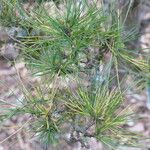
Pinus sibirica
Siberian pine · Siberian Stone Pine · Пөш
Description
Source: leafsnapPinus sibirica, commonly known as the Siberian pine, is a coniferous tree species native to Siberia and parts of Mongolia. This slow-growing evergreen can reach heights of up to 30 meters and typically exhibits a conical shape. The tree’s bark is dark brown and scaly, while its bluish-green needles grow in clusters of two. Siberian pines are renowned for their hardiness, capable of withstanding extremely cold temperatures. Ecologically, they play a crucial role by providing food for various wildlife, including squirrels, birds, and bears. The wood of the Siberian pine is highly valued for its strength and durability, making it a popular choice for construction, such as building houses and crafting furniture. Beyond its practical applications, Pinus sibirica also boasts medicinal properties. Its needles are rich in vitamin C, which historically has been used to treat scurvy and other vitamin deficiencies. Overall, Pinus sibirica is of significant ecological and economic importance in the regions where it thrives.
Care Guide
💧 Water Every 7 days
The Siberian stone pine is a resilient, drought-tolerant evergreen that thrives with minimal watering; it only needs to be watered once every two weeks. This hardy tree effectively conserves moisture throughout the year, adapting well to sporadic rainfall. It showcases exceptional survival skills in arid climates, enduring seasonal dry spells with ease.
How should I water my Siberian stone pine tree?
Watering your Siberian stone pine is a simple task. One way to do it is by using a garden hose to slowly soak the soil. This is ideal for mature trees that require a lot of water. However, smaller trees can be watered with a watering can or a smaller tool. It's important to avoid overhead watering, especially for young trees, as excessive moisture on the leaves can cause disease.
What should I do if I give my Siberian stone pine too much water or too little water?
Overwatering can occur when the soil is not allowing water to drain properly, leading to a decline in the Siberian stone pine. To address this, you can improve drainage by amending the soil or relocating the plant. If growing in a pot, using looser soil and a container with better drainage can help. Overwatering can also result in diseases, which should be treated promptly. On the other hand, if the Siberian stone pine is underwatered, simply watering more frequently will help it recover. To determine if the plant is overwatered, check for discolored or fragile new growth and observe if water is not draining quickly in the growing area. Underwatered plants may have sparse or brown leaves. Additionally, consider if excessive rainfall or high temperatures could be the cause of these symptoms.
How frequently should I water my Siberian stone pine?
A mature Siberian stone pine is highly resistant to drought and can survive solely on rainfall. Generally, you only need to water it once a week during the hottest months. However, you may not need to water it at all during other seasons. The only exception to this is if you have recently planted the tree, in which case regular watering is required to establish the roots. It is crucial to avoid overwatering as the Siberian stone pine cannot tolerate standing water. It's better to err on the side of underwatering than risk overwatering.
How much water does my Siberian stone pine tree need?
During the height of summer, the Siberian stone pine usually requires about one inch of water per week. However, this amount may vary depending on how much it has rained. If it has rained one inch or more, you do not need to water the Siberian stone pine. For newly planted Siberian stone pines, they will need more water during the establishment period, which means you should water them about once every one to two weeks for the first few growing seasons.
How do I water my Siberian stone pine throughout the year?
During the summer months, when it's hottest, the Siberian stone pine tree requires the most water. In this period, you should water the plant once a week if there hasn't been any rainfall. Throughout other times of the year, the plant can often survive without any water at all. However, if the weather is unusually hot in spring or fall, you may need to provide some water, although this is rare. Unlike many other plants, the Siberian stone pine doesn't go into full dormancy during winter. This means it will continue to grow even in the coldest months. However, due to the cool temperatures, the water needs during winter will remain low since the soil won't dry out quickly.
☀️ Light Full sun
Siberian stone pine comes from open habitats, such as sunny meadows and forest margins, that provide abundant light. It performs best in Full Sun but can tolerate Partial Sun, adapting well to a range of sunlight conditions.
What are the sunlight requirements for the Siberian stone pine?
The Siberian stone pine, also known as Pinus sibirica, thrives under specific sunlight conditions to promote its health and growth. It requires full sun exposure, which means it should receive above 6 hours of sunlight daily, to flourish optimally. Alternatively, it can also grow under partial sun, needing about 3-6 hours of sunlight. It's essential to observe how sunlight traverses your garden throughout the day, enabling you to identify locations that offer an ideal mix of light and shadow. This thoughtful placement ensures your Siberian stone pine remains joyful and healthy.
🌡️ Temperature 0–32.2°C
Siberian stone pine tolerates a wide range of climatic conditions, from blazing summers to frosty winters. Still, it has a preferred temperature range for healthy growth. If temperatures become too high, the tree is vulnerable to heat and humidity stress, which can cause it to die. In areas where temperatures approach the lower limit of its cold tolerance, it is important to use insulation measures to safeguard the plant.
What is the Siberian stone pine?
The Siberian stone pine, known botanically as Pinus sibirica, is a species of pine tree. It is native to Siberia and is known for its robust nature and adaptability to its cold environment. This tree plays a significant role in its ecosystem and is also valued for its seeds, known as pine nuts, which are a source of food and oil.
💨 Humidity
🪴 Soil 5-6
🌱 Fertilizer
The Siberian stone pine has specific nutrient needs and does not require heavy fertilization. Applying fertilizer in spring is best for encouraging optimal growth. Providing nutrients enhances its health, raises its resistance to pests and diseases, and helps preserve its long lifespan.
🪴 Pot & Repot Every 12 months
✂️ Pruning
The Siberian stone pine is a slow-growing conifer known for its dense needles and edible seeds. To maintain its health and shape, it is best to prune the tree from early to late winter. Focus on removing any dead branches and shaping the plant. This practice improves air circulation and light penetration, contributing to the pine's overall health and structural integrity.
🌿 Propagating
🐛 Diseases & pets
☠️ Toxicity
Characteristics
- Plant Type
- Tree
- Life Cycle
- Perennial
- Genus
- Pinus
- Family
- Pinaceae
- Hardiness Zone
- 1-7
- Mature Height
- 39.93 m
- Mature Spread
- 11.89 m
- Leaf Color
- Dark Green
- Leaf Type
- Evergreen
- Flower Color
- Yellow, Green, Brown
- Bloom Time
- Early summer, Mid summer
- Planting Time
- Spring, Summer
- Harvest Time
- Late summer, Early fall, Mid fall
- Native Area
- Russia, Kazakhstan, Mongolia, China