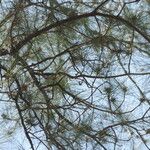
Pinus taeda
Loblolly pine · Southern Pine
Description
Source: leafsnapPinus taeda, commonly known as the loblolly pine, is a species of pine tree native to the southeastern United States. It is a fast-growing evergreen that can reach heights of 30-35 meters and features a straight trunk with rough bark. The needles are long and slender, measuring up to 20 cm in length, and are arranged in clusters of three. The loblolly pine is a vital commercial timber species due to its rapid growth rate and high-quality wood. It is utilized for lumber, pulpwood, plywood, and various other wood products. Additionally, it provides habitat for wildlife, including birds and squirrels. This tree prefers well-drained soils but can tolerate wetter conditions compared to other pines. It thrives in full sunlight but can endure some shade in its early stages. Due to its adaptability to different soil types, the loblolly pine has been widely planted outside its native range. It is a significant plantation crop worldwide, particularly in South America, where it was introduced during the colonial period. Overall, Pinus taeda plays an important economic and ecological role, making it one of the most significant trees in the forests of the southeastern United States today.
🌳 Recognized for its remarkable hardiness, the loblolly pine flourishes even after severe events like wildfires or storms, repopulating areas that were once barren. This fast-growing species is a bioenergy resource, producing environmentally friendly biofuels. In the timber industry, the loblolly pine's rapid maturity and sturdy trunks make it well suited for manufacturing products ranging from paper to houses. Additionally, encouraging studies suggest the loblolly pine could play a role in carbon capture technologies, offering another pathway in the fight against global warming.
🎭 Optimism, Sympathy
Care Guide
💧 Water Every 7 days
The loblolly pine, native to the well-drained soils of the southeastern United States, has a moderate tolerance to drought and needs watering every 1-2 weeks. As an evergreen tree, it requires consistent soil moisture throughout the year, especially during the growing season when adequate water uptake is crucial for its growth.
How can I water my Loblolly pine tree effectively?
Watering your Loblolly pine is a simple task. One way to do it is by using a garden hose to slowly soak the soil. This method is best for mature trees that require a lot of water. For smaller trees, you can use a watering can or other smaller tools. It's important to avoid overhead watering because it can cause disease, especially in young trees.
What should I do if I give my Loblolly pine tree too much or too little water?
Overwatering can occur when the soil is not draining properly, particularly for Loblolly pine trees. If this happens, you can either improve the soil's drainage or relocate the tree to a better spot. If you're growing the tree in a pot, you might need to repot it with looser soil and better drainage. Overwatering can lead to diseases, which should be treated promptly. To remedy underwatering, simply increase the frequency of watering. To determine if your Loblolly pine is overwatered, check the foliage, especially the new growth, for discoloration or easy breakage. Standing water or slow drainage may also indicate excessive moisture. Underwatered trees will have sparse, brown leaves. Consider recent rainfall or high temperatures as possible causes for these symptoms.
How frequently do I need to water my Loblolly pine tree?
A mature Loblolly pine is quite resilient and can mostly rely on rainfall for its water needs. During the hottest months, you might need to water it once a week, but for the rest of the year, watering may not be necessary. However, if you have just planted a Loblolly pine, consistent moisture is important to help it establish roots. Remember, Loblolly pines do not do well with excessive water, so it's better to avoid overwatering.
How often does my Loblolly pine tree need to be watered?
During the height of summer, it is important to water your Loblolly pine to keep it healthy. Normally, you should give it about one inch of water per week. However, you should adjust this amount based on how much it has rained. If there has been one inch or more of rain that week, you won't need to water your Loblolly pine. For newly planted Loblolly pines, they will require more water during the establishment period. Usually, you should water them about once every one to two weeks for the first few growing seasons.
How do I water my Loblolly pine tree throughout the year?
During the summer months, when it's the hottest, the Loblolly pine tree needs the most water. In the absence of rainfall, you should water it about once per week. However, during other times of the year, this tree can often survive without any water. In spring and fall, if the weather is exceptionally hot, you may need to provide some water, but this is rare. Unlike many other plants, the Loblolly pine doesn't go into full dormancy in winter. This means it continues to grow even during the coldest months. However, the water needs during winter remain quite low because the cool temperatures don't dry out the soil quickly.
☀️ Light Full sun
Loblolly pine grows best where it receives sunlight for most of the day, though it can tolerate moderate shade. Excessive shade can lead to weaker growth, while too much sun can stress the plant. It comes from habitats with plentiful sun exposure.
What are the sunlight requirements for Loblolly Pine?
Loblolly Pine needs abundant sunlight to thrive, flourishing best with over 6 hours of sunlight daily, marking it a full sun plant, though it can tolerate partial sun conditions of about 3-6 hours of sunlight. It's vital to observe the movement of sunlight through your garden to find spots that offer the right balance of light and shade, ensuring the plants' well-being.
Can Loblolly Pine grow with artificial lighting?
Yes, Loblolly Pine can grow with artificial lighting, especially when natural sunlight is insufficient. LED lights are recommended as they can provide specific wavelengths needed for the plants. For full sun plants, 30-50W per square foot is needed; partial sun plants require 20-30W per square foot, and full shade plants need 10-20W per square foot. The artificial light source should be placed 12-36 inches above the plant, mimicking natural sunlight for 8-12 hours a day.
What are the common symptoms of insufficient or excessive sunlight in Loblolly Pine?
Common symptoms of insufficient sunlight in Loblolly Pine include smaller new leaves, leggy or sparse growth, faster leaf drop, slowed or halted growth, lighter-colored new leaves, and chlorosis. Symptoms of excessive sunlight include sunscald, leaf curling, wilting, leaf scorching, and chlorosis, where leaves may turn yellow due to the breakdown of chlorophyll, negatively affecting photosynthesis.
How can I address sunlight-related issues for Loblolly Pine both indoors and outdoors?
To address sunlight-related issues for Loblolly Pine, gradually acclimate the plant to more sunlight by positioning it in sunnier locations each week. For indoor plants, use south-facing windows or provide additional light with artificial lighting for at least 8 hours daily. For outdoor placement, carefully choose spots with better sunlight and avoid sudden light intensity changes to prevent sunburn. Pruning nearby trees can help reduce shade, and for smaller plants, consider transplanting during their dormant period to spots with ample sunlight and good drainage. It's important to note that parts of the plant affected by insufficient sunlight might not recover, but new growth will be healthy after adjusting the light exposure.
🌡️ Temperature 20–35°C
The loblolly pine is indigenous to the southern United States and prefers temperatures of 68 to 95 ℉ (20 to 35 ℃). It can endure colder winter temperatures of -3 to 10 ℉ (-19 to -12 ℃). Recommended seasonal adjustments are to provide adequate water during hot, dry summers and to protect the tree from late frosts in early spring.
What is the native region of the Loblolly Pine and its preferred temperature range?
The Loblolly Pine, or Pinus taeda, is native to the southern United States. It prefers temperatures ranging between 68 to 95°F (20 to 35°C). This tree is adaptable to a wide range of temperatures, but it thrives best within its preferred temperature range for optimal growth.
How does the Loblolly Pine adapt to seasonal temperature changes?
To adapt to seasonal temperature changes, the Loblolly Pine requires adequate watering during the hot and dry summer months to cope with high temperatures. Additionally, it needs protection from late frosts in early spring to prevent damage. While the Loblolly Pine has some tolerance to cold, with temperatures above 0°C generally not requiring additional measures, when the temperature is expected to drop below 0°C, temporary protective measures such as wrapping the plant in plastic film, fabric, or other materials are necessary. These measures should be removed once the temperature rises again.
What are the symptoms of low temperature effects on Loblolly Pine, and how can they be managed?
Loblolly Pines have a moderate tolerance to low temperatures and perform best above 20°C. When temperatures fall below -5°C, the leaves may droop and, in severe cases, wilt and fall off. To manage low temperature damage, trim off frost-damaged parts, wrap the plant in non-woven fabric or cloth for protection, and construct a wind barrier to shield it from cold winds. These steps help the pine withstand and recover from cold stress.
How should Loblolly Pine be cared for during high temperatures?
During periods of high temperature, especially above 35°C, Loblolly Pines may exhibit signs of stress such as lighter leaf color, dry and withered leaf tips, curled leaves, and increased susceptibility to sunburn. To care for Loblolly Pine in high temperatures, trim away sunburned and dried-up parts. Relocate the plant to provide shade during the midday and afternoon sun, or use a shade cloth. Ensuring the soil remains moist by watering the plant in the morning and evening is also crucial to help it cope with the heat.
💨 Humidity
🪴 Soil 4-6
🌱 Fertilizer
Loblolly pine has specific nutrient needs and does not require excessive fertilization. Fertilizing in spring is the best time to encourage optimal growth. Providing nutrients improves its health, increases its resistance to pests and diseases, and helps sustain its long lifespan.
Why is it important to add fertilizer to my Loblolly pine?
To promote healthy growth in Loblolly pine, it is essential to fertilize it in the spring. This plant has a long lifespan and requires support. Moreover, supplementing the soil with nutrients can enhance its overall health, enabling it to better resist common pests and diseases that can hinder growth or decrease its lifespan.
When should I fertilize my Loblolly pine tree?
Loblolly pine is not like typical garden plants because it doesn't need as many nutrients. However, sometimes the growing medium doesn't provide enough nutrients for it to grow properly. The best time to fertilize Loblolly pine is in the spring, before new growth begins.
When is it better to not apply fertilizer to my Loblolly pine tree?
Loblolly pine, unlike other plants, does not need frequent fertilization. Applying too much fertilizer can actually harm it and lead to dying back. For best results, only fertilize in the spring and avoid adding any fertilizer or organic matter during the summer, fall, and winter seasons.
What kind of plant food does my Loblolly pine tree need?
When choosing fertilizer for your Loblolly pine, consider the age of your plant. While it doesn't need many extra nutrients, a balanced plant food can still promote healthy root development and growth. Avoid fertilizers with high nitrogen contents.
How can I help my Loblolly pine grow better?
Fertilizing Loblolly pine is crucial, not only the timing but also the method. To fertilize, apply it once in the spring at the plant's base, taking care to avoid the trunk. If you opt for granulated fertilizer, add a thin layer of soil to cover the pellets. This helps the fertilizer to be better absorbed by the soil.
🪴 Pot & Repot Every 12 months
✂️ Pruning
The loblolly pine features a tall trunk and needle-like leaves. To minimize sap loss and reduce the risk of disease, it's best to prune this tree from early to late winter. Key techniques for pruning include removing dead branches and thinning the tree to improve air circulation. When cutting, be sure to make the cut just outside the branch collar to ensure proper healing.
🌿 Propagating
🐛 Diseases & pets
☠️ Toxicity
Characteristics
- Plant Type
- Tree
- Life Cycle
- Perennial
- Genus
- Pinus
- Family
- Pinaceae
- Hardiness Zone
- 9-10
- Mature Height
- 29.87 m to 35.05 m
- Mature Spread
- 0.4 m to 1.52 m
- Leaf Color
- Green, Yellow, Gold
- Leaf Type
- Evergreen
- Flower Color
- Yellow, Purple, Red, Brown, Gold, Cream, Lavender, Burgundy
- Flower Size
- 2.54 cm
- Bloom Time
- Mid spring, Late spring
- Planting Time
- Spring, Autumn
- Harvest Time
- Mid summer, Late summer, Early fall
- Native Area
- Southeastern United States