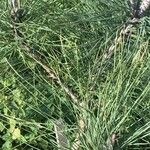
Pinus torreyana
Torrey pine · Del Mare Pine · Soledad Pine · Del Mar pine
Description
Source: leafsnapPinus torreyana, commonly known as the Torrey pine, is a rare and endangered species of pine tree native to the coastal regions of Southern California. It was named after John Torrey, a renowned American botanist who first described the species in 1853. The Torrey pine typically grows to a height of 20-30 meters and has a distinctive appearance characterized by its asymmetrical branches and long needles that grow in pairs. These bluish-green needles are generally around 20-30 cm long. The tree's cones are also unique, measuring around 15-20 cm in length and featuring thick scales that protect the seeds from predators. Pinus torreyana has adapted to survive in harsh coastal environments, where it faces strong winds, salt spray from ocean waves, droughts, and wildfires. It plays a vital role in stabilizing sand dunes along the coastlines where it grows. Due to habitat loss caused by urbanization along California's coastlines and the effects of climate change, such as prolonged droughts, it has become difficult for young trees to survive. Consequently, Pinus torreyana has been listed on both California's state and the federal endangered species lists since 1987. Conservation efforts are in place by various organizations, such as The Torrey Pines State Natural Reserve, which aims to protect this rare species for future generations through habitat restoration programs and other initiatives.
🎭 Optimism, Sympathy
Care Guide
💧 Water Every 7 days
The Torrey pine is well-suited to semi-arid coastal environments and is known for its ability to thrive with minimal water, showcasing impressive drought tolerance. To care for it, water once every 1-2 weeks, ensuring the soil dries out between waterings. This evergreen conifer is usually grown outdoors and is resilient in a variety of soil types.
☀️ Light Full sun
Torrey pine does best in locations where the sun is unobstructed all day. It can, however, tolerate sites where the sun’s rays are partly blocked. The tree comes from habitats where direct, unfiltered sunlight is common. Too little light can impede its growth, while excessive light may potentially stress the plant.
What are the sunlight requirements for a Torrey pine?
Torrey pine requires full sun exposure, which means it thrives in areas receiving more than 6 hours of sunlight daily. It can also endure in partial sun, with about 3-6 hours of sunlight. Originating from environments with unfiltered sunlight, the Torrey pine can experience hindered growth with insufficient sunlight, while too much sun might cause stress. It's essential to observe your garden's sunlight patterns to ensure your Torrey pine gets the right balance of light and shade for optimal health.
How can artificial lighting support Torrey pine growth indoors?
Indoor Torrey pines require adequate lighting to grow optimally, especially when natural sunlight is insufficient. Artificial lights, particularly LED lights that can be customized to specific plant needs, offer a vital solution. For full sun plants, 30-50 watts per square foot of artificial light is needed; partial sun plants require 20-30 watts per square foot, and full shade plants need 10-20 watts per square foot. Position the light source 12-36 inches above the plant to mimic natural sunlight, ensuring the plant receives 8-12 hours of light per day.
What are the symptoms of light deficiency or overexposure in Torrey pines?
Light deficiency in Torrey pines can lead to symptoms such as smaller new leaves, leggy or sparse growth, faster leaf drop, slower or halted growth, and lighter-colored or yellowing leaves indicating insufficient chlorophyll. Overexposure to sunlight can cause sunscald, leaf curling, wilting, leaf scorching, and chlorosis. These symptoms highlight the importance of providing the right amount of sunlight to maintain plant health.
What are the solutions for light-related issues in Torrey pines?
To address light-related issues in Torrey pines, gradually increase sunlight exposure to achieve at least 6 hours of direct sun daily. Use south-facing windows and keep curtains open for optimal sunlight, or employ artificial light for plants that are large or not easily movable. For outdoor Torrey pines, move them to sunnier spots gradually to prevent sunburn. Reducing obstructions like trimming tree branches can also improve sunlight access. If necessary, transplant smaller plants during their dormant period to locations with better sun exposure and drainage.
🌡️ Temperature 15–37.8°C
Torrey pine is native to regions where temperatures range from 59 to 100.4 °F (15 to 38 ℃). It prefers warmer conditions but can tolerate slight drops in temperature. Seasonal adjustments may be needed to ensure optimal growth.
What climates are suitable for the Torrey pine?
The Torrey pine, or Pinus torreyana, is native to climates experiencing temperatures ranging from 59 to 100.4 °F (15 to 38 °C). It thrives in warmer climates but can tolerate slight dips in temperature. The tree has some cold tolerance and doesn't generally require special measures if the temperature is above -5°C. However, if temperatures are expected to drop below -5°C, temporary cold protection measures, such as wrapping the plant in plastic film or fabric, are necessary. These protective measures should be removed once temperatures rise again to ensure optimal growth.
How does the Torrey pine respond to low temperatures?
The Torrey pine has a moderate tolerance for low temperatures, flourishing best when temperatures remain above 15°C. During winter, it's essential to keep the tree above -5°C. If temperatures fall below -10°C, the tree's leaves may start to droop; they might recover in mild cases but will wilt and eventually fall off in severe situations. To protect the tree from frost damage and cold winds, trim the frost-damaged parts and wrap the tree with non-woven fabric or cloth. Constructing a wind barrier can also offer additional protection against the cold.
How does the Torrey pine react to high temperatures?
During the summer, the Torrey pine should be kept below 38°C. When temperatures exceed 43°C, the leaves may lighten in color, the tips might dry and wither, leaves can curl, and the tree becomes more prone to sunburn. To mitigate damage from high temperatures, trim away the sunburned and dried-up parts of the tree. Move the tree to a shaded location or use a shade cloth to protect it from the midday and afternoon sun. Watering the tree in the morning and evening helps keep the soil moist and supports the tree's health in high temperatures.
💨 Humidity
🪴 Soil 6-7
🌱 Fertilizer
The Torrey pine has particular nutrient needs and does not require heavy fertilization. Spring is the best time to apply fertilizer for optimal growth. Supplying nutrients enhances its health, increases its resistance to pests and diseases, and helps sustain its long lifespan.
🪴 Pot & Repot Every 12 months
✂️ Pruning
Torrey pine benefits greatly from pruning between early and late winter. This process includes removing dead or diseased branches and thinning crowded areas to improve airflow. Pruning in this manner helps create a healthier tree structure, reduces the risk of pests, and maintains the tree's natural shape. Be sure to use clean, sharp tools for the best results.
🌿 Propagating
🐛 Diseases & pets
☠️ Toxicity
Characteristics
- Plant Type
- Tree
- Life Cycle
- Perennial
- Genus
- Pinus
- Family
- Pinaceae
- Hardiness Zone
- 8-11
- Mature Height
- 7.92 m to 17.07 m
- Mature Spread
- 7.62 m to 11.89 m
- Leaf Color
- Dark Green
- Leaf Type
- Evergreen
- Flower Color
- Yellow, Green, Brown
- Bloom Time
- Early spring, Mid spring
- Planting Time
- Spring, Autumn
- Harvest Time
- Late summer, Early fall, Mid fall