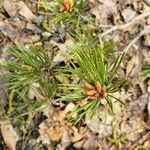
Pinus virginiana
Scrub pine · Virginia pine · Jersey pine · Old field pine · Poverty pine
Description
Source: leafsnapPinus virginiana, commonly known as Virginia pine, is a species of pine tree native to the eastern United States. This medium-sized evergreen can grow up to 30 meters tall with a trunk diameter reaching up to 60 centimeters. The bark of the Virginia pine is reddish-brown and scaly, while its dark green needles grow in pairs, measuring about 5 to 10 centimeters in length. Virginia pine typically flourishes in dry or rocky soils, often found on hillsides or ridges. It has adapted well to harsh environments, such as droughts and wildfires, thanks to its deep root system that enables access to water even during dry periods. The wood of the Virginia pine is used for various purposes, including construction lumber, pulpwood for paper production, and Christmas trees, appreciated for its attractive appearance. Additionally, the tree provides habitat for various wildlife species, such as birds and small mammals. Despite its resilience, Virginia pine is susceptible to damage from pests like bark beetles, which can cause significant harm if left unchecked. It is also impacted by air pollution, which can lead to stunted growth or even death. Overall, Pinus virginiana plays a crucial role in eastern U.S. ecosystems by providing habitat for wildlife while also serving as an important source of timber products for human use.
🌳 Despite its unassuming look, virginia pine serves an important role in cultural celebrations. It is widely harvested for use as Christmas trees, bringing festive spirit into households. Aside from this holiday function, it is closely used in rustic crafts, supplying raw materials for handmade ornaments and wreaths. Its wood, firm yet easy to work, is popular with DIY enthusiasts and is beginning to be recognized in the crafting community for its suitability for woodcarving and furniture making.
🎭 Optimism, Sympathy
Care Guide
💧 Water Every 7 days
Virginia pine, native to dry upland areas, is moderately drought-tolerant. It thrives with deep watering every 1-2 weeks in well-drained soil. As an evergreen conifer, it retains water in its needles, making it well-suited for outdoor growth despite temperature fluctuations.
How should I water my Virginia pine tree to keep it healthy?
Watering your Virginia pine is a simple task. To water the tree, just turn on your garden hose and use it to slowly soak the soil. This is the best way to water mature Virginia pine trees because they require a large amount of water. However, for smaller trees, you can use a watering can or a smaller watering tool. It's important to avoid watering the leaves too much, as this can cause disease, especially in young trees.
What should I do if I give my Virginia pine tree too much or too little water?
Poor soils can sometimes lead to overwatering issues for Virginia pine trees. When the soil doesn't allow water to drain effectively, the plant's health is likely to decline. To address this problem, you have two options. You can either improve the soil's drainage by adding amendments or transplant the Virginia pine to a more suitable location. If you are growing the tree in a pot, repotting it with looser soils and a container that facilitates better drainage might be necessary. Overwatering can also make the plant susceptible to diseases, so immediate treatment is advisable in such cases. On the other hand, if your Virginia pine is underwatered, simply increasing the frequency of watering will help it recover and regain optimum health. One way to determine if your Virginia pine has been overwatered is by examining its foliage, particularly the new growth. Discolored or easily breakable new growth can be a clear indication of excess moisture. Additionally, standing water or slow drainage in the tree's growing area suggests that the soil is overly moist. In the case of underwatered Virginia pine trees, sparse and brown leaves are common symptoms. Considering recent heavy rainfall or consistently high temperatures can help you assess whether these factors have contributed to your plant's condition.
How many times do I need to water my Virginia pine?
A mature Virginia pine is highly adaptable to drought conditions and can usually survive solely on rainfall. Typically, you only need to water it once a week during the hottest months of the year, and you may not need to water it at all in other seasons. However, if you have recently planted a Virginia pine, it is important to water it regularly to support root establishment and maintain consistent soil moisture. Remember that standing water is not well-tolerated by this tree, so if you are unsure, it is better to avoid watering it too much rather than overwatering it.
How much water should I give my Virginia pine?
During the height of summer, it is important to water your Virginia pine. Normally, it requires about one inch of water per week. However, this amount may vary if there has been rainfall. If it has rained an inch or more that week, you can skip watering your Virginia pine. For newly planted Virginia pines, they will need more water during the establishment period. Generally, this means watering once every one to two weeks for the first few growing seasons.
How do I water my Virginia pine tree all year round?
During the summer months when it is hottest, the Virginia pine tree needs the most water. If it doesn't rain, you should water it about once a week. However, during other times of the year, this plant can often survive without any water at all. In spring and fall, you may need to give it some water if the weather is very hot, but this is rare. Unlike most plants, the Virginia pine tree doesn't fully go into dormancy in winter, so it will continue to grow even in the coldest months. However, because the temperatures are cool, the water needs during winter will be low since the soil won't dry out quickly.
☀️ Light Full sun
Virginia pine strongly needs a substantial amount of daily light to support vigorous growth. It can withstand somewhat shaded situations, though its growth may be reduced. Its native environment where it naturally occurs has abundant light. Both excessive shade and too much exposure can negatively impact its health.
What are the sunlight requirements for Virginia Pine?
Virginia Pine requires a significant amount of daily light for optimal growth, thriving best in full sun conditions which means above 6 hours of sunlight. It can tolerate partial sun, about 3-6 hours of sunlight, but this may result in slower growth rates. The plant's natural habitat provides it with ample exposure to light, highlighting the importance of ensuring enough light for its health and growth. It's also suggested to observe the movement of sunlight through your garden to find the perfect balance for your plants.
Can Virginia Pine grow with artificial lighting?
Yes, Virginia Pine can grow with artificial lighting, especially when natural sunlight is insufficient, like in winter or less sunny spaces. Indoor plants benefit from the right type of artificial lighting, such as LED lights, which can be customized to provide specific wavelengths needed for the plant. For optimal growth, full sun plants require 30-50W/sq ft of artificial light, partial sun plants need 20-30W/sq ft, and full shade plants require 10-20W/sq ft. The light source should be placed 12-36 inches above the plant and turned on for 8-12 hours per day to mimic natural daylight hours.
What are the symptoms of inadequate light exposure in Virginia Pine?
Virginia Pine may show several symptoms if it doesn't receive enough light, including smaller new leaves than previously matured ones, leggy or sparse growth due to longer spaces between leaves or stems, faster leaf drop as a conservation measure, slower or halted growth indicating survival mode, and lighter-colored new leaves or chlorosis indicating insufficient chlorophyll. Excessive light can lead to sunscald, leaf curling, wilting, and leaf scorching, which are harmful to the plant's health.
How can I address light-related issues in Virginia Pine?
To address light-related issues in Virginia Pine, gradually acclimate the plant to more sunlight if it's indoors by moving it closer to a south-facing window or using artificial lighting for at least 8 hours a day. For outdoor plants, find the best sunlight spot and move the plant there gradually to avoid sunburn. Pruning or transplanting can help reduce obstructions to sunlight. Note that while affected parts may not recover, new growth will be healthy with improved light exposure.
🌡️ Temperature 0–32.2°C
The Virginia pine requires a native growth environment with temperatures ranging from 0 to 32 ℃ (32 to 89.6 ℉). It prefers temperatures of 20 to 27 ℃ (68 to 80.6 ℉) during the growing season. In winter it can withstand temperatures as low as -29 ℃ (-20.2 ℉).
What are the ideal growing conditions for Virginia Pine?
Virginia pine thrives in its native growth environment with a temperature range from 0 to 32°C (32 to 89.6°F). Optimal growth occurs within a temperature range of 20 to 27°C (68 to 80.6°F) during the growing season. Remarkably cold-tolerant, the Virginia pine can endure winter temperatures down to -29°C (-20.2°F) without requiring additional frost protection measures. To prepare for winter, it's recommended to water the plant generously before the first freeze in autumn to ensure the soil remains moist and enters a frozen state, thus preventing drought and water scarcity during winter and early spring.
How does Virginia Pine react to extreme low temperatures?
Although Virginia pine is notably cold-tolerant, maintaining winter temperatures above -35°C is crucial. Should the temperature fall below this threshold, the tree may not show immediate damage during winter, but come spring, the branches might become brittle and dry, with no new shoots emerging. To address this issue, it is advisable to prune away any dead branches that have failed to produce new leaves in spring.
What should I do if my Virginia Pine experiences high temperatures?
Virginia pine is not tolerant of high temperatures. Experiencing temperatures above 32°C (89.6°F) can lead to significant leaf drop, and in severe cases, the entire plant may wither and die. To mitigate damage, trim away sunburned and dried-up parts of the plant. Relocating the plant to a shaded location or using a shade cloth can provide protection from the midday and afternoon sun. Ensuring the soil remains moist by watering the plant in the morning and evening is also beneficial.
💨 Humidity normal (40-60%)
This plant will thrive in moderate humidity, which is probably the level in your home. However, misting it a few times a week can be very beneficial. Make sure the room has good ventilation.
🪴 Soil 5-6
🌱 Fertilizer
Virginia pine has specific nutrient needs and does not require heavy fertilization. The best time to fertilize for optimal growth is in spring. Providing nutrients improves its health, strengthens its resistance to pests and diseases, and helps sustain its long lifespan.
Why should I put fertilizer on my Virginia pine tree?
To promote healthy growth in Virginia pine, it is recommended to fertilize it in the spring. Keep in mind that this plant has a long lifespan and requires support. In addition, enriching the soil with nutrients can boost its overall health, helping it ward off common pests and diseases that can hinder growth or reduce its lifespan.
When should I put fertilizer on my Virginia pine tree?
Virginia pine is a unique plant that doesn't need as many nutrients as your typical garden plants. The growing medium it's planted in often doesn't provide enough nutrients on its own. That's why it's best to fertilize Virginia pine in the spring, right before new growth starts to appear.
When is it not a good time to fertilize my Virginia pine tree?
Virginia pine does not need regular fertilization like some other plants. Applying too much fertilizer can actually harm it by causing it to die back. If you decide to fertilize, only do so in the spring and avoid adding fertilizer or organic matter during the summer, fall, and winter.
What kind of fertilizer does my Virginia pine tree need?
The age of your plant is important when choosing fertilizer. Virginia pine doesn't need a lot of nutrients, so a balanced plant food is recommended. This will promote healthy root development and growth. Avoid fertilizers with high nitrogen content.
How should I fertilize my Virginia pine?
To properly fertilize Virginia pine, it is crucial to consider both the timing and method. Begin by applying the fertilizer in the spring, at the plant's base. Be careful not to get any fertilizer on the trunk. If you are using granulated fertilizer, cover the pellets with a thin layer of soil. This will aid in the absorption of the fertilizer into the soil.
🪴 Pot & Repot Every 12 months
✂️ Pruning
Virginia pine has needle-like foliage and a conical shape. It's best to prune the tree between early and late winter to remove any dead or damaged branches. This improves airflow and helps reduce pests. Additionally, you should trim any overgrown limbs to maintain the tree's shape, but avoid making severe cuts. This practice promotes health, encourages denser growth, and preserves the natural form of the Virginia pine.
🌿 Propagating
🐛 Diseases & pets
☠️ Toxicity
The Virginia pine is not toxic. Native Americans used it as a refreshing tea and a health elixir to combat colds. It was also used in a celebratory drink during rituals when an infusion made with the needles would be mixed with apple juice.
Characteristics
- Plant Type
- Tree
- Life Cycle
- Perennial
- Genus
- Pinus
- Family
- Pinaceae
- Hardiness Zone
- 3-7
- Mature Height
- 9.14 m to 17.98 m
- Mature Spread
- 6.1 m
- Leaf Color
- Green, Blue, Yellow, Gold
- Leaf Type
- Evergreen
- Flower Color
- Yellow, Green, Gold
- Bloom Time
- Late spring, Early summer
- Planting Time
- Spring, Summer
- Harvest Time
- Mid summer, Late summer, Early fall
- Native Area
- Eastern United Stated