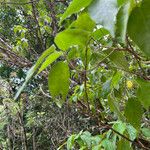
Pipturus argenteus
Description
Source: leafsnapPipturus argenteus, known as false stinger, native mulberry, white mulberry, white nettle, amahatyan (Chamorro), and ghasooso (Carolinian), is a small tree native to Malesia, Papuasia, northern and eastern Australia, Micronesia, Melanesia and Polynesia.
Care Guide
💧 Water
☀️ Light Partial sun
False stinger is native to habitats like forest understories and rocky sites, where it grows in natural shade. It prefers partial sun but can tolerate either full sun or full shade, showing its adaptable and hardy nature.
🌡️ Temperature 20–37.8°C
False stinger comes from tropical areas, where the climate is usually warm and humid. Consequently, it is well suited to high temperatures and moisture. It does not tolerate sudden temperature changes and prefers a stable thermal environment, so avoiding temperature fluctuations indoors is important. It typically cannot endure cold and requires warmer conditions to grow. If the surrounding temperature falls too low, the plant may stop growing or even die.
💨 Humidity
🪴 Soil 6-7
🌱 Fertilizer
Fertilizing is essential for the care of False stinger. Supplying nutrients regularly during the growing season maintains the energy required for its showy foliage and supports overall growth. Failing to provide fertilizer can lead to unhealthy leaves, reduced ornamental value, and stunted or weak growth that is prone to breaking.
🪴 Pot & Repot
✂️ Pruning
The False Stinger is known for its striking silver foliage and rapid growth. To ensure healthy development, prune it in early spring by trimming damaged branches and removing dead wood. This improves air circulation. Regular maintenance also helps shape the plant, control its size, and enhance its resilience in various conditions.
🌿 Propagating
🐛 Diseases & pets
☠️ Toxicity
Characteristics
- Plant Type
- Shrub
- Life Cycle
- Perennial
- Genus
- Pipturus
- Family
- Urticaceae
- Hardiness Zone
- 10-12
- Mature Height
- 3.05 m to 10.06 m
- Mature Spread
- 2.13 m to 4.88 m
- Leaf Color
- Green, Silver
- Leaf Type
- Deciduous
- Flower Color
- White, Cream
- Flower Size
- 0.20 cm to 0.25 cm
- Bloom Time
- Spring, Summer
- Planting Time
- Spring, Summer, Autumn
- Harvest Time
- Late spring, Summer, Early fall, Mid fall
- Native Area
- Indonesia, Vanuatu, Philippines, Madagascar, Fiji