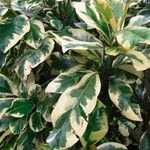
Pisonia umbellifera
Umbrella catchbirdtree · Birdcatcher Tree · Bird-lime Tree
Description
Source: leafsnapPisonia umbellifera, commonly known as the umbrella tree or birdcatcher tree, is a species of flowering plant in the Nyctaginaceae family. It is native to the tropical regions of the Pacific and Indian Oceans, including Australia and Southeast Asia. The plant can reach heights of up to 20 meters and has a trunk diameter of up to 60 centimeters. Its large, glossy leaves have a distinctive umbrella-like shape, inspiring its common name. Pisonia umbellifera produces small white flowers, which are followed by clusters of greenish-yellow fruits containing small seeds that birds disperse. The tree's sticky sap can trap birds, earning it the name "birdcatcher tree." Additionally, it has been used in traditional medicine to treat ailments such as fever and skin diseases. This tree plays a vital role in many tropical ecosystems, providing habitat for various bird species and other wildlife. However, it can become invasive in areas where it has been introduced outside its native range. Overall, Pisonia umbellifera is a fascinating and unique plant with significant ecological benefits but also poses potential negative impacts if not managed properly outside its natural habitat.
💡 The birdlime tree produces sticky fruit that was traditionally used to trap native birds in the area. Once captured, the birds' feathers were plucked. Some birds were released to regrow their feathers for the following year, while others were consumed as food. The harvested feathers were then used to create capes, leis, and helmets.
Care Guide
💧 Water Every 7 days
The Birdlime tree thrives in tropical climates with consistent moisture and high humidity. While it can tolerate moderate drought, it prefers soil that maintains stable moisture levels. When grown indoors, it flourishes in humid conditions, which you can create by misting the plant or using pebble trays. Water the Birdlime tree every two weeks to keep it healthy.
☀️ Light Full sun
The birdlime tree grows best in direct, unshaded sunlight but can also tolerate moderate sun exposure. Its native habitats receive abundant sunlight, which supports its healthy growth. Both excessive and insufficient sunlight can negatively affect the birdlime tree, altering its overall condition and diminishing its vitality.
What are the sunlight requirements for Birdlime trees?
Birdlime trees require full sun, which means they thrive in conditions where they receive above 6 hours of sunlight daily. However, they can also withstand partial sun, about 3-6 hours of sunlight. It is important to watch how sunlight moves through your garden to ensure that you choose spots that provide the perfect balance of light and shade for your plants, ensuring their happiness and healthy growth.
How does sunlight affect the growth of Birdlime trees?
Birdlime trees thrive under the unobstructed light of the sun and can also tolerate moderate sunlight exposure. The native habitats of the Birdlime tree feature abundant sunlight, contributing to its healthy growth. Insufficient or excessive sunlight might affect the tree negatively, altering its condition and reducing its vitality. It is essential to ensure that Birdlime trees get enough sunlight to maintain their health and vigor.
What should I do if my Birdlime tree does not get natural sunlight?
If your Birdlime tree does not receive sufficient natural sunlight, especially during winter or in less sunny spaces, artificial lighting can be an effective solution. Adequate lighting is crucial for the optimal growth of indoor plants. LED lights are often recommended because they can provide specific wavelengths of light needed by the plants. For full sun plants, 30-50W/sq ft of artificial light is needed, partial sun plants require 20-30W/sq ft, and full shade plants need 10-20W/sq ft. The light source should be placed 12-36 inches above the plant, mimicking natural sunlight, and kept on for about 8-12 hours per day to promote faster, healthier growth.
What are the symptoms of light deficiency in Birdlime trees?
Symptoms of light deficiency in Birdlime trees include smaller new leaves compared to previous ones, leggy or sparse growth, faster leaf drop, slower or no new growth, lighter-colored new leaves, chlorosis, sunscald, leaf curling, wilting, and leaf scorching. These symptoms indicate that the tree is not receiving adequate sunlight, affecting its ability to photosynthesize and maintain healthy growth.
How can I manage light deficiency symptoms in Birdlime trees?
To manage light deficiency symptoms in Birdlime trees, gradually move plants to a sunnier location to ensure they receive at least 6 hours of direct sunlight daily. Use a south-facing window for indoor plants, and consider using artificial light if the plant is large or not easily movable. For outdoor plants, gradually adapt them to more sunlight to avoid sunburn. Reducing obstructions that block sunlight, such as pruning trees, or transplanting smaller plants to sunnier locations during their dormant period, can also help. While parts of the plant affected by insufficient sunlight may not recover, new growth will be healthy with increased light exposure.
🌡️ Temperature 20–37.8°C
The birdlime tree is native to areas where temperatures range from 68 to 100 ℉ (20 to 38 ℃). Although it grows best in warmer climates, attentive care during cooler months can help maintain its health. Seasonal adjustments may be necessary.
What is the native temperature range for the Birdlime tree?
The Birdlime tree, botanically known as Pisonia umbellifera, is native to regions where temperatures range between 68 to 100°F (20 to 38°C). It flourishes in warmer climates, indicating its preference for heat. During cooler months, however, the Birdlime tree requires proper care and seasonal adjustments to maintain its health, highlighting the necessity of monitoring and adjusting its environment to ensure optimal growth conditions.
How should you care for a Birdlime tree during the winter?
During the winter, it's crucial to protect the Birdlime tree from cold temperatures, as it is extremely heat-loving. If grown outdoors, it is advisable to bring the tree indoors to shield it from the cold. Positioning it near a bright window will ensure it gets enough light, but make sure it's placed at a safe distance from heaters to avoid damage. Keeping the indoor temperature above 20°C is beneficial for the tree’s health, while temperatures nearing 5°C or lower are harmful and should be avoided to prevent damage.
What are the symptoms and solutions for Birdlime tree exposed to low temperatures?
Birdlime tree shows an intolerance to low temperatures, thriving best above 20°C. When exposed to temperatures below 1°C, leaves may begin to lighten in color, eventually turning brown or black as a result of frost damage, alongside symptoms like wilting and drooping. To manage such situations, it’s advisable to trim off the frost-damaged parts and immediately move the tree to a warm environment indoors. Positioning the plant near a south-facing window ensures ample sunlight, while also avoiding placement near heaters or air conditioning vents to prevent air dryness.
How do you manage Birdlime tree care in high temperatures?
In the summer, when temperatures climb, it's important to keep the Birdlime tree below 38°C to prevent heat stress. Exposure to temperatures above 43°C can lead to lighter leaf colors and increase susceptibility to sunburn. Addressing this involves trimming away sunburned or dried parts and relocating the plant to a shaded area, particularly away from the intensive midday and afternoon sun. Additionally, watering the plant in the morning and evening can help keep the soil adequately moist, supporting its wellbeing during intense heat periods.
💨 Humidity
🪴 Soil 6-7
🌱 Fertilizer
The optimal period to apply fertilizer to a Birdlime tree is during the initial stages of spring, when it's exiting its dormant state. This helps to stimulate overall growth as well as the development of flowers. The act of fertilizing not only aids in the enhancement of leaves, stems, and branches, but also fosters the growth of big, colorful, and durable blossoms. Moreover, it assists in the transportation of nutrients from the roots to the flowers, subsequently strengthening the plant's overall wellbeing and its ability to resist diseases.
🪴 Pot & Repot
✂️ Pruning
The Birdlime tree is a fast-growing shrub that benefits from pruning in late winter. During this time, focus on removing dead branches and thinning the shrub to improve air circulation. Regular pruning promotes the plant's health and helps prevent it from becoming invasive. To prevent the spread of disease and enhance the plant's ornamental appeal, be sure to disinfect your tools before using them.
🌿 Propagating
🐛 Diseases & pets
☠️ Toxicity
Characteristics
- Plant Type
- Tree, Shrub
- Life Cycle
- Perennial
- Genus
- Pisonia
- Family
- Nyctaginaceae
- Hardiness Zone
- 10-11
- Mature Height
- 10.06 m
- Mature Spread
- 3.05 m
- Leaf Color
- Green
- Leaf Type
- Evergreen
- Flower Color
- White, Pink
- Flower Size
- 5.08 cm to 11.43 cm
- Bloom Time
- Late spring, Summer
- Planting Time
- Autumn
- Harvest Time
- Late summer, Fall