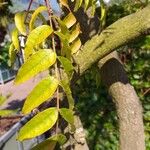
Pistacia chinensis
Chinese pistache · Chinese pistachio
Description
Source: leafsnapPistacia chinensis, commonly known as the Chinese pistache, is a deciduous tree native to China and Taiwan. It belongs to the Anacardiaceae family and can grow to heights of 10-20 meters, with a spread of 10-15 meters. The tree features an attractive, rounded crown with dark green leaves that transform into brilliant shades of orange, red, and purple in the fall. Renowned for its ornamental value and hardiness, the Chinese pistache thrives in a variety of soil types and climates. Once established, it can tolerate drought conditions but performs best in well-drained soil with moderate moisture levels. In the spring, the tree produces small, greenish-yellow flowers that later develop into clusters of small red berries in the fall. Although the berries are edible, they are not commonly consumed because of their bitter taste. Chinese pistache trees are frequently used in landscaping due to their appealing foliage and ability to provide shade during hot summer months. Additionally, their strong wood makes them valuable for timber production. Overall, Pistacia chinensis is a versatile plant offering both aesthetic beauty and practical uses, making it an excellent choice for any garden or landscape project.
🌳 Known for its vivid autumn foliage in red and yellow, chinese pistache's appeal goes beyond appearance. Its dense wood is valued for making traditional Chinese furniture. The tree's fruit produces a deep green oil used in East Asia to condition leather. When crushed, the fruit yields a natural dye for textiles and artwork, a practice rooted in ancient traditions.
🎭 Benevolence
Care Guide
💧 Water Every 7 days
The Chinese pistache tree flourishes in temperate environments where there is moderate moisture and a brief tolerance for drought. It's important to water the tree every 1 to 2 weeks, ensuring that the soil stays moist but not overly wet. When grown outdoors, applying mulch can help retain moisture during its active growth phase.
How should I water my Chinese pistache tree?
To ensure excellent root development, consider placing a garden hose at the base of your plants. Avoid spraying the leaves directly, as this can lead to overwatering. Outdoor plants in direct sunlight may require more watering for their leaves. For root moistening, try using bubblers or soaker hoses that cover each plant or the entire garden bed. When adding or removing plants, use soaker hoses to encourage deep root growth. After watering, drain any excess water and allow the soil to dry before watering again. Watering at ground level helps prevent diseases. On sunny days, it may be beneficial to spray the entire bush with water. Regardless of whether your plants are potted or in-ground, remember that Chinese pistache prefers deep watering rather than light sprinkling.
What do I need to do if I give too much or too little water to Chinese pistache?
When a Chinese pistache is overwatered, it may display symptoms such as yellowing, dropping, and wilting leaves. The plant might also have a dull and unhealthy appearance, with mushy stems. If these signs begin to show, it is advisable to adjust your watering schedule. However, wilting can also be a sign of under watering. In this case, the leaves will become crispy and dry. To determine if watering is necessary, check the soil for dryness. If watering alone does not suffice, provide a thorough watering. Although enough water will help the Chinese pistache recover, its leaves may still turn dry and yellow due to damage to the root system. Once the plant returns to normal, the yellowing of the leaves will stop. When keeping the Chinese pistache indoors, always check the moisture levels in the pot and refrain from overwatering. Look out for black spots as they indicate excessive watering. In such cases, allow the soil to dry by refraining from watering for a few days. Overwatering can lead to root rot, so if you observe discolored and slimy roots, consider transferring the plant to a different pot. It is crucial to prevent root rot by avoiding excessively soggy soil. When planting the Chinese pistache outdoors, ensure the soil is adequately hydrated. If your fingers reveal that the soil is too dry, it might be a sign of underwatering. Provide sufficient water to aid in the plant's recovery.
How frequently should I water my Chinese pistache tree?
The Chinese pistache prefers deep and infrequent watering. If you plant them in pots, make sure to water them with a gallon of water each time as the soil in pots dries out faster. In cold regions, water the plant every 3 to 5 days. The best time to water is early in the morning when the soil is dry. To determine if watering is needed, check the soil. If the top 2-3 inches of soil are dry, it's time to water the plant thoroughly. On hot days, check the moisture daily as the soil in the pot can dry out quickly. If you have a garden, you'll need to irrigate the soil as well. In a hot climate, watering once a week is sufficient. However, only water if the top 2 to 3 inches of soil are too dry. Take into account any rainfall and avoid overwatering to prevent root rot. Chinese pistache plants typically grow in the spring and fall. When they are outdoors, adding mulch 3 to 4 inches deep helps conserve water. Sandy soil requires more frequent watering, while clay soil necessitates less frequent watering to prevent root rot. To keep track of watering, mark the dates on a calendar. If the leaves begin to droop, it could be a sign that watering is overdue.
How much water should I give my Chinese pistache tree?
For Chinese pistache plants that are in pots, water them deeply until you see water dripping from the bottom of the pot. Then, wait for the soil to dry before watering again. Use a water calculator or moisture meter to determine how much water you've given the plant in a week. During the flowering period, provide plenty of water but allow the moisture to evaporate afterwards to avoid root rot. If Chinese pistache plants are planted outdoors and the rainfall is adequate, they may not need extra watering. However, when they are young or newly planted, ensure they receive 1-2 inches of rain per week. As they grow, Chinese pistache can survive solely on rainfall. Only when the weather is extremely hot or there has been no rainfall for 2-3 weeks, consider giving Chinese pistache a thorough watering during the cooler parts of the day to prevent heat damage. Additionally, additional watering will be necessary during extended dry periods.
Do I need to change how often I water my Chinese pistache tree based on the time of year or the weather?
The Chinese pistache prefers outdoor conditions with rain, but may need watering during persistent dry weather. In the spring and fall, keep the soil moist but not soggy, alternating between dry and moist conditions. In the summer, hot weather can cause water to evaporate quickly, so water more frequently if there is a lack of rainfall. During winter, the Chinese pistache needs less water as it becomes dormant. Use well-draining soil mixed with terracotta to help with water evaporation. Once the plant begins to leaf out, it can rely on fall and winter rains for survival. For flowering, ensure good drainage and avoid ponding or drought. When in pots, keep them well-watered during summer and provide adequate drainage to avoid cold and wet roots. Water the Chinese pistache deeply once or twice a week, avoiding shallow sprinkles that encourage fungal growth. Even in dormancy, don't let the plants dry out completely in the fall or winter. Avoid overwatering to prevent drowning and promote drainage. Apply mulch when possible to reduce stress, conserve water, and encourage healthy blooms.
☀️ Light Full sun
Chinese pistache typically does best with abundant sunlight. Its healthy development relies on ample solar energy, especially in its early growth stages. Originating from regions with plentiful sun, it can also tolerate somewhat less bright conditions. However, too little or too much sun can hinder its growth.
What are the sunlight requirements for Chinese Pistache?
Chinese Pistache thrives best in full sunlight, requiring above 6 hours of sunlight daily. It can also grow in partial sun, with about 3-6 hours of sunlight. For optimal growth and health, it's important to watch how sunlight moves through your garden and choose spots that provide a balance of light and shade, ensuring your Chinese Pistache's happiness.
How does sunlight affect the growth of Chinese Pistache?
The healthy growth of Chinese Pistache is deeply connected to abundant sun exposure, especially in its formative phases, due to its origin in habitats with significant sunlight availability. While it can adapt to less sunny environments, insufficient or excessive sun may impede its growth. In indoor settings, artificial lighting can be crucial for optimal growth, especially when natural sunlight is limited. LED lights are recommended for their ability to provide specific wavelengths needed for plant growth, with the intensity and duration tailored to mimic natural sunlight conditions.
What are the symptoms of improper lighting for Chinese Pistache?
When Chinese Pistache receives insufficient sunlight, it may exhibit symptoms such as small or lighter-colored new leaves, leggy growth, faster leaf drop, slower or halted growth, and even chlorosis where leaves lose their green color. Sunscald and leaf curling can occur with too much sun, leading to pale or necrotic spots, while overexposure can cause wilting, leaf scorching with brown, dry patches on leaves indicating damage from intense sunlight.
How can I address lighting issues for indoor and outdoor Chinese Pistache plants?
For indoor Chinese Pistache plants with lighting issues, gradually move them to sunnier locations, aiming for at least 6 hours of direct sunlight daily. Consider using artificial lights, like desk lamps or grow lights, for at least 8 hours daily if the plant is too large to move. For outdoor plants, move them gradually to sunnier spots to avoid sunburn, allowing them to adapt slowly. If your plant is hindered by shade, assess and possibly reduce obstructions like branches, or consider transplanting smaller plants to sunnier locations during their dormant period, ensuring ample sunlight and good drainage.
🌡️ Temperature 10–35°C
The Chinese pistache is native to China and grows best when temperatures range from 50 ℉ (10 ℃) to 95 ℉ (35 ℃). It prefers warm summers and cool winters and can tolerate light frosts. In summer it can endure temperatures up to 105 ℉ (40 ℃) if it receives sufficient watering. In winter, it is advisable to cut back on watering and protect the roots from freezing.
What is the native region of the Chinese Pistache plant?
The Chinese Pistache plant, botanically known as Pistacia chinensis, is native to China. It thrives in regions that offer warm summers and cool winters, reflecting its adaptability to a range of temperate climates.
What are the optimal growth temperatures for Chinese Pistache?
Optimal growth for Chinese Pistache occurs between temperatures of 50°F (10°C) to 95°F (35°C). The plant is capable of tolerating mild frosts and can even withstand summer temperatures up to 105°F (40°C) with sufficient watering. In winter, it's advisable to reduce watering and ensure the roots are protected from freezing, despite its strong cold resistance.
How should Chinese Pistache be cared for in extreme winter temperatures?
While the Chinese Pistache has a significant cold resistance, special frost protection measures should be taken if winter temperatures are expected to fall below -25°C. Protecting the plant can involve wrapping the trunk and branches with non-woven fabric or cloth. Additionally, before the onset of the first freeze in autumn, it's recommended to water the plant abundantly to keep the soil moist, which helps in preventing drought and water scarcity during the winter and early spring.
What are the important symptoms and solutions for Chinese Pistache in low temperatures?
In low temperatures, specifically when it falls below -25°C, there may not be immediate noticeable changes, but during spring, the branches may turn brittle and dry, failing to produce new shoots. The ideal solution in spring is to prune away any dead branches that haven't produced new leaves, allowing for healthier growth and maintenance of the plant.
How does high temperature affect Chinese Pistache and what are the solutions?
During summer, Chinese Pistache is best kept below 35°C. Exceeding 38°C may result in lighter leaf color, withered tips, and increased susceptibility to sunburn. To mitigate these effects, trim away sunburned and dried parts of the plant. Moving the plant to a shaded location or employing a shade cloth can protect it from the midday and afternoon sun. Additionally, watering the plant in the morning and evening helps in maintaining soil moisture, reducing stress from high temperatures.
💨 Humidity normal (40-60%)
This plant will thrive in moderate humidity, which is probably the level in your home. However, misting it a few times a week can be very beneficial. Make sure the room has good ventilation.
🪴 Soil 6-7
🌱 Fertilizer
Fertilize your Chinese pistache in early spring to encourage healthy growth. Regular feeding boosts overall health, leading to vigorous development, better tolerance of harsh conditions, and enhanced resistance to pests and diseases. Keep to a specific fertilizing routine for your Chinese pistache to maintain vibrant leaves with deep color and a lush appearance.
Why is it important to add fertilizer to my Chinese pistache?
No matter which type of Chinese pistache you have, it's important to fertilize regularly to promote overall plant health. Providing the right nutrients will encourage strong growth and make your Chinese pistache more resistant to tough conditions, diseases, and pests. The foliage of your Chinese pistache is a key feature, so maintaining it is crucial. This involves following a regular fertilization schedule tailored to your Chinese pistache, resulting in vibrant leaves and a lush appearance.
When should I fertilize my Chinese pistache tree?
To ensure healthy growth, it is recommended to fertilize your Chinese pistache for the first time in late winter or early spring. This gives the tree the necessary nutrients to thrive once the weather warms up. If you live in a warm climate region, providing an additional fertilizer feeding during early fall can also be beneficial. This not only adds nutrients for the following growing season, but also helps the tree withstand winter cold without damage to its foliage. Fertilizing earlier in the fall allows new branches enough time to grow and withstand the cold winter.
When is the best time to not fertilize my Chinese pistache tree?
There are certain periods throughout the year when you should avoid fertilizing your Chinese pistache. The first is during the early and mid-winter, when the plant is dormant and doesn't require feeding. Another time to avoid fertilization is in late spring and throughout summer, as the weather is usually hotter and drier. These conditions can have a negative impact on your Chinese pistache if it's fertilized during this time. To avoid any issues, it's recommended to stick to a fertilization schedule that exclusively involves feeding in early spring and early fall.
What kind of fertilizer does my Chinese pistache tree need?
Chinese pistache trees require all three main nutrients - nitrogen, phosphorus, and potassium. While nitrogen is the most important nutrient, the others should not be neglected. A balanced fertilizer like 10-10-10 can be effective in providing all three nutrients, but a more optimized ratio, such as 10-6-4, may promote even better growth. Both granular and liquid fertilizers can be used during the fertilization process.
How do I make my Chinese pistache plant grow better?
To fertilize your Chinese pistache tree, you have two choices: granular fertilizer or liquid fertilizer. If you opt for granular fertilizer, simply sprinkle it on the soil at the appropriate time. This type of fertilizer slowly releases nutrients into the soil over time. It's a good idea to lightly water the tree before applying the granular fertilizer. Alternatively, you can use a liquid fertilizer by mixing it with water and pouring it around the base of the tree. However, this method is less common. Before fertilizing, it may be helpful to perform a soil test to determine if any adjustments to the pH are needed.
🪴 Pot & Repot
✂️ Pruning
The Chinese pistache displays stunning fall foliage and thrives when pruned in early spring, before new growth begins. Focus on removing dead or diseased wood, thinning out crowded branches, and shaping young plants to develop a strong structure. Regular maintenance not only enhances its aesthetic appeal but also promotes healthy and robust growth.
🌿 Propagating
🐛 Diseases & pets
☠️ Toxicity
Characteristics
- Plant Type
- Tree
- Life Cycle
- Perennial
- Genus
- Pistacia
- Family
- Anacardiaceae
- Hardiness Zone
- 6-9
- Mature Height
- 20.12 m
- Mature Spread
- 6.1 m to 9.14 m
- Leaf Color
- Green, Yellow, Orange, Red
- Leaf Type
- Deciduous
- Flower Color
- Green, Red
- Flower Size
- 5.08 cm to 7.62 cm
- Bloom Time
- Late spring, Early summer
- Planting Time
- Spring, Autumn
- Harvest Time
- Mid summer, Late summer
- Native Area
- China to Phillipines