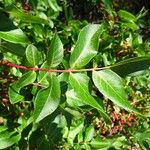
Pistacia terebinthus
پسته کوهی (FA) · Terebinth · Cyprus-turpentine · Turpentine-tree · Eastern Turpentine Tree
Description
Source: leafsnapPistacia terebinthus, commonly known as the turpentine tree, is a small deciduous tree or shrub belonging to the Anacardiaceae family. Native to the Mediterranean region, it can be found in countries such as Greece, Turkey, and Iran. The plant can reach heights of up to 10 meters and has a spreading crown with a diameter of up to 8 meters. The leaves of Pistacia terebinthus are pinnate with 5 to 11 lanceolate-shaped leaflets. The flowers are small and greenish-yellow, appearing in clusters from April to June. The fruit is a drupe that transitions from green to red when ripe. Historically, the turpentine tree has been used for various purposes. Its resin was utilized for medicinal purposes, such as treating wounds and respiratory problems, while its wood was used for making furniture and as fuel. Additionally, Pistacia terebinthus is known to have antioxidant properties due to its high content of phenolic compounds, which may offer potential health benefits when consumed. Overall, Pistacia terebinthus is an intriguing plant with historical significance and potential health benefits, making it an important species within its native range.
🌳 The terebinth tree's resin, also called Chian turpentine, has an unexpected culinary background as a flavoring used in regional Greek cooking, indicating its potential for subtle food applications. Its uses, however, go beyond the kitchen: it has been valued since ancient times for strong qualities in producing long-lasting varnishes and lacquers, which are prized in fine woodworking and historical restoration. This intriguing twofold use highlights the terebinth tree's versatility and richness, suggesting it may be an untapped resource for both artisanal and industrial pursuits in flavoring and craftsmanship.
Care Guide
💧 Water Every 7 days
The Terebinth tree is a drought-tolerant plant native to the Mediterranean region, where it thrives in environments characterized by dry summers and mild, wet winters. This resilient tree requires watering only once every three weeks and prefers well-draining soil. It can also be grown in containers, provided that proper drainage is maintained and overwatering is avoided.
How should I water my Terebinth tree?
To ensure excellent root development, place a garden hose at the base of the plant instead of directly spraying the leaves. If the plant is outdoors and exposed to direct sunlight, the leaves will need more water. To moisten the roots, you can also use bubblers for each plant or soaker hoses that cover the entire garden or bed. When adding or removing plants, use soaker hoses to push the roots deeper. Remember to drain any excess water and wait for the soil to dry between waterings. Water at ground level to prevent diseases. On a sunny day, consider spraying the entire bush with water. Keep in mind that whether potted or in-ground, the Terebinth tree prefers deep watering rather than light sprinkling.
What should I do if I give the Terebinth tree too much or too little water?
An overwatered Terebinth tree will show signs such as yellow leaves, leaf drop, and wilting. The stems may become mushy and the overall appearance of the plant will be dull and unhealthy. It is important to adjust your watering schedule when these signs appear. Wilting can also be a sign of under watering, which can cause crispy and dry leaves. If the soil is dry and simply watering is not enough, the tree should be given a thorough watering. However, even with enough water, the damaged root system may still cause the tree to have dry, yellow leaves for a few days. Once the tree returns to normal, the yellowing of leaves will stop. When the Terebinth tree is kept indoors, it is essential to regularly check the moisture levels in the pot. Overwatering should be avoided and signs of black spots should be monitored. If black spots are present, the soil in the pot should be allowed to dry for a few days before watering again. Overwatering can lead to root rot, so if you suspect root rot in your plant, it is advisable to transfer it to a different pot, especially if you see discolored and slimy roots. Preventing root rot by avoiding overly soggy soil is crucial. When planting the Terebinth tree outdoors, make sure to dig a little deeper and check the soil moisture level with your fingers. If the soil is too dry, it may be a sign of underwatering, and the plant will require adequate watering to recover.
How frequently should I give water to my Terebinth tree?
The Terebinth tree prefers deep and infrequent watering. If they are planted in pots, it's important to soak them in a gallon of water each time since the water storage in pots is limited and the soil can dry out quickly. In cold regions, watering is needed every 3 to 5 days. Watering early in the morning when the soil is dry, both outdoors and indoors, is recommended. To determine if watering is needed, check the soil inside. If the top 2-3 inches of soil are dry, it's time for a full watering. On hot days, check the moisture daily as the heat can rapidly dry out the pot's soil. For gardens, irrigation of the soil is necessary. In hot climates, watering once a week is sufficient. Only water when about 2 to 3 inches of soil become too dry indoors or outdoors. Take into account rainfall and avoid adding water to prevent root rot. Additional watering may not be necessary if there has been a lot of rainfall. The Terebinth tree typically grows during spring and fall. Outdoors, adding mulch about 3 to 4 inches deep helps conserve water. Sandy soil requires more frequent watering as it drains faster, while clay soil requires less frequent watering to prevent root rot. Keeping track of watering dates on a calendar can help avoid under-watering, indicated by drooping leaves.
How much water should I give my Terebinth tree?
The Terebinth tree needs about a gallon of water on its schedule. For potted plants, water deeply until you see water dripping out of the bottom. Then, wait for the soil to dry before watering again. Use a water calculator or moisture meter to track how much water you give your plant each week. During the flowering period, provide plenty of water but let the moisture evaporate afterwards to avoid root rot. If the Terebinth tree is planted outdoors and receives adequate rainfall, it may not need extra watering. Young or newly planted Terebinth trees need 1-2 inches of rain per week. As the Terebinth tree grows, it can rely solely on rainfall. Only water the tree thoroughly during cooler times of the day when the weather is hot or there has been no rainfall for 2-3 weeks to prevent heat damage. Additional watering is necessary during extended dry periods.
Do I need to change how often I water my Terebinth tree depending on the time of year or the weather?
The Terebinth tree needs to be outdoors and rely on rainwater for watering, unless it is consistently dry, in which case it needs to be watered. In the spring and fall, the soil should be kept moist but not soggy, with alternating dry and moist conditions being beneficial. In the summer, hot weather can cause water to evaporate quickly, so additional watering may be needed if there is a lack of rainfall. During the winter, the Terebinth tree requires less water because it drops its leaves and goes dormant. It is advisable to use a well-draining but moisture-retaining soil mixture for the tree during this period. Once the tree starts to leaf out and go dormant in the spring, watering can be skipped as it can rely on rainfall. After the winter, cultivation and encouragement of growth can be done when the temperature becomes warmer. Good drainage is crucial, especially during the winter, and should be maintained at all times. When the tree is in a pot, it has limited root growth and needs to be well-watered, especially in the summer. Shallow sprinkles that reach the leaves should be avoided as they promote fungal growth and do not reach the roots. Even during dormancy in the fall or winter, the tree should not be allowed to dry out completely. Overwatering should be avoided to prevent the tree from sitting in water for too long, which can cause it to die in winter. Applying mulch is recommended to reduce stress, preserve water, and promote healthy blooms.
☀️ Light Full sun
Terebinth tree grows best in full sun and is least tolerant of its absence. Native to warm surroundings, this plant thrives with a large amount of sunlight each day. Excessive shade hinders healthy growth, whereas abundant sunlight causes no problems.
What are the sunlight requirements for the Terebinth tree?
The Terebinth tree, or Pistacia terebinthus, demands a full canopy of sunlight for optimal growth, thriving best with significant daily exposure to the sun. It originates from environments saturated in warmth, making it least tolerant of shade. Lack of sufficient sunlight inhibits its healthy development, whereas it can withstand excessive sunlight without issues. It's crucial to observe the movement of sunlight through your garden to identify areas that offer a harmonious balance of light and shade, fostering an ideal setting for your plants.
How can artificial lighting be used for indoor Terebinth trees?
For indoor Terebinth trees, artificial lighting can compensate for insufficient natural sunlight, especially during winter or in less sunny spaces. LED lights are recommended because they can be tailored to provide the specific wavelengths needed by the plants. For full sun plants, 30-50 watts per square foot is needed; partial sun plants require 20-30 watts per square foot, and full shade plants need 10-20 watts per square foot. The light source should be placed 12-36 inches above the plant to mimic natural sunlight, and the duration should mimic natural daylight hours, typically 8-12 hours per day.
What are the symptoms of light deficiency in Terebinth trees?
Terebinth trees exhibit several symptoms when exposed to insufficient light, including smaller new leaves, leggy or sparse growth, faster leaf drop, slower or halted new growth, and paler new leaves indicating a lack of chlorophyll. Sun-related damages such as chlorosis, sunscald, leaf curling, wilting, and leaf scorching can also occur, underscoring the tree's sensitivity to both inadequate and excessive light.
What solutions are recommended for Terebinth trees not getting enough light?
To address light deficiency in Terebinth trees, gradually increasing exposure to sunlight is key. For indoor plants, move them closer to a south-facing window for at least 6 hours of direct sunlight daily or use artificial light sources, like desk lamps or grow lights, for a minimum of 8 hours a day. Outdoor plants should be relocated gradually to sunnier spots to prevent sunburn. Reducing obstructions like pruning trees can also help, and for smaller plants, consider transplanting during their dormant period to a location with more sunlight. It's important to note that while damaged parts may not recover, new growth under better light conditions will be healthy.
🌡️ Temperature 15–37.8°C
The Terebinth tree is native to regions with moderate temperatures, about 59 to 100.4˚F (15 to 38˚C). It does well in these conditions, so keeping temperatures within this range is recommended. Seasonal fluctuations should be monitored and adjusted as necessary to remain within these limits.
What is the native environment for the Terebinth tree?
The Terebinth tree, also known by its botanical name Pistacia terebinthus, thrives in environments with moderate temperatures, specifically ranging from 59 to 100.4°F (15 to 38°C). It is adaptable to seasonal variations, however, maintaining temperatures within its preferred range is essential for its well-being.
What measures should be taken for Terebinth tree during cold weather?
Terebinth trees have a certain degree of cold tolerance and generally do not require any special measures if the temperature stays above -5°C. However, if temperatures are expected to drop below -5°C, it's important to implement temporary cold protection strategies. This can include wrapping the tree with plastic film, fabric, or other protective materials, and removing these covers once the temperature warms up again.
How does the Terebinth tree react to low temperatures and what are the solutions?
The Terebinth tree has a moderate tolerance to low temperatures and prefers conditions above 15°C. When temperatures fall below -10°C, leaves may begin to droop and, in severe cases, wilt and drop. To protect and aid recovery, trim frost-damaged parts, wrap the tree with non-woven fabric or cloth, and create a wind barrier if low temperatures are anticipated again.
What are the effects of high temperatures on the Terebinth tree and how can one mitigate them?
During the peak of summer, it's crucial to ensure the Terebinth tree doesn't experience temperatures above 38°C. Exceeding 43°C can lead to lighter leaf color, dry and withered leaf tips, curling leaves, and increased risk of sunburn. To combat this, trim away any sunburned or dried parts of the tree, relocate it to a shaded area or use shade cloth for protection, and water the tree during cooler morning and evening hours to maintain soil moisture.
💨 Humidity normal (40-60%)
This plant will thrive in moderate humidity, which is probably the level in your home. However, misting it a few times a week can be very beneficial. Make sure the room has good ventilation.
🪴 Soil 6-7
🌱 Fertilizer Every 30 days
Fertilize your Terebinth tree in early spring to encourage healthy growth. Regular fertilization improves overall health, leading to vigorous growth, increased tolerance of harsh conditions, and stronger resistance to diseases and pests. Maintain a consistent fertilization schedule for your Terebinth tree to ensure the foliage stays vibrant, richly colored, and lush in appearance.
Why should I put fertilizer on my Terebinth tree?
To ensure the overall health of your Terebinth tree, it is important to regularly fertilize it, regardless of its type. Providing the right nutrients will promote vigorous growth and enhance the tree's ability to withstand harsh conditions while also defending against diseases and pests. The foliage of the Terebinth tree is particularly attractive, so it's crucial to maintain its integrity. This involves following a consistent fertilization schedule tailored to your specific tree, which will result in leaves with rich color and a lush appearance.
When should I fertilize my Terebinth tree?
To ensure healthy growth, it is recommended to fertilize your Terebinth tree for the first time in late winter or early spring. This provides the necessary nutrients for the tree to flourish once the weather becomes warm enough. In regions with warm climates, an additional fertilizer feeding during early fall can be beneficial. This not only enriches the soil for the following growing season but also helps the tree become more resilient and better able to withstand the cold of winter without foliage damage. Fertilizing earlier in the season ensures that the new branches have adequate time to mature and withstand the winter chill.
When is it not a good time to add fertilizer to my Terebinth tree?
You should avoid fertilizing your Terebinth tree at certain times of the year. Firstly, during the early and mid-winter months when the tree is dormant and does not require feeding. Additionally, it is not recommended to fertilize the tree during late spring and throughout the summer. During this period, the weather is usually hotter and drier, which can have a negative impact on the tree if fertilized. To avoid any issues, it is advisable to stick to a fertilization schedule that involves feeding only in early spring and early fall.
What kind of fertilizer does my Terebinth tree need?
Most Terebinth trees primarily need nitrogen for growth, but phosphorus and potassium are also important. Using a balanced fertilizer with equal amounts of all three nutrients, like a 10-10-10, is generally effective. However, a more specific nutrient ratio, particularly higher in nitrogen, can promote optimal growth for a Terebinth tree. An example would be a 10-6-4 ratio. Both granular and liquid fertilizers can be used when fertilizing.
How can I feed my Terebinth tree?
To fertilize your Terebinth tree, you have two options: using a granular fertilizer or a liquid fertilizer. If you choose to use a granular fertilizer, simply sprinkle it on the soil at the appropriate time. The slow-release nature of granular fertilizer ensures that nutrients are gradually released into the soil over time. It's a good idea to lightly water your Terebinth tree before applying the fertilizer. If you prefer to use a liquid fertilizer, mix it with water and then pour the solution onto the soil around the base of the tree. However, this approach is not as commonly used. Additionally, consider conducting a soil test before fertilizing to determine if any pH adjustments are necessary.
🪴 Pot & Repot
✂️ Pruning
The Terebinth tree, prized for its resin and ornamental appeal, thrives with a pruning session in late winter. Pruning encourages healthy growth by focusing on key practices such as removing dead wood and thinning out branches. This not only improves air circulation but also lowers the risk of disease and boosts the tree's vigor. For specific pruning techniques, it's wise to consult local horticultural experts.
🌿 Propagating
🐛 Diseases & pets
☠️ Toxicity
Pistacia terebinthus has no toxic effects reported.
Characteristics
- Plant Type
- Tree, Shrub
- Life Cycle
- Perennial
- Genus
- Pistacia
- Family
- Anacardiaceae
- Hardiness Zone
- 8-11
- Mature Height
- 2.44 m to 6.1 m
- Mature Spread
- 6.1 m
- Leaf Color
- Dark Green, Olive Drab
- Leaf Type
- Deciduous
- Flower Color
- Yellow, Pink, Green, Purple, Red
- Flower Size
- 15.24 cm
- Bloom Time
- Late spring, Early summer
- Planting Time
- Winter
- Harvest Time
- Mid summer, Late summer
- Native Area
- Saudi Arabia, Libya, Turkey, Tunisia, Montenegro, Cyprus, Bulgaria, Greece, Croatia, Slovenia, Morocco, Lebanon, Serbia, Syria, Italy, Spain, France, Albania, Algeria, Portugal