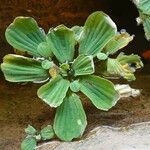
Pistia stratiotes
Water-lettuce · Water-cabbage · Shellflower · Tropical-duckweed · Nile-cabbage
Description
Source: leafsnapPistia is a genus of aquatic plants in the arum family, Araceae. It is the sole genus in the tribe Pistieae which reflects its systematic isolation within the family. The single species it comprises, Pistia stratiotes, is often called water cabbage, water lettuce, Nile cabbage, or shellflower. Its native distribution is uncertain but is probably pantropical; it was first discovered from the Nile near Lake Victoria in Africa. It is now present, either naturally or through human introduction, in nearly all tropical and subtropical fresh waterways and is considered an invasive species as well as a mosquito breeding habitat. The genus name is derived from the Greek word πιστός (pistos), meaning "water," and refers to the aquatic nature of the plants. The specific epithet is also derived from a Greek word, στρατιώτης, meaning "soldier," which references the sword-shaped leaves of some plants in the Stratiotes genus.
🎭 Purity, Safeguarding, Affection
Care Guide
💧 Water
Water lettuce thrives in environments with high humidity and consistent moisture, making it perfect for tropical-like settings. To prevent drought stress, it's important to water it weekly. Often seen floating on the surface of water, water lettuce is ideal for water gardens or aquatic containers because it absorbs water directly from its surroundings.
How should I water my Water lettuce?
There are several ways to water your Water lettuce effectively. If you have indoor pots, you can simply take them to your kitchen sink and use the faucet to add water. Hold the pot in your hands and stop watering when you see the water flowing through the drainage holes. Remember not to do this during winter or in cold climates as it can harm the root system. If your tap water contains high levels of fluorine, chlorine, or salts, it's best to consider using rainwater or lake water. Additionally, Water lettuce can respond well to overhead watering or watering directly into the soil, so feel free to use a watering can, hose, or any other tool you prefer.
What should I do if I give my Water lettuce too much or too little water?
If you notice that your Water lettuce is not getting enough water, the first thing to do is to give it a good watering. Make sure to water it deeply until excess water drains out of the container or until the soil is completely moist if it's growing outside. On the other hand, if you realize that your Water lettuce is getting too much water, start by reducing your watering schedule. It's also important to consider the soil and container it's growing in. If the soil or container does not allow proper drainage, the plant will likely become overwatered again. To fix this, consider moving the plant to soil that allows better drainage and/or choose a container with larger drainage holes or made of a more porous material. Additionally, check the location of the plant. If it's in a corner or a poorly ventilated area, it's recommended to move it near a window or door to improve airflow. Having the plants in a well-ventilated location can help prevent overwatering to some extent.
How many times should I give water to my Water lettuce?
Water lettuce is a plant that doesn't need constant moisture in its soil. It's actually better to let the soil dry out between waterings. If you grow water lettuce in containers, you can check how dry the soil is to determine when to water it. For example, if the top half of the soil in your container is dry, it's time to add water. You can feel it with your fingers, use sticks, or even a soil moisture meter. If you're growing water lettuce outdoors, you can plan to water it once every other week, unless it has rained recently.
How much water does my Water lettuce require?
Once the top layer of soil around your Water lettuce's roots has become dry, you need to add water to moisten it again. The amount of water you should add depends on the size of your plant and the container it is in. For a small Water lettuce in a small to medium-sized container, one to two cups should be enough to dampen the soil sufficiently. If your plant is larger, you'll need to increase the amount of water accordingly. To ensure your plant has received enough water, you can either feel the soil with your finger or a trowel to check if it's moist all the way through. Another option is to water until you see excess water draining from the holes at the bottom of the container.
How can I know if I'm giving enough water to my water lettuce?
Both overwatering and underwatering can harm the health of your Water lettuce. However, they show distinct signs when they occur. Insufficient watering can cause yellow leaves and brown, brittle leaf margins. On the other hand, overwatering will result in both yellow and brown marks on the leaves simultaneously, potentially leading to diseases like root rot, which can appear on your plant. If you can identify the signs of overwatering and underwatering, you have a better chance of addressing and rectifying both problems.
☀️ Light Full sun
Water lettuce prefers abundant sunlight for healthy growth, though it can tolerate moderate light as well. Native to environments with strong sun exposure, it does best under those conditions. Both too much and too little light can negatively affect its growth, causing visual defects or stunted development, respectively.
What are the sunlight requirements for Water lettuce?
Water lettuce requires full sun, which means it needs above 6 hours of sunlight daily, but it can also tolerate partial sun, about 3-6 hours of sunlight. It's important to observe the movement of sunlight in your garden to find the perfect balance of light and shade for these plants. Ensuring they get the right amount of sunlight is crucial for their happiness and healthy growth.
What are the essentials for growing Water lettuce?
Water lettuce thrives with an abundant exposure to sunlight, performing best in environments that mimic its natural, sunlit habitats. Though it can endure moderate illumination, too much or too little light can adversely affect its growth, leading to visual defects or stunted development. For indoor plants, when natural light is insufficient, artificial lighting serves as an essential alternative. LED lights are recommended for their ability to provide specific wavelengths needed by plants. Depending on the plant's sunlight needs, the wattage for artificial light ranges from 10-50W per square foot, with the light source placed 12-36 inches above the plant for 8-12 hours per day.
What symptoms indicate light deficiency or overexposure in Water lettuce?
Symptoms of light deficiency in Water lettuce include smaller new leaves, leggy or sparse growth, faster leaf drop, slower or no new growth, and lighter-colored new leaves. These symptoms often signify insufficient light. On the other hand, symptoms of overexposure include chlorosis, sunscald, leaf curling, wilting, and leaf scorching. These reflect damage from too much sunlight, affecting the plant's ability to photosynthesize and maintain health.
How can I address lighting issues for my Water lettuce?
To address lighting issues for Water lettuce, gradually adjust the plant's exposure to sunlight. For indoor plants, move them closer to a south-facing window or use artificial lighting, such as desk lamps or professional grow lights, ensuring at least 8 hours of light daily. For outdoor plants, relocate them to sunnier spots progressively each week to prevent sunburn. If sunlight is blocked by obstructions like trees, consider pruning to improve light penetration. When moving plants for better sunlight exposure, do it during their dormant period, and ensure the new location has ample sunlight and good drainage.
🌡️ Temperature 15–35°C
Water lettuce comes from warm regions and prefers temperatures of 68 to 95 °F (20 to 35 ℃). If conditions fall outside this range, adjustments may be needed. In colder months, consider placing it in a warm indoor setting to ensure optimal growth.
What is the optimal temperature range for water lettuce?
Water lettuce, also known by its botanical name Pistia stratiotes, is native to warm climates and favors temperatures between 68 to 95 °F (20 to 35 °C) for optimal growth. If the environmental temperature falls outside this range, adjustments might be necessary to maintain the plant's health. For instance, during colder seasons, it may be beneficial to move water lettuce to a warm indoor environment to ensure it continues to thrive.
Does water lettuce have any cold tolerance?
Water lettuce possesses some level of cold tolerance and generally does not require any additional cold protection measures when the temperature remains above 0°C (32°F). However, in conditions where the temperature is expected to drop below freezing, temporary protective measures, such as wrapping the plant with plastic film, fabric, or other insulating materials, are necessary. Once the temperature rises again, these protective coverings should be removed promptly to avoid any potential damage to the plant.
How should water lettuce be cared for in low temperature conditions?
In low temperature conditions, water lettuce shows moderate tolerance but thrives best when the temperature is maintained above 20°C (68°F). During winter, it is crucial to keep the plant above 0°C (32°F) to prevent damage. If temperatures fall below -10°C (14°F), the plant's leaves may start to droop. While mild effects may allow for recovery, severe cases could lead to leaves wilting and eventually falling off. To protect water lettuce from frost damage, trim off the frost-damaged parts and, before encountering low temperatures again, wrap the plant with insulating materials such as non-woven fabric or cloth and create a wind barrier for additional protection.
What measures should be taken if water lettuce is exposed to high temperatures?
During the summer, it is important to keep water lettuce in conditions below 35°C (95°F) to prevent heat stress. Exposure to temperatures exceeding 41°C (105.8°F) can lead to symptoms such as lighter leaf color, dry and withered leaf tips, curled leaves, and increased susceptibility to sunburn. To mitigate these effects, trim away the sunburned and dried-up parts of the plant. Moving the plant to a shaded location, especially during the midday and afternoon sun, or using a shade cloth can provide necessary protection. Additionally, watering the plant in the morning and evening helps keep the soil moist and supports the plant's health under high temperature stress.
💨 Humidity high (>60%)
This plant needs special care because it loves high humidity levels of 60-80% or more. The best way to achieve this is by placing a humidifier near the plant. Daily misting is also essential! Make sure the room has good ventilation.
🪴 Soil
🌱 Fertilizer
If the water lacks the proper quantities of nutrients, a fertilizer treatment may be required. You may remove the plants and soak them in liquid fertilizer for a few hours, apply fertilizer directly to the pond or aquarium, or add a nutrient booster to the water.
🪴 Pot & Repot
✂️ Pruning
Water lettuce is characterized by its floating leaves and sponge-like roots. To keep your water lettuce healthy, prune it regularly from early to late spring. This helps remove yellow leaves, improves light and water circulation, and prevents decay. Consistent pruning encourages vigorous growth, making water lettuce a perfect choice for aquatic gardens. For detailed care instructions, consult horticultural guides.
🌿 Propagating
🐛 Diseases & pets
☠️ Toxicity
The leaves of water lettuce contain calcium oxalate crystals, which may cause disease if consumed or chewed, particularly by tiny animals and children. Symptoms include throat, lip, and tongue swelling with acute burning, vomiting, nausea, and diarrhea. In extreme situations, the throat might expand to the point that it impedes breathing.
Characteristics
- Plant Type
- Herb
- Life Cycle
- Perennial, Annual
- Genus
- Pistia
- Family
- Araceae
- Hardiness Zone
- 8-10
- Mature Height
- 8 cm to 15 cm
- Mature Spread
- 15 cm to 46 cm
- Leaf Color
- Green, Gray, Silver
- Leaf Type
- Evergreen
- Flower Color
- White
- Flower Size
- 2.54 cm
- Bloom Time
- Late spring, Early summer, Mid summer
- Planting Time
- Spring, Summer
- Harvest Time
- Summer
- Native Area
- Sri Lanka, Belize, Egypt, India, Angola, Mexico, Guatemala, Namibia, Madagascar, Rwanda, Pakistan, Nigeria, Guinea-Bissau, Niger, Jamaica, Mali, Sierra Leone, Equatorial Guinea, Cameroon, Liberia, Mozambique, Venezuela, Brazil, Congo, Nepal, Central African Republic, Chile, Honduras, Peru, South Africa, Sudan, Mauritania, Bangladesh, Laos, Guinea, Gambia, Panama, Chad, Colombia, Solomon Islands, Bolivia, Vietnam, Myanmar, Togo, El Salvador, Senegal, Nicaragua, Guyana, Ecuador, Costa Rica, Congo (DRC), Gabon