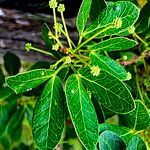
Pithecellobium keyense
Florida Keys blackbead
Description
Source: leafsnapPithecellobium keyense, commonly called Florida Keys blackbead', or Florida Key apes-earring, is a species of flowering plant in the legume family (Fabaceae).
Care Guide
💧 Water
☀️ Light Full sun
Florida keys blackbead originates from open habitats, such as sunny meadows and forest edges, which supply abundant light. It thrives in Full Sun but can also tolerate Partial Sun, adapting well to a range of sunlight conditions.
🌡️ Temperature 20–37.8°C
Florida keys blackbead shows good temperature adaptability, tolerating high heat and wide temperature fluctuations. In hot conditions, attention should be paid to watering and appropriate shading to avoid sunburn. Conversely, Florida keys blackbead has relatively poor cold tolerance. Although it can endure some cold, excessively low temperatures may cause frost damage.
💨 Humidity
🪴 Soil 6-8
🌱 Fertilizer
Fertilize your Florida keys blackbead in early spring to encourage healthy growth. Regular feeding improves overall health, producing vigorous growth, greater tolerance of harsh conditions, and enhanced resistance to pests and diseases. Stick to a consistent fertilization schedule for your Florida keys blackbead to preserve vibrant, deeply colored foliage and a lush appearance.
🪴 Pot & Repot
✂️ Pruning
🌿 Propagating
🐛 Diseases & pets
☠️ Toxicity
Characteristics
- Plant Type
- Tree
- Life Cycle
- Perennial
- Genus
- Pithecellobium
- Family
- Fabaceae
- Hardiness Zone
- 9-11
- Mature Height
- 3.05 m to 6.1 m
- Mature Spread
- 3.05 m to 4.88 m
- Leaf Color
- Dark Green
- Leaf Type
- Evergreen
- Flower Color
- White, Pink
- Flower Size
- 1.02 cm to 2.03 cm
- Bloom Time
- Late spring, Summer
- Planting Time
- Spring, Autumn
- Harvest Time
- Late summer, Fall
- Native Area
- Bahamas, Mexico, Belize, Cuba