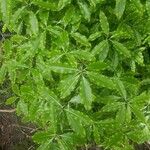
Pittosporum eugenioides
Lemonwood · Tarata lemonwood · White mapau · Tarata cheesewood · Tarata
Description
Source: leafsnapPittosporum eugenioides, common names lemonwood or tarata, is a species of New Zealand native evergreen tree. Growing to 12 m (39 ft) tall by 5 m (16 ft) broad, it is conical when young but more rounded in shape when mature. Its leaves are mottled yellow-green with curly edges and a salient bright midrib, and have a strong lemony smell when crushed. It has highly fragrant clusters of attractive yellow-cream flowers in spring, followed by distinctive black seed capsules. It is found throughout New Zealand's North and South Islands along forest margins and stream banks from sea level to 600 m (1,969 ft). It is New Zealand's largest Pittosporum.The binomial qualifier eugenioides means "resembling Eugenia", a different genus of plants.The variegated cultivar 'Variegatum' has gained the Royal Horticultural Society's Award of Garden Merit.
Care Guide
💧 Water
Lemonwood thrives in moderate to high humidity and requires consistent moisture for optimal growth. Once the tree is established, it becomes drought-tolerant, but it still benefits from watering every 2 to 3 weeks. Being an evergreen, lemonwood holds water in its foliage, which is essential for maintaining its vitality during dry periods.
☀️ Light Full sun
Lemonwood does best with plenty of sunlight. This vigorous growth stems from its origins where sufficient sun penetration was available. It can, however, tolerate spots with some shade, even though it favors a sunnier location. Excessive or insufficient light can negatively affect the plant's health.
What are the sunlight requirements for Lemonwood?
Lemonwood (Pittosporum eugenioides) thrives under full sun, which means it requires more than 6 hours of sunlight per day. However, it can also tolerate partial sun, about 3-6 hours of sunlight. It's essential to watch how sunlight moves through your garden and choose spots that provide the perfect balance of light and shade for your plants, ensuring their happiness and health.
How does Lemonwood react to different lighting conditions?
Lemonwood prefers an ample amount of sun exposure due to its origins in adequately sunlit environments. While it can endure some shadow, a sunnier environment is more favorable. Either overexposure or a deficiency in sunlight may hinder the plant's health. For indoor plants, artificial lighting, such as LED lights providing 30-50W/sq ft for full sun plants, 20-30W/sq ft for partial sun plants, and 10-20W/sq ft for full shade plants, can compensate for natural light deficits, promoting healthier growth.
What are the symptoms of improper light exposure in Lemonwood?
Symptoms of improper light exposure in Lemonwood include small or lighter-colored new leaves, leggy or sparse growth, faster leaf drop, slower or halted growth, chlorosis, sunscald, leaf curling, wilting, and leaf scorching. These symptoms indicate either a deficiency or excess of sunlight, affecting the plant's ability to photosynthesize, maintain proper hydration, and overall health.
How can I address light-related issues in Lemonwood for better growth?
To address light-related issues in Lemonwood and ensure optimal growth, gradually move plants to sunnier locations to receive at least 6 hours of direct sunlight daily. For indoor plants, consider using artificial light if moving them isn't feasible, keeping a lamp on for at least 8 hours daily or investing in professional plant grow lights. Outdoors, gradually acclimate your plants to avoid sunburn. You can also prune any obstructions like trees to let more sunlight reach your plants. If necessary, transplant smaller plants during their dormant period to a location with better sunlight and drainage.
🌡️ Temperature 15–37.8°C
Lemonwood originates from temperate regions and grows best at temperatures of 59 to 100.4 °F (15 to 38 ℃). In colder seasons, modify the surroundings to replicate these conditions to ensure its healthy growth.
What is the ideal temperature range for Lemonwood?
Lemonwood thrives best in temperate regions with temperatures ranging from 59 to 100.4 °F (15 to 38 °C). It has some cold tolerance, but to ensure its healthy growth, the surroundings should be adjusted to mimic this ideal temperature range, especially during colder seasons.
How can Lemonwood be protected in temperatures below -5°C?
Although Lemonwood generally does not require additional measures when the temperature is above -5°C, if the temperature is expected to drop below this point, it is necessary to take temporary measures for cold protection. This can include wrapping the plant with plastic film, fabric, or other materials to keep it warm. Once the temperature rises again, these protective measures should be removed promptly.
What are the symptoms and solutions for Lemonwood exposed to low temperatures?
Lemonwood has moderate tolerance to low temperatures and thrives best when the temperature is above 15°C. During winter, it should be kept above -5°C to avoid damage. When the temperature falls below -10°C, the leaves may droop, and in severe cases, wilt and eventually fall off. To mitigate damage, trim off the frost-damaged parts and, when expecting low temperatures again, wrap the plant with non-woven fabric or cloth and construct a wind barrier to protect it from the cold.
What are the symptoms and solutions for Lemonwood exposed to high temperatures?
During summer, it's important to keep Lemonwood below 38°C to prevent heat stress. Symptoms of exposure to temperatures exceeding 43°C include lighter leaf color, dry and withered leaf tips, curling leaves, and susceptibility to sunburn. To address this, trim away sunburned and dried-up parts, move the plant to a shaded location, or use a shade cloth to protect it from the midday and afternoon sun. Additionally, watering the plant in the morning and evening can help keep the soil moist and reduce temperature stress.
What is the botanical name of Lemonwood?
The botanical name of Lemonwood is Pittosporum eugenioides.
💨 Humidity
🪴 Soil 5-7
🌱 Fertilizer
Timing is important when fertilizing Lemonwood. Apply fertilizer in early spring and continue doing so every month up to early summer. Fertilizer promotes attractive blooms and supplies energy during both dormant and active growth stages.
🪴 Pot & Repot Every 12 months
✂️ Pruning
To keep lemonwood healthy, it's important to prune it from early to late winter. This involves removing dead branches and thinning the plant to improve airflow. Using proper pruning techniques encourages healthier growth and helps prevent disease. However, it's crucial not to over-prune, as maintaining enough foliage is necessary for photosynthesis. These recommendations are supported by reputable horticultural sources.
🌿 Propagating
🐛 Diseases & pets
☠️ Toxicity
Characteristics
- Plant Type
- Tree
- Life Cycle
- Perennial
- Genus
- Pittosporum
- Family
- Pittosporaceae
- Hardiness Zone
- 8-11
- Mature Height
- 11.89 m
- Mature Spread
- 4.88 m
- Leaf Color
- Green
- Leaf Type
- Evergreen
- Flower Color
- Yellow
- Flower Size
- 2.54 cm
- Bloom Time
- Mid spring, Late spring
- Planting Time
- Spring, Summer, Autumn
- Harvest Time
- Late summer, Early fall, Mid fall
- Native Area
- New Zealand