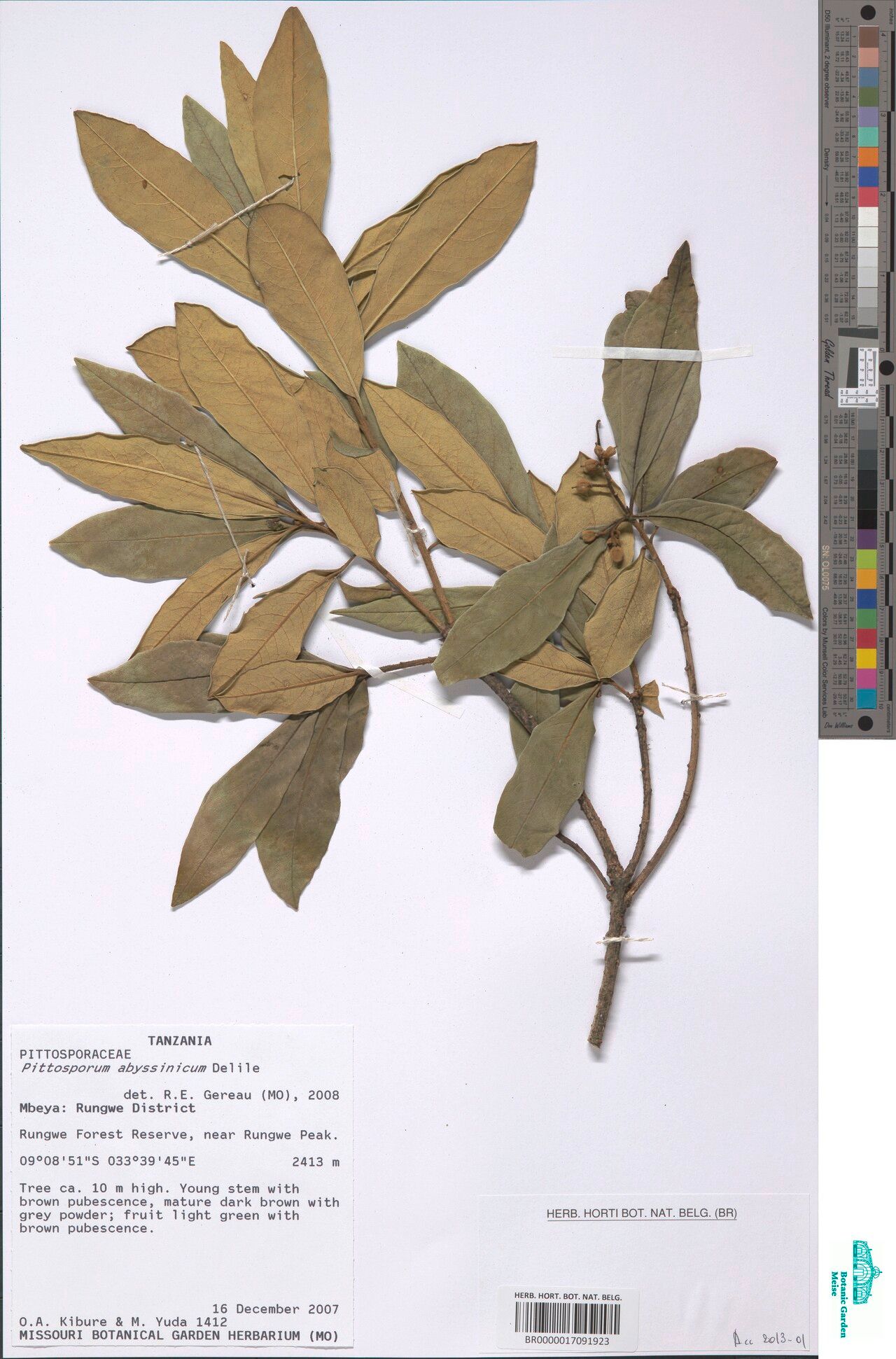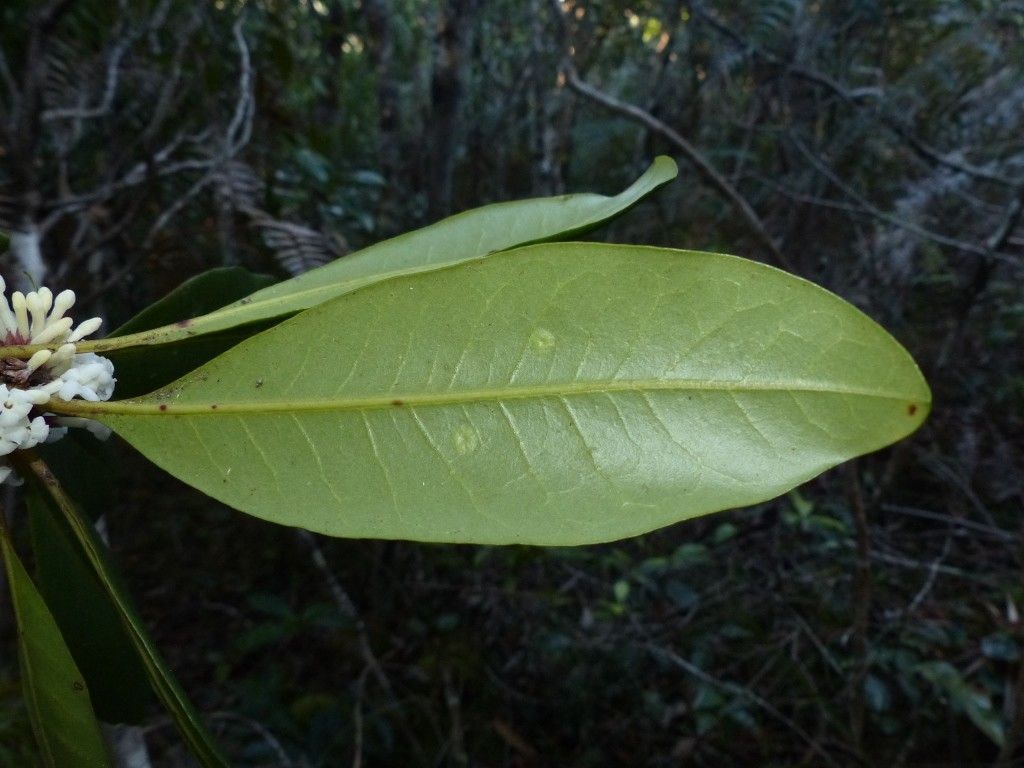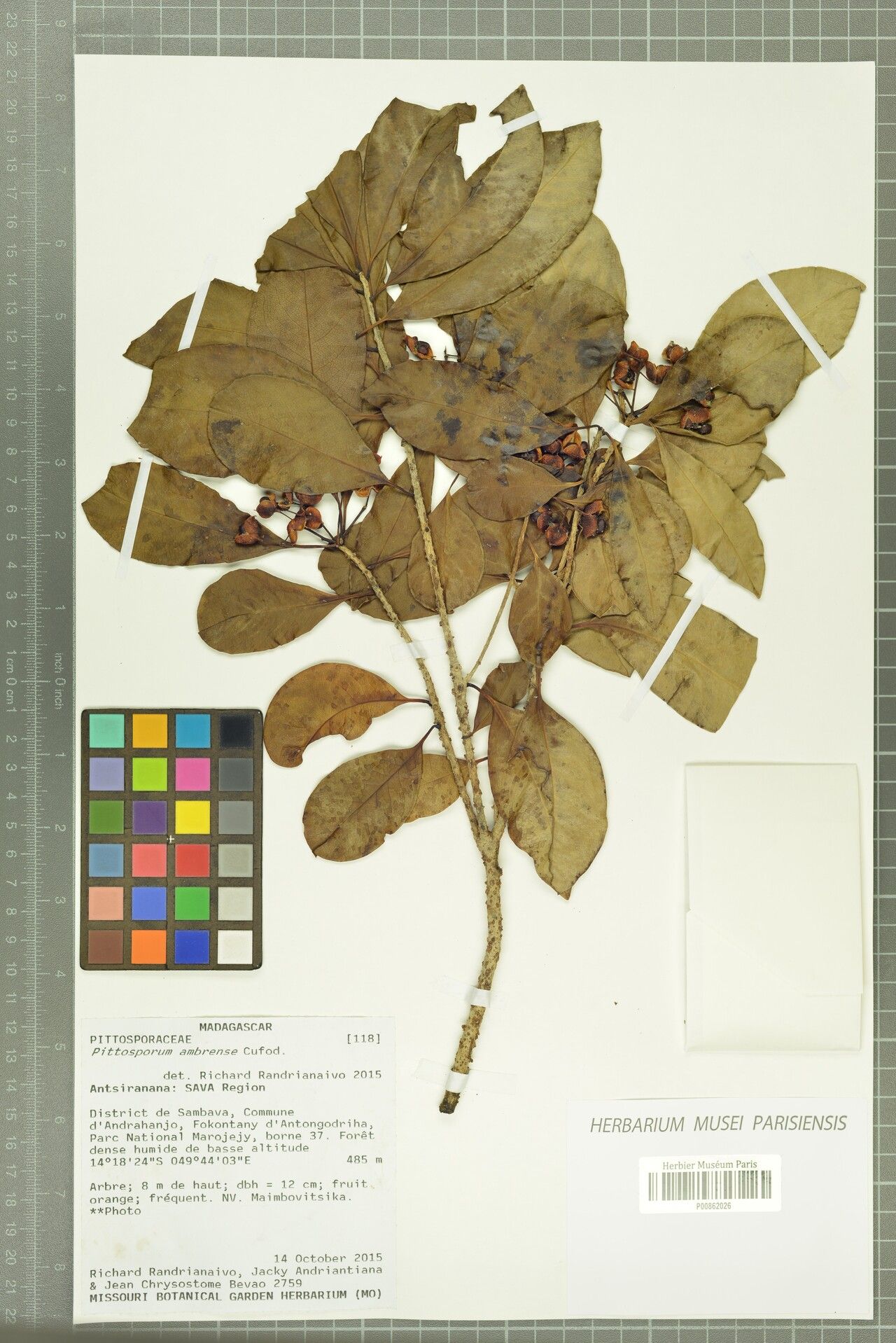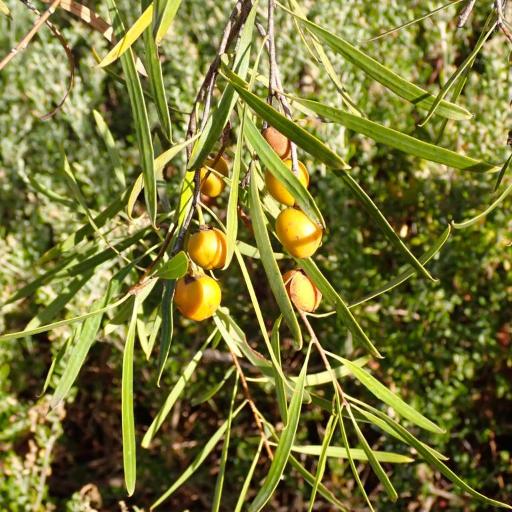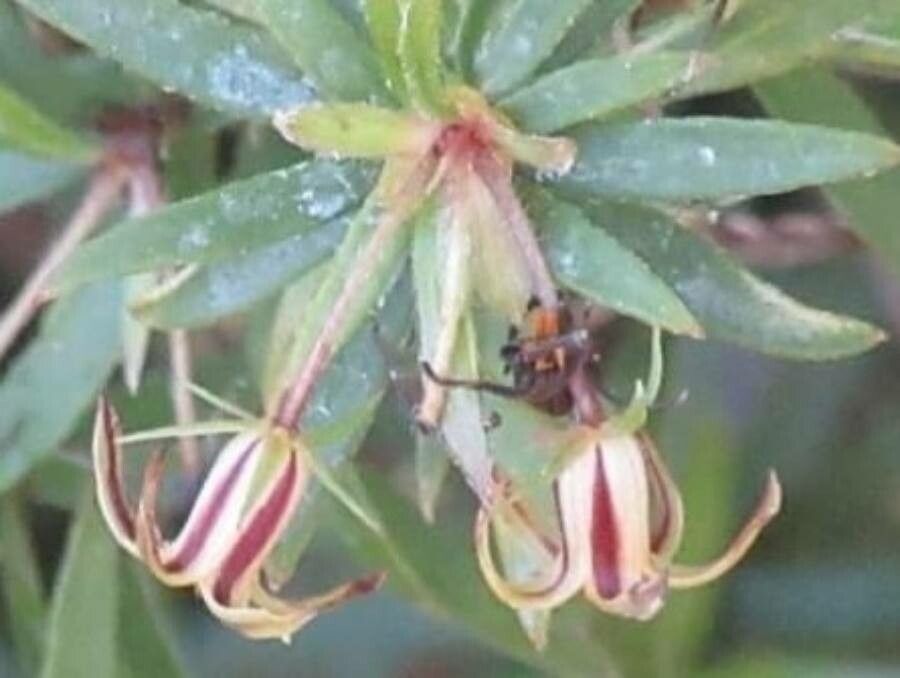
Pittosporum ( or ) is a genus of about 200 species of flowering plants in the family Pittosporaceae. The genus is probably Gondwanan in origin; its present range extends from Australasia, Oceania, eastern Asia and some parts of Africa. Citriobatus can be included here, but might be a distinct (though closely related) genus. They are commonly known as pittosporums or, more ambiguously, cheesewoods. The species are trees and shrubs growing to 2–30 m tall. The leaves are spirally arranged or whorled, simple, with an entire or waved (rarely lobed) margin. The flowers are produced singly or in umbels or corymbs, each flower with five sepals and five petals; they are often sweetly scented. The fruit is a woody seed capsule, which bursts on ripening to release the numerous seeds. The seeds are coated with a sticky resinous substance. The genus is named after their sticky seeds, from the Greek meaning "pitch-seed". Tarata (P. eugenioides) and kohuhu (P. tenuifolium) – both from New Zealand – and the Japanese cheesewood (P. tobira) from southern Japan are widely cultivated as ornamental plants in subtropical regions; pittosporums can also be grown indoors as bonsai. The petroleum nut (P. resiniferum) yields petroleum nut oil, which is sometimes proposed as biofuel; due to its excessive n-heptane content and consequent low octane rating, it is better suited as a source of n-heptane, which is otherwise produced from crude oil. Many herbivores detest the resinous pittosporums, in particular their seeds, which will stick anywhere. But some animals eat them with relish, for example the kea (Nestor notabilis), which likes P. anomalum fruit and seeds. The cottony cushion scale (Icerya purchasi) is a common pest on ornamental pittosporums (in particular the New Zealand species); the sac fungus Nectriella pironii often infects Japanese cheesewood.
How to keep Pittosporum Pimeleoides.
Water
Pittosporum pimeleoides flourishes in consistently moist conditions, so it needs regular watering during the spring and summer months. To prevent over-watering, make sure the top layer of soil dries out between waterings. When newly planted, pittosporum pimeleoides should be watered 3 to 4 times a week initially. Over time, this can be reduced to once a week, and even less frequent watering is required during the winter season.
Pruning
Pittosporum pimeleoides is a shrub with dense foliage that benefits from pruning in early spring before new growth begins. To encourage healthy growth, remove any dead branches and thin out crowded areas to improve airflow. Be careful to avoid cutting into old wood, as regular pruning helps promote both growth and flowering. Always use clean, sharp tools to reduce the risk of disease.
Botanical profile.
- Plant Type
- Shrub
- Genus
- Pittosporum
- Family
- Pittosporaceae
Reader questions.
What are the sunlight requirements for Pittosporum pimeleoides?
Pittosporum pimeleoides requires specific sunlight conditions to thrive. For full sun exposure, the plant needs above 6 hours of sunlight daily. If it is to be placed in partial sun, it should receive about 3-6 hours of sunlight. It's important to observe the way sunlight moves through your garden to ensure that you place your Pittosporum pimeleoides in a location that offers the right balance of light and shade, which is crucial for its health and happiness.