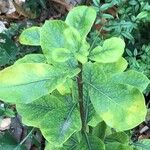
Pittosporum viridiflorum
Cape pittosporum · Cheesewood · Iyoyi · Cape cheesewood
Description
Source: leafsnapPittosporum viridiflorum (Cape cheesewood, Afrikaans: Kasuur, Sotho: Kgalagangwe, Xhosa: Umkhwenkwe, Zulu: Umfusamvu) is a protected tree in South Africa.
🎭 Innocent love or pure thoughts, chastity and sincerity of heart
Care Guide
💧 Water
Cape cheesewood is a drought-tolerant plant that thrives with watering every 2 to 3 weeks, making it well-suited for regions with irregular rainfall. It is commonly grown outdoors, where it benefits from mulching to retain soil moisture, similar to the leaf litter in its natural habitat.
☀️ Light Full sun
Cape cheesewood grows best in full sun and tolerates spots with filtered light. Its native habitat matches this preference, being found in areas with abundant sunlight. A range of light levels usually does not seriously affect its growth, provided they are not extreme. However, excessive or insufficient light can be harmful and may impede the plant’s healthy development.
What are the sunlight requirements for Cape Cheesewood?
Cape Cheesewood (Pittosporum viridiflorum) thrives under full sunlight, requiring more than 6 hours of direct sunlight per day. It can also tolerate partial sun, which means about 3-6 hours of sunlight. Observing the movement of sunlight through your garden and choosing locations that offer an ideal balance of light and shade will support the health and happiness of your plants.
How does the origin habitat of Cape Cheesewood reflect on its sunlight preferences?
The origin habitat of Cape Cheesewood is indicative of its preference for environments abundant in sunlight exposure. It is well-suited to thrive under the full radiance of the sun and capable of adapting to areas with diffused illumination. While varying sun intensities might not significantly affect its growth, extreme overexposure or insufficient light can be harmful and may prevent the plant from developing healthily.
What solutions are available for Cape Cheesewood to receive adequate lighting?
For indoor Cape Cheesewood plants, ensuring they receive adequate lighting is crucial for optimal growth. When natural sunlight is scarce, especially in winter or in less sunny spaces, artificial lighting serves as an essential remedy. Options include keeping a desk or ceiling lamp on for at least 8 hours daily or investing in professional plant grow lights. For outdoor plants, finding the best sunlight spot and gradually moving your plants each week to adapt to the new light intensity without causing sunburn is recommended. Pruning or transplanting might be necessary to reduce obstructions and provide ample sunlight and good drainage.
What are the symptoms of inadequate lighting for Cape Cheesewood?
When Cape Cheesewood is subjected to suboptimal lighting conditions, it may exhibit various symptoms signaling light deficiency. These include smaller new leaves, leggy or sparse growth, faster leaf drop, slower or no new growth, lighter-colored new leaves, chlorosis, sunscald, leaf curling, wilting, and leaf scorching. Each symptom provides insight into the plant's struggle with inadequate sunlight and hints at the need for adjustments in its care.
How does exposure to different light conditions affect Cape Cheesewood's growth?
Exposure to different light conditions can significantly impact Cape Cheesewood's growth and health. Full sun exposure, which is above 6 hours of direct sunlight, suits it best, promoting vigorous growth. Partial sunlight, around 3-6 hours, can still support its development but may influence the plant's density and vigor. Extremely low light conditions may lead to various growth issues, such as reduced leaf size, elongated stems, and reduced ability to photosynthesize, which can hinder the plant's overall development.
🌡️ Temperature 15–37.8°C
Cape cheesewood is native to areas where temperatures generally range from 59 to 100.4 °F (15 to 38 ℃). The plant does best within this temperature range and may need adaptations if local conditions fall outside these parameters.
What is the native temperature range for Cape cheesewood?
Cape cheesewood, also known as Pittosporum viridiflorum, is native to environments where temperatures typically range from 59 to 100.4 °F (15 to 38 °C). The plant thrives best within this temperature spectrum, indicating its optimal growth conditions. Should the local conditions fall outside of these parameters, certain adaptations may be necessary to ensure the plant's health and vitality.
What are Cape cheesewood's cold tolerance and protection measures?
Cape cheesewood possesses some degree of cold tolerance, generally requiring no additional protective measures when temperatures stay above -5°C. However, if temperatures are expected to plummet below -5°C, temporary cold protection steps should be implemented. This involves wrapping the plant with materials such as plastic film, fabric, or other insulating materials to shield it from the cold. It's crucial to remove these protections once temperatures rise again to prevent any potential damage from overheating or restricted growth.
How does low temperature affect Cape cheesewood and what are the solutions?
Cape cheesewood exhibits a moderate tolerance to low temperatures, flourishing best when it's above 15°C and should be kept above -5°C during winter. When temperatures fall below -10°C, the plant's leaves may begin to droop. In mild cases, they can recover, but severe cold can cause leaves to wilt and eventually drop. The solution involves trimming off frost-damaged parts and taking preventive measures against future cold exposure. This includes wrapping the plant with non-woven fabric or cloth and constructing a wind barrier to shield it from cold winds.
What happens to Cape cheesewood at high temperatures and how can it be protected?
During the summer, it's essential to ensure Cape cheesewood remains below 38°C as exceeding 43°C can cause the leaves to lighten in color, dry out at the tips, curl, and increase the plant's susceptibility to sunburn. To protect the plant in such conditions, remove any sunburned or dried up parts and relocate the plant to a shaded area, especially away from the harsh midday and afternoon sun. Employing a shade cloth can also offer protection. Additionally, watering the plant in the morning and evening helps keep the soil adequately moist, reducing the stress from high temperatures.
💨 Humidity
🪴 Soil 6-7
🌱 Fertilizer
Timing is important for fertilizing Cape cheesewood. Apply fertilizer in early spring and then monthly through early summer. Fertilizer encourages attractive blooms and provides energy during both dormant and active growth phases.
🪴 Pot & Repot
✂️ Pruning
Cape cheesewood is an evergreen plant known for its fragrant flowers and attractive foliage. To promote growth, prevent disease, and extend its blooming period, prune the plant from early to late winter. Use clean, sharp tools to make precise cuts, minimizing stress on the plant during its dormant period.
🌿 Propagating
🐛 Diseases & pets
☠️ Toxicity
Characteristics
- Plant Type
- Tree
- Life Cycle
- Perennial
- Genus
- Pittosporum
- Family
- Pittosporaceae
- Hardiness Zone
- 8-11
- Mature Height
- 3.05 m to 29.87 m
- Mature Spread
- 3.05 m to 6.1 m
- Leaf Color
- Green, Blue
- Leaf Type
- Evergreen
- Flower Color
- White
- Flower Size
- 6.35 cm
- Bloom Time
- Late spring, Early summer, Mid summer
- Planting Time
- Spring, Summer, Autumn
- Harvest Time
- Late summer, Early fall, Mid fall
- Native Area
- Malawi, Djibouti, Somalia, Lesotho, India, Angola, South Africa, Zambia, Madagascar, Rwanda, Sudan, Nigeria, Guinea, Yemen, Kenya, Uganda, Tanzania, Zimbabwe, Gabon, Cameroon, Mozambique, Côte d'Ivoire, Eswatini, Ethiopia, Congo (DRC), Central African Republic