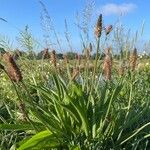
Plantago argentea
Silver Plantain · Ribwort Plantain · Narrowleaf Plantain
Description
Source: leafsnapPlantago argentea, commonly known as Silver Plantain, is a perennial herbaceous plant in the Plantaginaceae family. Native to Europe and Asia, it has been introduced and naturalized worldwide. The plant grows up to 30 cm tall and features a basal rosette of silver-gray leaves that are lanceolate or oblong with prominent veins. The flowers of Plantago argentea are small and inconspicuous, arranged on long spikes that rise above the foliage. They bloom from late spring through summer and are followed by small capsules containing numerous tiny seeds. Silver Plantain thrives in well-drained soils with moderate moisture levels but can tolerate drought conditions once established. It grows best in full sun or partial shade but can also adapt to full shade. Historically, the plant has been valued for its medicinal properties, particularly its anti-inflammatory effects. The leaves have been used as a poultice for wounds, insect bites, burns, and other skin irritations. In addition to its medicinal uses, Silver Plantain is an attractive ornamental plant suitable for rock gardens or as ground cover due to its low-growing habit and silver-gray foliage. It is easy to grow from seed or by dividing established clumps during the spring or fall. Overall, this hardy perennial herbaceous plant offers both aesthetic appeal and potential health benefits, making it an excellent addition to any garden setting.
🎭 Recovery, Defense, Power
Care Guide
💧 Water Every 7 days
☀️ Light Full sun
Desert indian wheat does best under clear skies, receiving abundant light all day. That light is vital for its growth and development. Although it can tolerate less-than-ideal lighting, a prolonged shortage or an excess of light may harm its health, since it comes from habitats with ample sunlight.
🌡️ Temperature 20–37.8°C
Desert indian wheat is well adapted to temperature, able to withstand higher heat and larger temperature fluctuations. In hot weather, it is important to ensure proper watering and provide suitable shade to prevent sunburn. However, Desert indian wheat is less tolerant of low temperatures; while it can endure some cold, excessively low conditions can cause frost damage.
💨 Humidity
🪴 Soil 6-7
🌱 Fertilizer
Desert indian wheat responds well to regular, light fertilizer applications to encourage healthy leaf development. You should fertilize Desert indian wheat about once a month during the summer. Nitrogen is vital for the foliage, and providing nitrogen-rich sources helps Desert indian wheat thrive.
🪴 Pot & Repot
✂️ Pruning
Silver plantain benefits from pruning in the early to late spring. This promotes growth and improves air circulation. By removing dead leaves and spent stalks, you enhance the plant's appearance and boost flower production. Using clean tools helps prevent disease, and regular pruning increases the plant's vigor and resilience in various garden settings.
🌿 Propagating
🐛 Diseases & pets
☠️ Toxicity
Characteristics
- Plant Type
- Herb
- Life Cycle
- Annual
- Genus
- Plantago
- Family
- Plantaginaceae
- Hardiness Zone
- 9-11
- Mature Height
- 20 cm
- Mature Spread
- 30 cm
- Leaf Color
- Light Green, Gray
- Leaf Type
- Deciduous
- Flower Color
- White
- Flower Size
- 0.76 cm to 3.81 cm
- Bloom Time
- Early spring, Mid spring
- Planting Time
- Spring, Summer
- Harvest Time
- Late spring, Early summer
- Native Area
- Saudi Arabia, Libya, Egypt, India, Tunisia, United Arab Emirates, Mexico, Cyprus, Armenia, Pakistan, Morocco, Afghanistan, Iraq, Syria, Spain, Oman, Iran, Kuwait, Azerbaijan, Algeria, Qatar, Turkmenistan