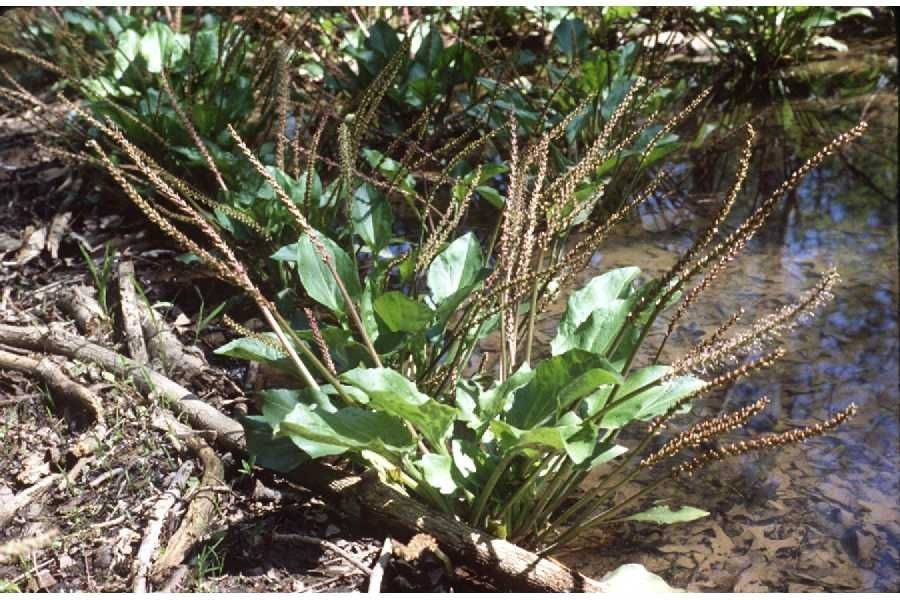
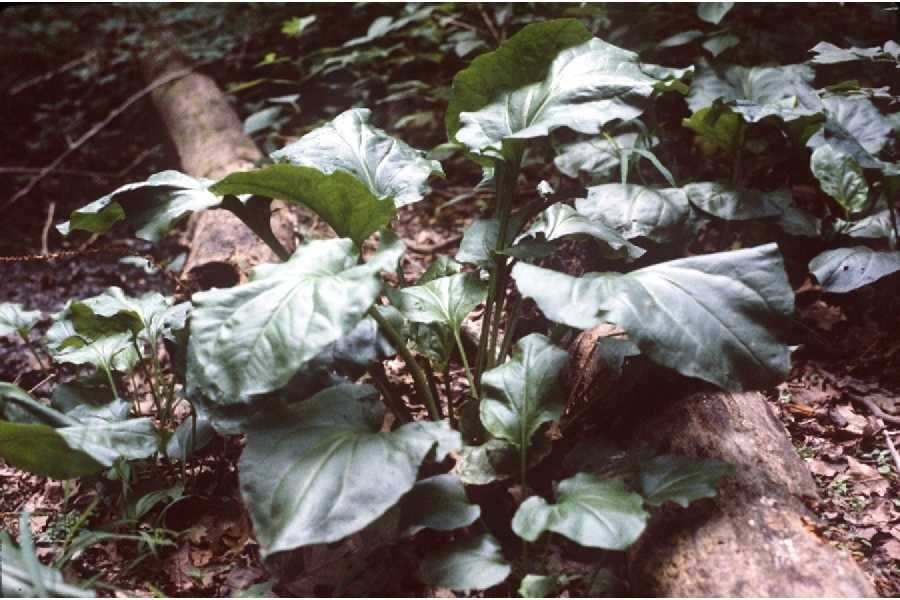
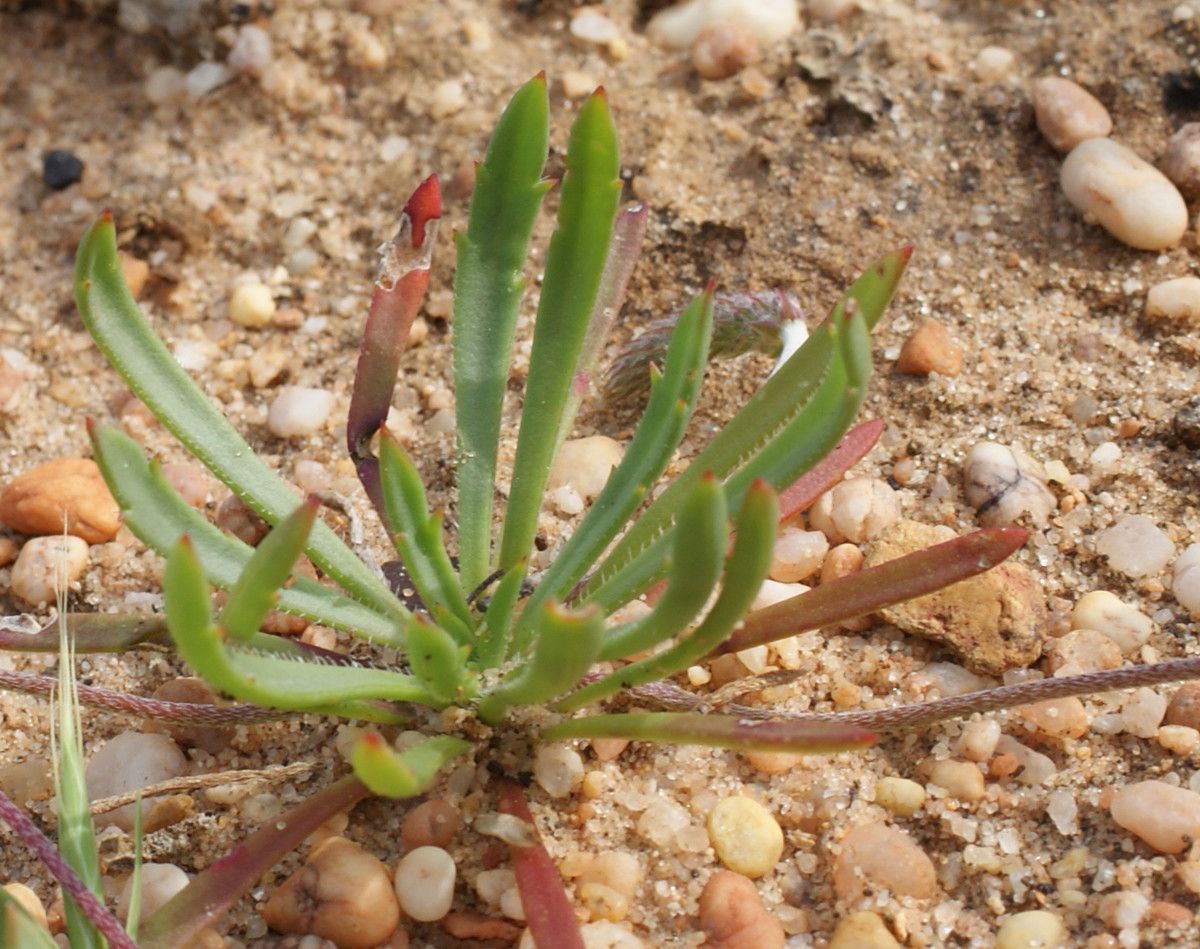
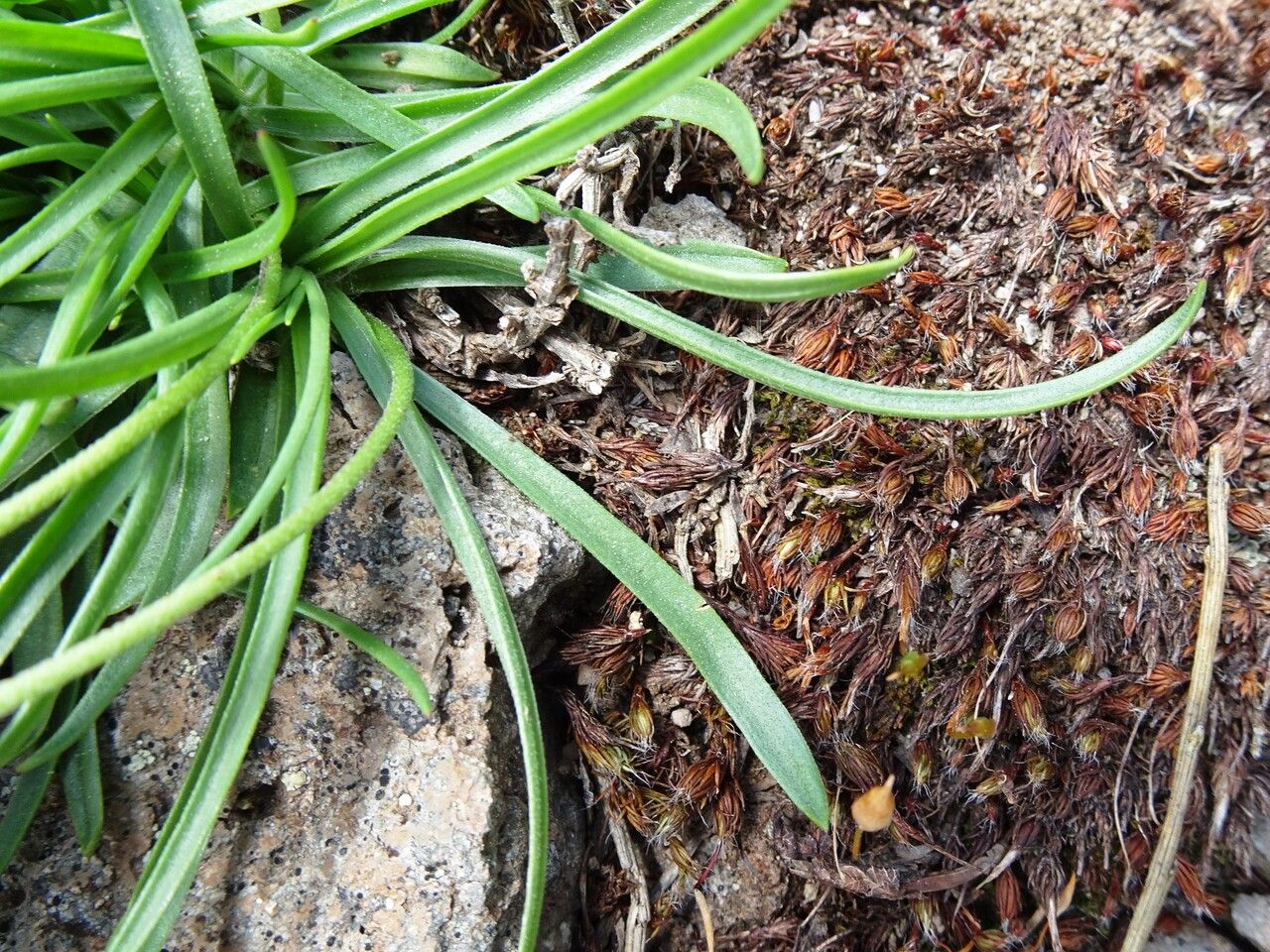
Plantago cordata, commonly known as the Heart-leaved Plantain, is a perennial herbaceous plant belonging to the Plantaginaceae family. Native to North America, it thrives in wetlands, meadows, and along streams. The plant forms a basal rosette of heart-shaped leaves that measure 2-5 cm in length and 1-4 cm in width. These smooth leaves feature prominent veins and sit on long petioles.
During the summer months, the Heart-leaved Plantain produces tall spikes adorned with small greenish-white flowers. These flowers cluster densely in cylindrical arrangements atop a leafless stem that can reach up to 60 cm in height.
For centuries, Native Americans have utilized this plant for its medicinal properties. It contains anti-inflammatory compounds, making it effective in treating wounds, insect bites or stings, and various skin irritations or rashes.
Plantago cordata is also a valuable food source for wildlife. Deer often browse its leaves, while birds feed on its seeds produced post-flowering.
In summary, this durable perennial with its distinct heart-shaped leaves is not only a visually appealing addition to gardens or natural landscapes but also provides significant ecological benefits by supporting wildlife.
Heart-leaf plantain has good disease resistance and is generally not prone to illnesses. However, it can be vulnerable to pests and diseases present in its environment. Those infections are typically not severe. Regarding care, this plant has moderate maintenance needs. It requires regular pruning to keep a tidy appearance and support healthy growth. Fertilizing can also help encourage flowering. Heart-leaf plantain is suitable for anyone with outdoor space, like a garden or patio, and does not need extensive care experience. It may need more attention when grown indoors.
How to keep Plantago Cordata.
Light
Heart-leaf plantain occurs naturally in places like forest understories or rocky areas, where it is found in natural shade. It prefers partial sun but can adjust to full sun or full shade, showing its versatile and hardy character.
Water
The heart-leaf plantain thrives in moist, shaded environments with consistently damp, but not waterlogged, soil. To maintain optimal moisture, water the plant weekly. While it is usually grown outdoors and benefits from natural rainfall, you'll need to adjust your watering schedule seasonally to support its growth and dormancy phases.
Temperature
Heart-leaf plantain can tolerate a wide range of temperatures, but its distribution may still be limited by particular combinations of moisture and heat. It does best in warm summer climates with sufficient rainfall or irrigation. Extended periods of cloudy, rainy weather or prolonged high temperatures can raise the likelihood of Heart-leaf plantain dying. In winter, adequate protection from cold can improve the plant's chances of survival.
Fertilizer
Typically one fertilizer application in spring is enough for Heart-leaf plantain, though repeated feedings can enhance growth. Fertilize about once every month to a month and a half. Fertilization improves the leaves' appearance and function, maintaining uniform color and healthy texture. It also promotes root development and nutrient uptake for the plant's long-term health.
Pruning
To ensure your heart-leaf plantain thrives, start with early spring pruning. This will help remove dead leaves and improve air circulation. Thin out crowded areas to reduce the risk of disease, and prune after flowering to enhance the plant's appearance. Always use clean, sharp tools to minimize stress, promote stronger growth, and maintain an attractive garden feature.
Botanical profile.
- Plant Type
- Herb
- Life Cycle
- Perennial
- Genus
- Plantago
- Family
- Plantaginaceae
- Hardiness Zone
- 5-9
- Leaf Type
- Deciduous
- Bloom Time
- Spring, Summer
Other names.