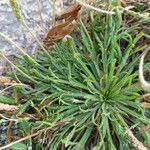
Plantago coronopus
بارهنگ پا کلاغی · Buckhorn plantain · Buck's-horn plantain · Star of the earth · Staghorn plantain
Description
Source: leafsnapPlantago coronopus, commonly known as Buck's-horn Plantain, is a perennial herbaceous plant of the Plantaginaceae family. Native to Europe and North Africa, it has also been introduced to other parts of the world. This plant features a rosette of basal leaves that are lance-shaped with toothed margins. The dark green leaves display prominent veins. From June to September, Buck's-horn Plantain produces long spikes of small greenish-white flowers. These blooms are followed by small capsules that contain numerous tiny seeds. The plant thrives in well-drained soils and can grow in both full sun and partial shade conditions. It is commonly found along roadsides, in waste grounds, meadows, pastures, and other disturbed areas. For centuries, Plantago coronopus has been valued for its medicinal properties. Its anti-inflammatory effects make it useful for treating respiratory problems such as coughs and bronchitis. Additionally, it can be applied externally as a poultice for wounds or insect bites due to its antiseptic properties. Overall, Buck's-horn Plantain is an intriguing herbaceous perennial. Not only does it offer medicinal benefits, but it also adds visual interest to any garden with its unique foliage and summer-long spikes of flowers.
🎭 Recovery, Defense, Power
Care Guide
💧 Water Every 7 days
Buck's horn plantain flourishes in coastal areas, where it prefers moderate moisture and weekly watering. While it adapts well to dry spells and mild humidity, it also benefits from the occasional sea mist. Typically grown outdoors, this plant demonstrates optimal growth when soil moisture is carefully managed. Its ability to thrive in variable water conditions highlights its resilience.
How should I water my Buck's horn plantain the most effectively?
To water Buck's horn plantain, you have several options. You can use a garden hose with a spray nozzle, a watering can, or any other common watering tool. Buck's horn plantain is not too picky when it comes to water sources. It can survive on rainwater, tap water, or filtered water. However, it's best not to water this plant from overhead as it can harm the leaves and flowers and potentially lead to disease. The most effective method for watering Buck's horn plantain is to set up a drip irrigation system, which evenly and directly applies water to the soil. If you have a container-grown Buck's horn plantain, the same watering approach can be used, but with different tools like a cup, watering can, or tap to water the soil directly.
What should I do if I give my Buck's horn plantain plant too much or too little water?
The solution for underwatering Buck's horn plantain is simple: when you see that your plant lacks moisture, start watering it more frequently. Overwatering, on the other hand, can be a more serious problem if you don't catch it early. When Buck's horn plantain gets overwatered, it can get sick and eventually die. To avoid this, it's important to choose the right location for growing, one that gets enough sunlight to dry out the soil and has good drainage to prevent water from pooling and causing waterlogged soil. If your potted Buck's horn plantain is overwatered, you may need to repot it. The previous container may have had poor soil drainage or not enough drainage holes. When repotting, make sure to use loose soil and a pot that drains well.
How often should I water my Buck's horn plantain plant?
To properly care for your Buck's horn plantain, it requires regular watering throughout the growing season. In spring, water the plant once a week. As the season progresses and temperatures rise, you may need to water it two to three times per week. It's important not to overwater, as this can harm the plant. The soil should be kept moist but not overly wet. If your Buck's horn plantain is in a pot, you'll need to adjust the watering frequency. Potted plants tend to dry out faster than those in the ground due to the heat and airflow. In most cases, watering a container-grown Buck's horn plantain a few times per week is necessary, compared to just once per week for an in-ground plant.
How much water does my Buck's horn plantain require?
To determine how much water to give your Buck's horn plantain, there are a few methods you can use. One approach is to check the soil for moisture and water until the top six inches feel moist. Another method is to follow a set measurement, such as giving the plant about two gallons of water per week. However, be cautious of overwatering if your plant requires less water. When growing Buck's horn plantain in a container, you'll need to adjust your watering technique. Simply moisten all the dry layers of soil, which can be tested by feeling the soil with your finger or observing a slight trickle of excess water from the drainage holes.
How do I know if I am giving my Buck's horn plantain enough water?
Taking care of your Buck's horn plantain can be a bit tricky when it comes to watering. While these plants have deep roots that require weekly moisture, they are also highly prone to root rot if overwatered. Overwatering can cause browning of the plant, while underwatering is less of a concern as they can survive without regular watering. However, if you neglect to water the plant for too long, it may start to wilt and develop dry leaves.
☀️ Light Full sun
Buck's horn plantain thrives with abundant sunlight but can also tolerate reduced light. Sunlight is essential to its healthy growth and plays a major role in promoting vigorous vegetation. In its native habitat it mainly grows where natural light is plentiful. Both excessive and insufficient light can affect the plant's vitality.
What are the sunlight requirements for Buck's horn plantain?
Buck's horn plantain requires full sun, which means it needs above 6 hours of sunlight each day to flourish. It's important to observe how sunlight moves through your garden to ensure you choose spots that provide the perfect balance of light and shade, which is critical for the plant's health and happiness.
What role does sunlight play in the growth of Buck's horn plantain?
Sunlight plays a crucial role in the growth of Buck's horn plantain, contributing extensively to its healthy vegetation. The plant can endure less luminosity, but ample solar exposure is essential for its thriving. Its original habitat supports conditions with abundant natural light, indicating the importance of both avoiding overexposure and underexposure to ensure the plant's vitality.
How can artificial lighting be used for Buck's horn plantain?
When natural sunlight is insufficient, especially in winter or less sunny spaces, artificial lighting can be a vital solution for Buck's horn plantain's growth. Adequate lighting promotes faster, healthier growth. LED lights are a popular artificial lighting choice because they can be customized to provide specific wavelengths of light needed by the plant. Full sun plants require 30-50W/sq ft, partial sun plants 20-30W/sq ft, and full shade plants 10-20W/sq ft of artificial light. The light source should be placed 12-36 inches above the plant and kept on for 8-12 hours per day to mimic natural daylight hours.
What are the symptoms of light deficiency in Buck's horn plantain?
Symptoms of light deficiency in Buck's horn plantain include small and lighter-colored new leaves, leggy or sparse growth, faster leaf drop, slower or no new growth, and symptoms of excessive sunlight like chlorosis, sunscald, leaf curling, wilting, and leaf scorching. These symptoms indicate the plant is struggling with the balance of light exposure, affecting its growth and overall health.
What are the solutions for Buck's horn plantain's light deficiencies?
To combat light deficiencies in Buck's horn plantain, gradually move plants to sunnier locations to ensure they receive at least 6 hours of direct sunlight daily. For indoor plants, use a south-facing window or consider artificial lighting, like professional plant grow lights, keeping them on for at least 8 hours daily. For outdoor plants, avoid sudden changes in light intensity to prevent sunburn. Reducing obstructions like pruning branches of trees that block sunlight and transplanting smaller plants during their dormant period to sunnier locations with good drainage can also help improve sunlight exposure.
🌡️ Temperature 5–35°C
Buck's horn plantain originates from temperate habitats and prefers temperatures of 68 to 95 °F (20 to 35 °C) for optimal growth. In cooler periods, modest warming measures can help maintain those ideal growing conditions.
What is the native ecosystem of Buck's horn plantain?
Buck's horn plantain is native to temperate ecosystems. The plant thrives in ideal growing temperatures ranging from 68 to 95 °F (20 to 35 °C). Although it possesses strong cold resistance, certain preparations are recommended to ensure its health during different seasons.
How should Buck's horn plantain be cared for during cooler seasons?
In cooler seasons, Buck's horn plantain may benefit from slight warming measures to maintain optimum growth conditions due to its preference for temperatures between 68 to 95 °F (20 to 35 °C). Despite its strong cold resistance, ensuring that it doesn't get too cold is beneficial for its growth.
What special winter care is needed for Buck's horn plantain?
During winter, Buck's horn plantain usually does not require special frost protection due to its strong cold resistance. However, if temperatures are expected to drop below -25°C, it's important to provide cold protection by covering the plant with soil or straw. Additionally, watering the plant abundantly before the first freeze in autumn helps to ensure the soil remains moist and enters a frozen state, preventing drought and water scarcity during winter and early spring.
How does low temperature affect Buck's horn plantain?
Buck's horn plantain is cold-tolerant and thrives at temperatures above 20°C. However, during winter, it should be kept above 0°C to avoid damage. When temperatures fall below -25°C, the plant may not show immediate changes, but there may be a decrease in sprouting or even no sprouting come springtime. In spring, it's advised to remove any parts of the plant that have failed to sprout to maintain its health.
What are the effects of high temperature on Buck's horn plantain and how can they be mitigated?
During summer, it's crucial to ensure that Buck's horn plantain is kept below 35°C. Exposure to temperatures above 38°C can result in leaves becoming lighter in color, prone to curling, susceptible to sunburn, and in severe cases, can cause the entire plant to wilt and dry out. To mitigate these effects, trim away the sunburned and dried-up parts of the plant. Move the plant to a shaded location or use a shade cloth to protect it from midday and afternoon sun. Additionally, watering the plant in the morning and evening can help keep the soil moist and support the plant's health during high temperatures.
💨 Humidity
🪴 Soil 6-7
🌱 Fertilizer
For the greatest yield and best flavor of Buck's horn plantain, supply adequate nitrogen throughout the entire growth period, from before planting through harvest. Plants that are kept well watered and fertilized produce plentiful, healthy leaves and are less bitter. Enrich the soil with organic matter such as compost or manure before planting, preferably 2 to 8 weeks ahead.
Why should I use plant food on my Buck's horn plantain?
All plants require nutrients to grow, but some plants, such as Buck's horn plantain, are able to obtain the necessary nutrients without the need for additional fertilizers. Like other plants, Buck's horn plantain relies on nutrients to support its growth and internal processes. The main nutrients that plants need, such as nitrogen, phosphorus, and potassium, contribute to various essential functions in the plant. In the case of foliage, nitrogen is particularly important. However, Buck's horn plantain may struggle to obtain sufficient nitrogen from the soil alone, which is why many gardeners opt to provide additional nitrogen supplementation.
When should I fertilize my Buck's horn plantain?
Buck's horn plantain generally grows well, but to give it a boost, you can apply fertilizer about once a month when it is actively growing. During the spring and summer months, fertilize Buck's horn plantain about once a month. However, during fall and winter when the plant is less active, it does not require as many nutrients and should not be fertilized. If you see signs of new growth, that's when you should start fertilizing Buck's horn plantain. The fertilization schedule is the same for plants grown outside or indoors in a container. However, if your Buck's horn plantain is in a container, you may not need to fertilize for the first one to two months. Container plants are usually potted in soil that already contains enough nutrients. Therefore, you should start fertilizing only after your plant has been in the same soil for a while.
When is it not a good idea to add fertilizer to my Buck's horn plantain?
To ensure the health of your Buck's horn plantain, avoid fertilizing if it is unhealthy or has disease or pests. Additionally, refrain from fertilizing dehydrated plants as it worsens the problem. Only fertilize healthy plants. When watering, be cautious not to splash fertilizer onto the leaves or stem, as it can cause burned spots. Unless you have a special foliage fertilizer, avoid direct contact between the plant and the fertilizer.
What kind of plant food does my Buck's horn plantain need?
Buck's horn plantain requires certain nutrients like nitrogen, potassium, phosphorus, iron, manganese, and zinc to grow. A balanced fertilizer, like a 10-10-10 all-purpose fertilizer, is effective for this plant. Natural options like blood meal or worm castings also work well. If you prioritize leaf growth, opt for a fertilizer with higher nitrogen content, such as fish fertilizer. It's important to focus on the desired outcome when choosing supplements; if you're not concerned about flowers or seeds, there's no need to provide excessive nutrients for those aspects.
How should I fertilize my Buck's horn plantain?
To successfully fertilize your Buck's horn plantain, follow the instructions on the fertilizer you purchased. It's a good practice to start with half-strength fertilizer initially to avoid over-fertilizing. Buck's horn plantain often gets fertilized excessively due to its need for frequent fertilization. Remember that adding more fertilizer is easier than trying to revive an over-fertilized plant. Before applying fertilizer, ensure that the soil is not dry but already somewhat moist. This aids in the fertilizer's absorption and prevents fertilizer burn. Additionally, water the soil after applying dry fertilizers. Depending on the type of Buck's horn plantain, there are different ways to apply fertilizers. Some fertilizers should be mixed into the soil during planting, while others can be applied on top of the soil and then watered in. For most Buck's horn plantains, a water-soluble fertilizer is a convenient choice. Simply mix the fertilizer solution at the recommended dosage, pour it into your watering can, and water the plant as usual. If you prefer not to remember monthly fertilization, slow-release granules or fertilizer spikes are also effective options.
🪴 Pot & Repot Every 12 months
✂️ Pruning
Buck's horn plantain features narrow, serrated leaves. For optimal growth and air circulation, prune the plant between early and late spring. Focus on removing any damaged foliage. It's best to avoid heavy pruning; instead, opt for light trimming. Make sure to use clean tools and make precise cuts, as this encourages regrowth and helps prevent fungal diseases.
🌿 Propagating
🐛 Diseases & pets
☠️ Toxicity
Characteristics
- Plant Type
- Herb
- Life Cycle
- Annual, Biennial, Perennial
- Genus
- Plantago
- Family
- Plantaginaceae
- Hardiness Zone
- 5-9
- Mature Height
- 30 cm
- Mature Spread
- 30 cm
- Leaf Color
- Green, Dark Green
- Leaf Type
- Semi-evergreen
- Flower Color
- Yellow, Green, Brown
- Flower Size
- 4.06 cm to 6.35 cm
- Bloom Time
- Mid spring, Late spring, Summer, Early fall
- Planting Time
- Summer, Autumn
- Harvest Time
- Summer, Fall
- Native Area
- Libya, Egypt, Turkey, Sweden, Austria, Pakistan, Croatia, Morocco, Uzbekistan, Russia, Iraq, Germany, Jordan, Oman, Romania, Qatar, Belgium, Portugal, Netherlands, Saudi Arabia, France, Tajikistan, Tunisia, Czech Republic, Cyprus, Bulgaria, Poland, Greece, Ukraine, Serbia, Lebanon, Afghanistan, Syria, Italy, Spain, Denmark, Israel, Iran, Albania, Ireland, United Kingdom, Algeria, Kuwait, Azerbaijan, Turkmenistan