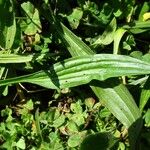
Plantago lanceolata
بارهنگ سرنيزه ای، · Narrow-leaf plantain · Ribwort Plantain · Ribwort · English plantain
Description
Source: leafsnapPlantago lanceolata, commonly known as ribwort plantain, is a perennial herbaceous plant in the Plantaginaceae family. Native to Europe and Asia, it has been introduced and naturalized in many parts of the world. The plant features a rosette of lance-shaped leaves that grow up to 20 cm long and 5 cm wide. These leaves have prominent parallel veins that give them a ribbed appearance, hence the name "ribwort." The stem of Plantago lanceolata can reach up to 50 cm in height and bears small greenish-brown flowers arranged in dense spikes at the top. These flowers bloom from May to September, attracting bees and other pollinators with their nectar-rich blossoms. Historically, Plantago lanceolata has been valued for its medicinal properties. It contains various bioactive compounds such as aucubin, allantoin, flavonoids, and tannins, which have anti-inflammatory effects. In traditional medicine, the plant is often used to treat respiratory issues like coughs and bronchitis due to its expectorant properties. Plantago lanceolata is commonly found growing along roadsides and in disturbed areas, where it can tolerate poor soil conditions. This makes it an excellent choice for erosion control on slopes or embankments. Overall, Plantago lanceolata is a versatile herbaceous perennial with a range of medicinal and horticultural applications, making it an important species within its family.
💡 In the United Kingdom, Ireland, and Scotland, children often play simple games using the ribwort plantain. One game involves twisting the stem around the stalk to launch the flowering head into the air, similar to a toy gun. Another game has children trying to knock off each other's flowering heads using their own ribwort plantain stems. In England, these games are sometimes called "cannonballs" and "bishops."
🌳 Aside from its established medicinal and culinary uses, ribwort plantain has been found to perform additional roles. It serves as a bioindicator, its abundance indicating particular soil conditions, mainly high calcium levels. At the same time, its fibrous material was historically used in the textile industry, notably for producing dye.
🎭 Recovery, Safeguarding, Power, Endurance
Care Guide
💧 Water Every 3 days
Ribwort plantain thrives in temperate zones with moderate moisture levels and can tolerate short periods of drought. To maintain optimal soil conditions, water the plant weekly, keeping the soil moist but not waterlogged. This is especially important during its active growth phase to support healthy foliage and root development.
When Should I Water My Ribwort Plantain?
Proper and timely watering is essential for the health and development of ribwort plantain, including its growth, flower production, and disease resistance. The soil's moisture level is a reliable indicator, with the plant needing water when the soil is dry 2 inches deep. Signs that the ribwort plantain needs watering include wilting, droopy leaves that lose their vibrant color, inward curling or crispy leaves, slow or stunted growth, flower buds dropping off prematurely, and the plant's increased need for water during high temperatures or excessive sunlight. Avoid watering too early or too late to prevent risks like root rot or plant dehydration. Recognizing these signs is key to effectively managing the watering schedule for ribwort plantain.
How Should I Water My Ribwort Plantain?
Ribwort plantain should be watered regularly to maintain optimal hydration but avoid overwatering to prevent root rot and other moisture-related issues. Bottom-watering is effective, ensuring roots receive moisture without saturating the soil's surface or wetting foliage, which can lead to fungal diseases. A narrow-spout watering can direct water to the base, avoiding foliage wetness. Using a moisture meter can help determine when to water. The soil should not become waterlogged; if excess water accumulates during bottom-watering, removing it is essential. Environmental conditions like temperature, humidity, and sunlight will affect water requirements, and while specific frequencies vary, a general guideline is to water when the top inch of soil feels dry.
How Much Water Does Ribwort Plantain Really Need?
Ribwort plantain has moderate water requirements, proportional to its size and pot volume. The amount of water needed ranges from a cup for small, young plants to several cups for mature ones, aiming to saturate the soil without leaving standing water. The plant is adaptive and can tolerate various watering conditions, but watching for signs of correct watering is essential. Adequately watered plants will have vibrant and firm foliage, while underwatering leads to droopy, dry, or browning leaves. Overwatering manifests as yellowing leaves that may look wilted. Both over and under-watering should be avoided to prevent root rot or premature plant death.
What Kind of Water is Best for Ribwort Plantain?
Ribwort plantain thrives best with distilled water, as it is pure and free from contaminants. Rainwater is also good, lacking the chemicals found in tap water. Tap water can be used if other sources aren't available, but consider its chlorine and mineral content. Filtered water is suitable too, provided it removes harmful contaminants. Moderate chlorine and fluoride levels are tolerable, but high amounts can damage the plant. Letting tap water sit for 24 hours before use helps dissipate chlorine. Water should be at room temperature, roughly 68-72°F or 20-22°C. Bottom watering is recommended for efficient hydration without waterlogging the roots.
How Do Ribwort Plantain's Watering Needs Change with the Seasons?
In spring, as ribwort plantain awakens from dormancy, it requires moderate watering to support new growth, avoiding overwatering to prevent root issues. Summer demands more water due to higher evaporation, ensuring moisture reaches deeper roots but allowing soil to dry between waterings. Autumn sees active growth, requiring consistently moist soil, even as the weather cools and rainfall increases. Winter watering should be reduced, keeping the soil slightly moist as the plant enters dormancy, taking care not to waterlog or freeze the roots, especially in freezing conditions.
☀️ Light Full sun
Ribwort plantain grows best with abundant sunlight, although it can also grow in places that receive moderate sun. Its native habitat is marked by plentiful solar radiation. Nevertheless, either too much or too little sunlight can negatively affect its growth.
What are the sunlight requirements for Ribwort plantain (Plantago lanceolata)?
Ribwort plantain thrives best under an abundance of sunlight exposure, benefiting considerably from being situated in environments that offer more than 6 hours of sunlight per day, categorizing it as a full sun plant. However, it can still grow in conditions that provide about 3-6 hours of sunlight, making it adaptable to partial sun as well. Its growth can be negatively impacted by both excessive and insufficient sunlight. Noticing how sunlight shifts throughout your garden will aid in selecting optimal locations that offer the right mix of light and shade, ensuring the plant's growth and happiness.
How can artificial lighting be used for indoor Ribwort plantain plants?
For indoor Ribwort plantain plants or in areas with less natural sunlight, artificial lighting serves as an excellent alternative to support their growth. LED lights are recommended due to their efficiency and ability to provide specific wavelengths required by plants. The general guideline for artificial lighting is 30-50W/sq ft for full sun plants, 20-30W/sq ft for partial sun, and 10-20W/sq ft for full shade plants. The lights should be placed 12-36 inches above the plant to simulate natural sunlight conditions and kept on for 8-12 hours per day to mimic natural daylight hours, encouraging healthy and robust growth.
What are the symptoms of inadequate lighting for Ribwort plantain?
Ribwort plantain exhibits several symptoms when subjected to inadequate lighting. These include smaller new leaves compared to older ones, leggy or sparse growth due to elongated spaces between leaves or stems, premature leaf drop as the plant tries to conserve resources, delayed or ceased growth as the plant enters survival mode due to poor light, paler or irregularly colored new leaves indicating a deficiency in chlorophyll and essential nutrients, and symptoms related to overexposure such as chlorosis, sunscald, leaf curling, wilting, and leaf scorching. These symptoms highlight the importance of providing Ribwort plantain with the right amount of sunlight for optimal health.
How do you remedy light-related issues in Ribwort plantain?
To address light-related issues in Ribwort plantain, a gradual approach to increasing sunlight exposure is recommended. For indoor plants, moving them to a sunnier spot each week until they receive at least 6 hours of direct sunlight daily is ideal. Using a south-facing window and keeping curtains open during the day maximizes sunlight exposure. If moving the plant is not feasible, consider using artificial light such as desk or ceiling lamps for at least 8 hours a day or professional grow lights. For outdoor plants, it's crucial to avoid sudden changes in light intensity by also gradually shifting them to sunnier locations to prevent sunburn. If sunlight is blocked by trees or other obstructions, consider pruning or transplanting smaller plants to more sunlit areas, ensuring ample sunlight and good drainage. It's important to note that parts of the plant damaged due to insufficient light may not recover, but new growth should be healthy with improved lighting conditions.
🌡️ Temperature 5–35°C
Ribwort plantain originates from temperate regions and prefers temperatures between 68 and 95 °F (20 to 35 ℃). In harsher seasons, consider keeping this temperature range to ensure healthy growth.
What is the native climate for Ribwort Plantain?
Ribwort plantain, known botanically as Plantago lanceolata, thrives in temperate climate regions. It prefers a temperature range of 68 to 95 °F (20 to 35 °C). To ensure the plant's healthy growth throughout the year, maintaining this temperature range during harsher seasons is advisable.
How does Ribwort Plantain handle cold temperatures?
Ribwort plantain possesses strong cold resistance, making special frost protection measures unnecessary for most winter conditions. However, if temperatures are expected to plummet below -25°C, providing cold protection is crucial. This can be done by covering the plant with soil or straw. Additionally, watering the plant abundantly before the first freeze in autumn helps keep the soil moist and prevents drought and water scarcity during the winter and early spring.
What should I do if the Ribwort Plantain experiences low temperatures?
If the temperature drops below 0°C, Ribwort plantain, capable of enduring cold weather, may not show any noticeable changes in winter but could experience a decrease in sprouting or fail to sprout at all during spring. If this occurs, it's recommended to remove any parts of the plant that have failed to sprout once spring arrives.
How does Ribwort Plantain react to high temperatures, and what are the solutions?
During high temperatures, especially when it surpasses 35°C and reaches up to 38°C or higher, Ribwort plantain can face several issues. The leaves may become lighter in color, curl, become susceptible to sunburn, and in extreme cases, the plant might wilt and dry out. To mitigate these issues, it's advised to trim away the sunburned and dried-up parts of the plant. Relocating the plant to a shaded area or using a shade cloth to protect it from the midday and afternoon sun can be beneficial. Ensuring the soil remains moist by watering in the morning and evening is also crucial.
💨 Humidity
🪴 Soil 5-7
🌱 Fertilizer
Typically one fertilizer application in spring is adequate for Ribwort plantain, though repeated feedings can boost growth. Apply fertilizer about once every month to a month and a half. Fertilization improves leaf appearance and function, helping maintain uniform color and a healthy texture. It also encourages root development and nutrient uptake, supporting the plant's long-term health.
🪴 Pot & Repot Every 12 months
✂️ Pruning
🌿 Propagating
🐛 Diseases & pets
☠️ Toxicity
Characteristics
- Plant Type
- Herb
- Life Cycle
- Perennial, Annual, Biennial
- Genus
- Plantago
- Family
- Plantaginaceae
- Hardiness Zone
- 5-9
- Mature Height
- 5 cm to 49 cm
- Mature Spread
- 15 cm
- Leaf Color
- Green
- Leaf Type
- Semi-evergreen, Deciduous
- Flower Color
- White
- Flower Size
- 2.54 cm to 7.62 cm
- Bloom Time
- Mid spring, Late spring, Early summer, Mid summer
- Planting Time
- Summer
- Harvest Time
- Early summer, Mid summer
- Native Area
- Libya, Turkey, Sweden, India, Slovakia, Montenegro, Pakistan, Slovenia, Morocco, Croatia, Belarus, Germany, Jordan, Romania, Latvia, Belgium, Moldova, Portugal, Netherlands, Saudi Arabia, Tunisia, Philippines, Cyprus, Bulgaria, Ukraine, Lebanon, Afghanistan, Syria, Kyrgyzstan, Kazakhstan, Italy, Finland, Iran, Azerbaijan, Egypt, Austria, Yemen, Zimbabwe, Uzbekistan, Russia, Iraq, Iceland, Estonia, Qatar, France, Nepal, Tajikistan, Czech Republic, Armenia, Poland, Greece, Serbia, Lithuania, Norway, Spain, Switzerland, Denmark, Israel, Bhutan, Albania, Ireland, United Kingdom, Hungary, Algeria, Turkmenistan