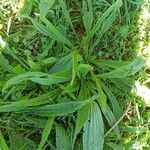
Plantago monosperma
Plaintain · Buckhorn Plantain · Buckhorn Plantai · Silver Plantain · Spitzwegerich
Description
Source: leafsnapPlantago monosperma, commonly known as the desert plantain, is a small herbaceous plant that belongs to the Plantaginaceae family. Native to the arid regions of North Africa and Southwest Asia, it thrives in sandy or rocky soils typically found in desert areas. The plant features a rosette of basal leaves that are long, narrow, and veined prominently. These leaves are covered with fine hairs that help protect them from water loss due to evaporation in hot, dry environments. The plant's stem is short and supports a single flower spike that can grow up to 20 cm tall. The flowers of Plantago monosperma are small, and greenish-white or yellowish-white in color, and arranged on the spike in dense clusters. They bloom from spring through summer. The fruit produced by this species is a capsule containing a single seed, which gives the plant its name "monosperma," meaning "one seed." The seeds have been used for medicinal purposes by indigenous people for centuries due to their anti-inflammatory properties. Overall, Plantago monosperma plays a crucial role as an ecological pioneer species by colonizing disturbed areas such as sand dunes and rocky slopes, where other plants struggle to grow due to harsh environmental conditions.
Care Guide
💧 Water Every 7 days
☀️ Light Full sun
🌡️ Temperature 5–35°C
💨 Humidity
🪴 Soil 6-7
🌱 Fertilizer
🪴 Pot & Repot
✂️ Pruning
🌿 Propagating
🐛 Diseases & pets
☠️ Toxicity
Characteristics
- Life Cycle
- Annual
- Genus
- Plantago
- Family
- Plantaginaceae
- Hardiness Zone
- 5-9
- Leaf Type
- Semi-evergreen