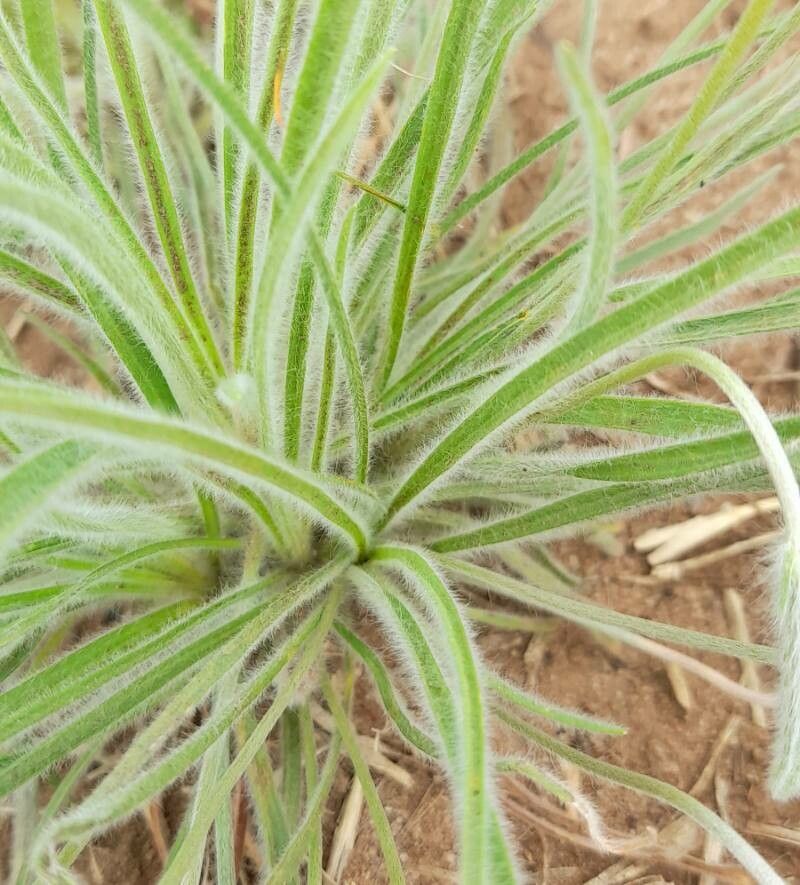
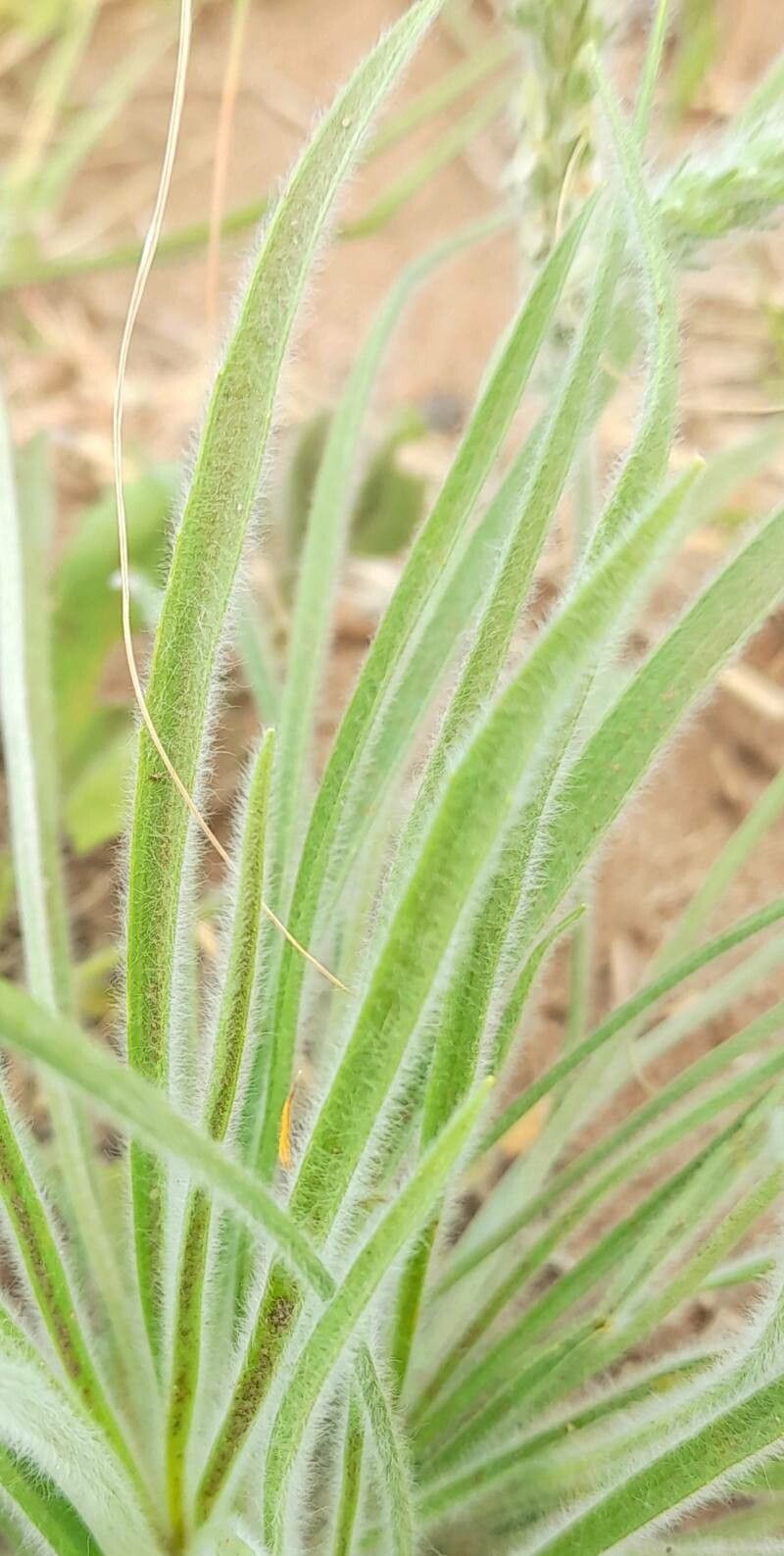
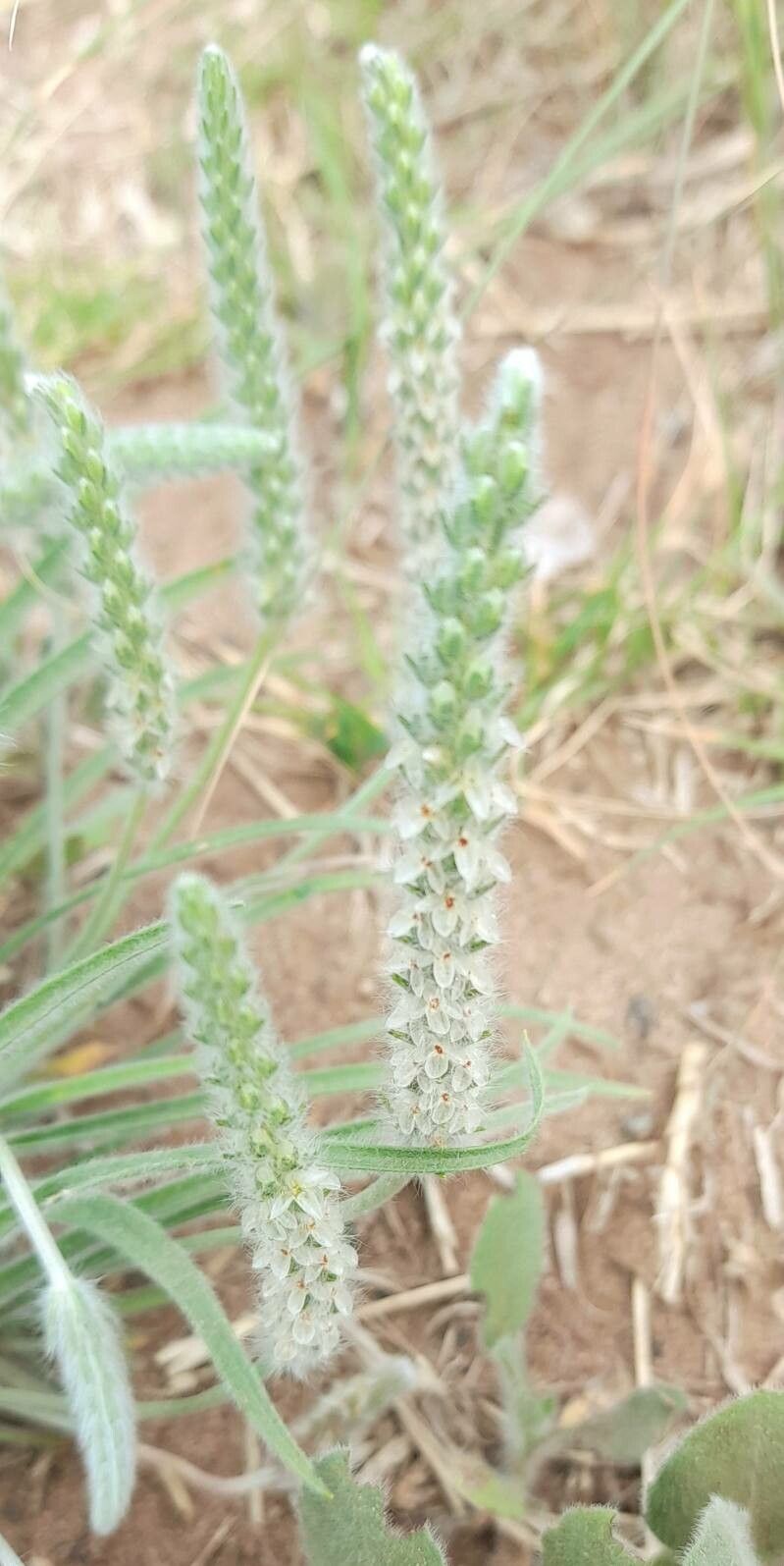
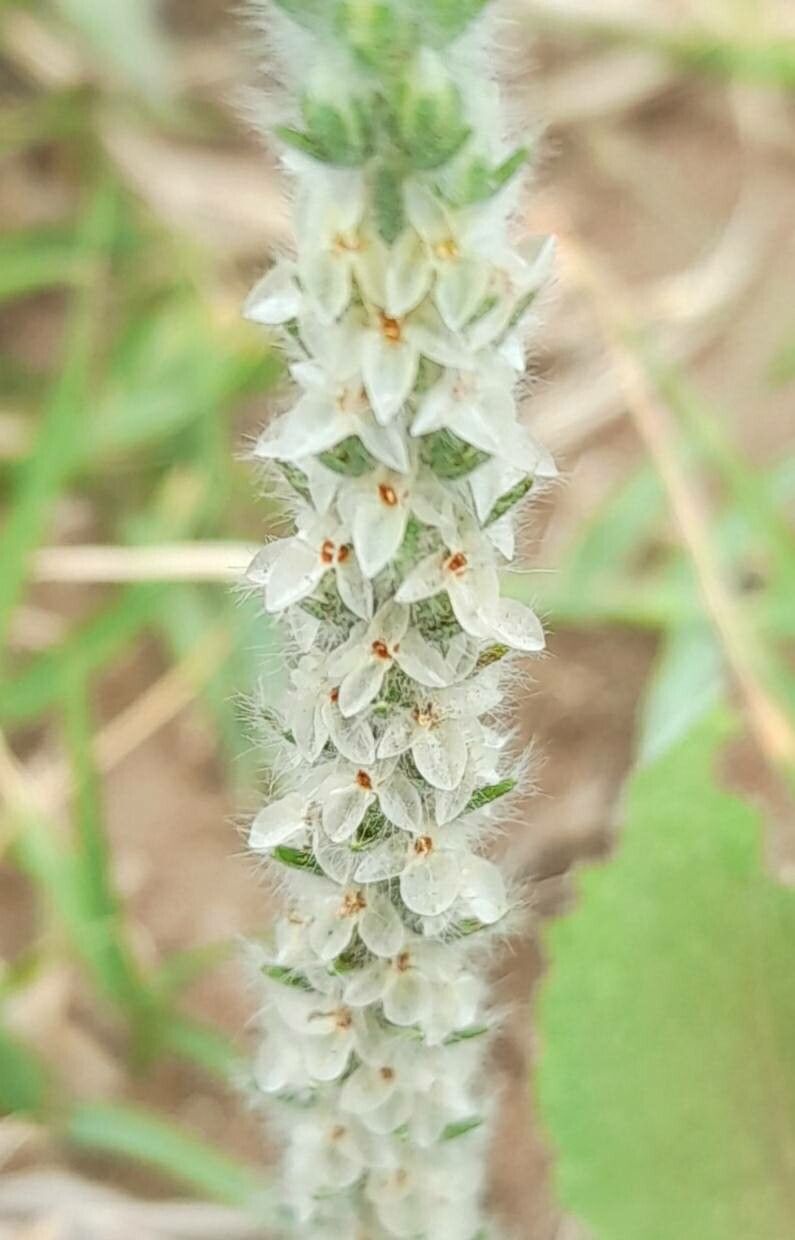
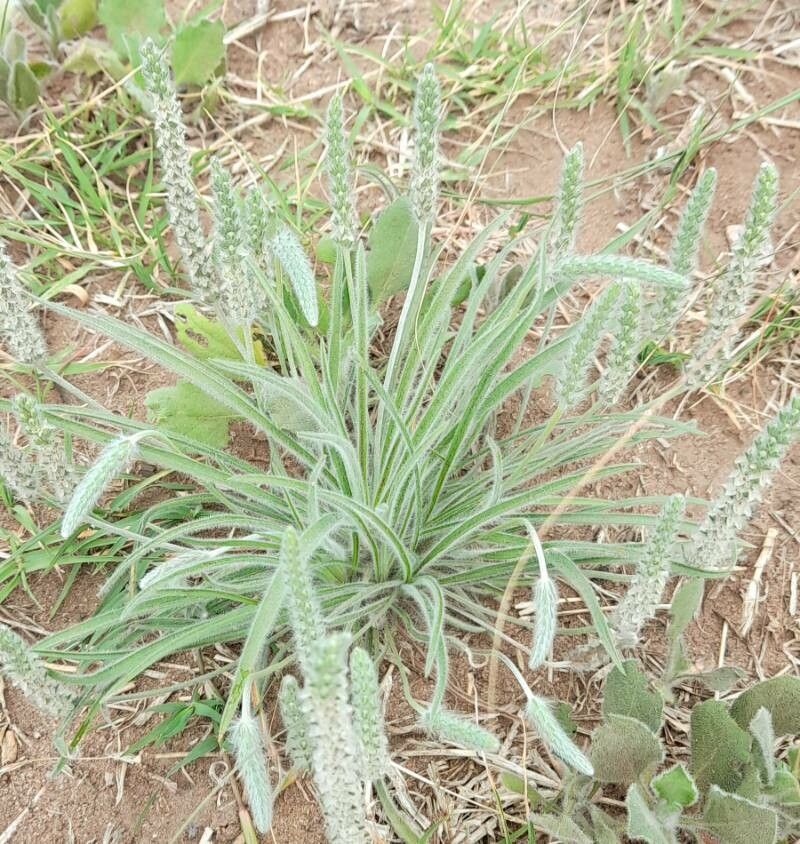
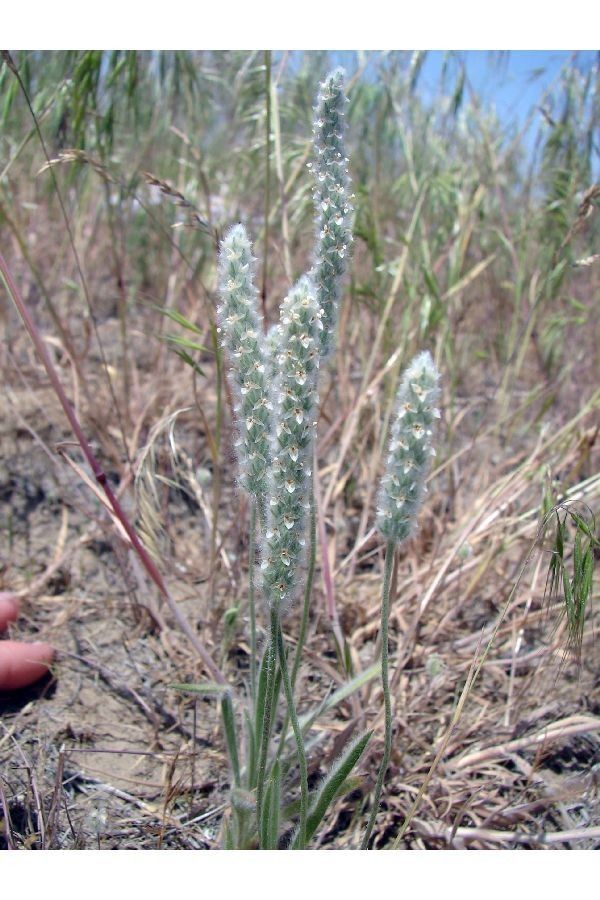
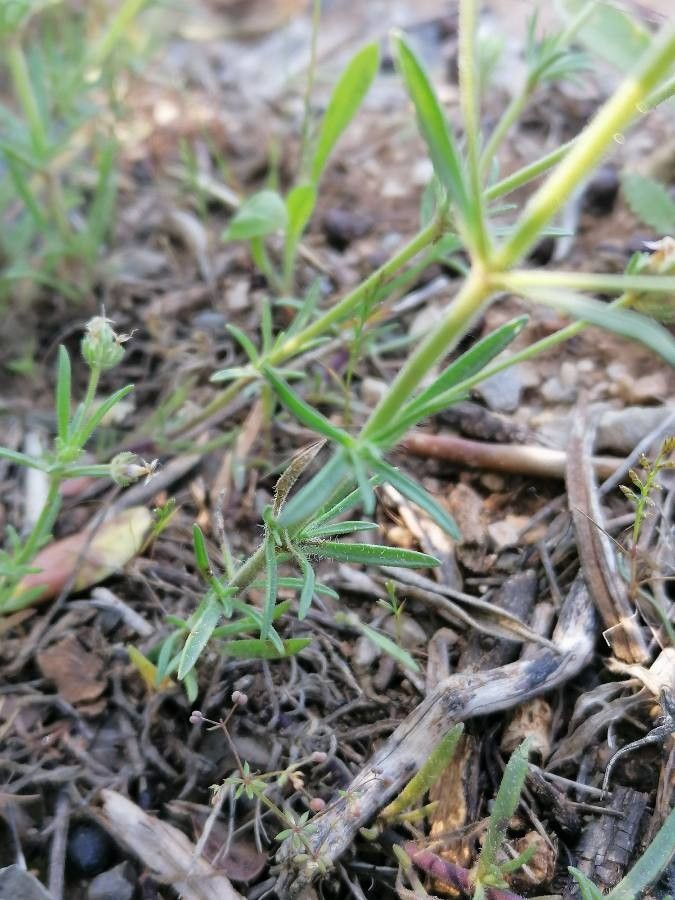
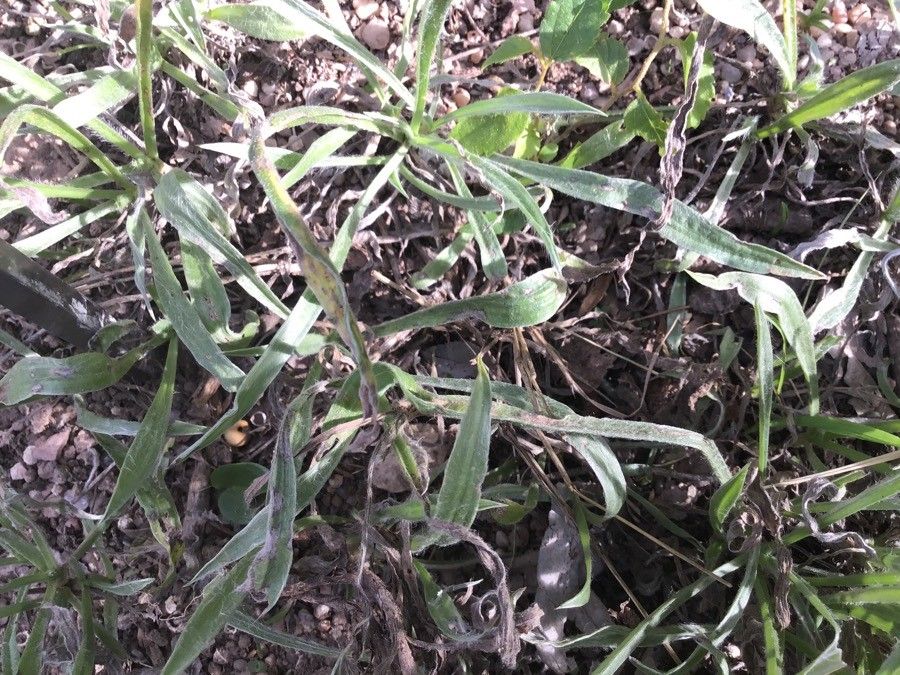
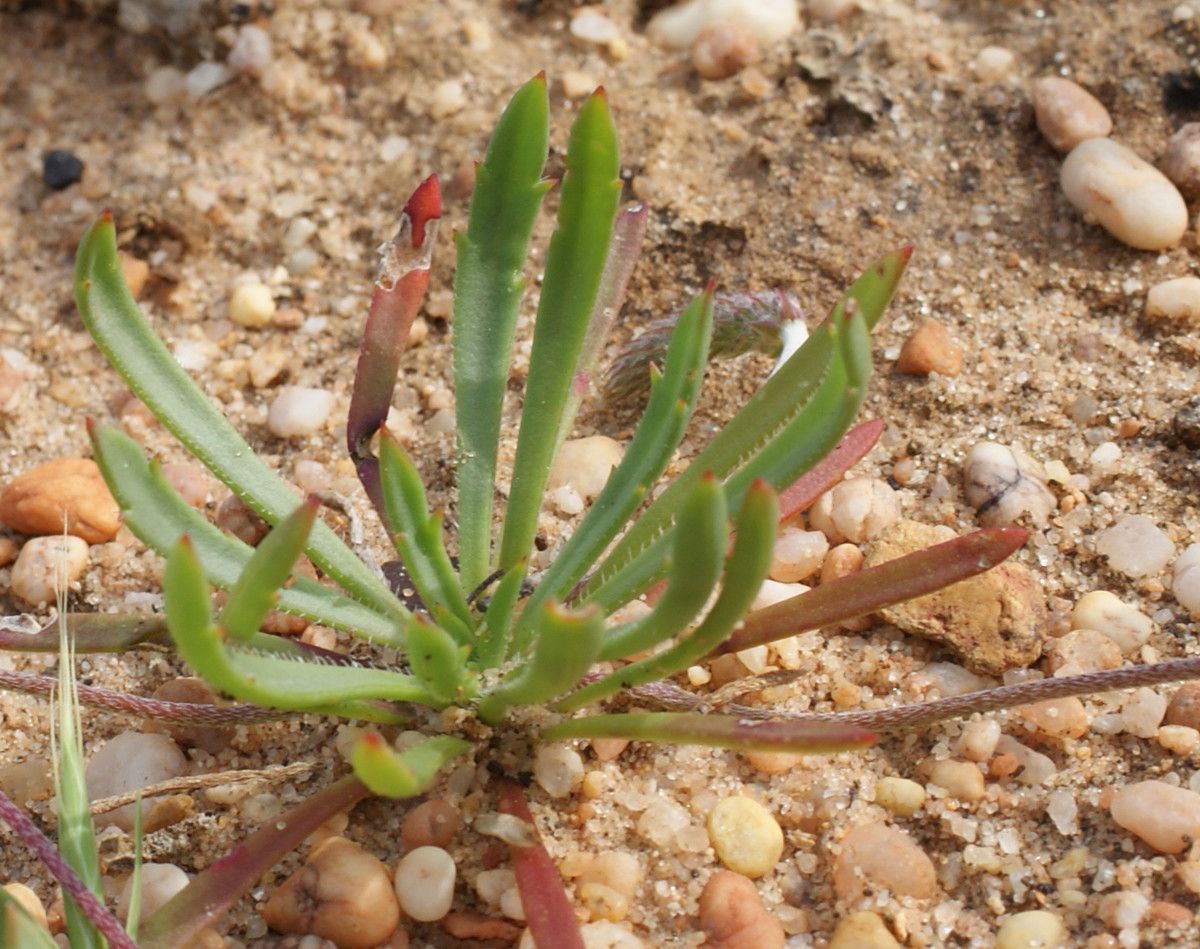
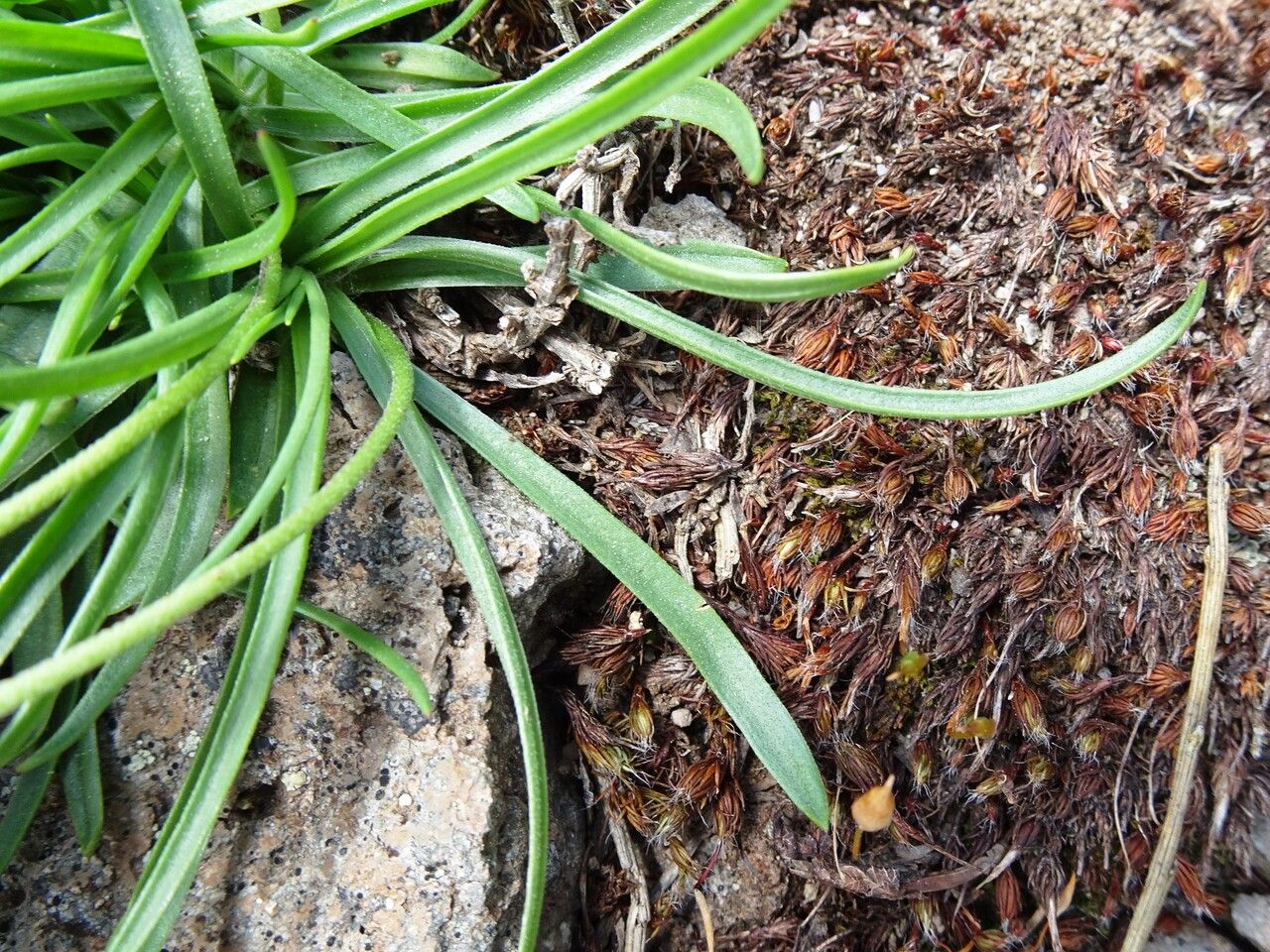
Plantago patagonica is a species of plantain known by the common name woolly plantain. It is native to much of North America, including the southern half of Canada, the western and central United States, and northern Mexico, and parts of southern South America. It grows in many types of habitat, including grassland and woodlands. It is a hairy annual herb producing linear or very narrowly lance-shaped basal leaves up to 10 centimetres (4 in) long. There are usually many stemlike inflorescences growing erect to a maximum height of around 15 cm (6 in). Atop the peduncle of the inflorescence is a dense cylindrical or somewhat conical spike of several tiny flowers and bracts. The spike is very woolly.Native Americans including the Navajo, Puebloans, and Hopi used this as a medicinal and ceremonial plant. The Navajo and Puebloans use it for headaches, diarrhea, babies' colic, and to reduce appetite and prevent obesity.
Wooly plantain is fairly resistant to disease and generally does not tend to get sick. However, it can be vulnerable to pests and diseases present in its environment. Those infections are usually mild. In terms of care, this plant requires moderate maintenance. Regular pruning is needed to keep a neat appearance and support healthy growth. Applying fertilizer can also help encourage flowering. Wooly plantain is suitable for anyone with outdoor space, such as a garden or patio, and does not demand extensive care experience. It may need more attention when grown indoors.
How to keep Plantago Patagonica.
Light
Wooly plantain does best with plentiful sun. Adequate sunlight is essential for its healthy growth, allowing photosynthesis to operate at its best. It tolerates only a little shade, and insufficient light can hinder its growth and development. In the wild it grows in full sun, showing its preference for bright exposure.
Water
The woolly plantain is well-suited for arid environments due to its exceptional drought tolerance. To mimic its natural dry conditions, it needs watering only once a week. For optimal growth, it should be planted outdoors in well-draining soil. This setup highlights its low-maintenance and resilient characteristics.
Temperature
Wooly plantain can tolerate a wide range of temperatures, but its distribution may still be restricted by particular combinations of moisture and heat. It performs best in warm summer climates with adequate rainfall or watering. Extended periods of cloudy, rainy weather, as well as prolonged high temperatures, can raise the likelihood of Wooly plantain dying. In winter, appropriate protection from cold can increase the plant’s survival rate.
Fertilizer
Wooly plantain benefits from regular, light applications of fertilizer to encourage healthy leaf growth. You should fertilize Wooly plantain about once a month throughout the summer. Nitrogen is essential for foliage, and adding nitrogen-rich sources helps Wooly plantain thrive.
Pruning
The woolly plantain is characterized by its dense, woolly leaves and its low rosette form. Pruning should be done from early to late spring to remove dead foliage, improve air circulation, and rejuvenate growth while maintaining its compact shape. This practice boosts the plant's vigor and encourages healthy growth patterns for the coming season.
Botanical profile.
- Plant Type
- Herb
- Life Cycle
- Annual, Perennial
- Genus
- Plantago
- Family
- Plantaginaceae
- Hardiness Zone
- 4-9
- Mature Height
- 5 cm to 20 cm
- Mature Spread
- 15 cm
- Leaf Color
- Gray, Green
- Leaf Type
- Deciduous
- Flower Color
- White
- Flower Size
- 2.54 cm
- Bloom Time
- Mid spring, Late spring, Early summer
- Planting Time
- Spring
- Harvest Time
- Summer
- Native Area
- Mexico
Other names.
Reader questions.
What are the sunlight requirements for Wooly plantain?
Wooly plantain requires full sun, which means it needs above 6 hours of direct sunlight daily to thrive. It's important to observe how sunlight moves through your garden to choose spots that offer a balance of light and shade, ensuring the plants' wellbeing. Wooly plantain tolerates minimal shade, but insufficient sunlight can stunt its growth. In its natural habitat, it enjoys uninhibited solar radiation, highlighting its preference for ample sunshine.
How can artificial lighting help Wooly plantain grown indoors?
Indoor Wooly plantain plants require adequate lighting for optimal growth. When natural sunlight is insufficient, especially during winter or in less sunny spaces, artificial lights are a vital solution. They promote faster, healthier growth by providing the required wavelengths of light. LED lights are recommended due to their customizable light spectra. Full sun plants need 30-50W/sq ft, partial sun plants need 20-30W/sq ft, and full shade plants need 10-20W/sq ft of artificial light. The light source should be placed 12-36 inches above the plant, mimicking natural sunlight for 8-12 hours per day.
What are the symptoms of light deficiency in Wooly plantain?
When Wooly plantain is cultivated indoors with insufficient light, it may display symptoms such as small, new leaves, leggy or sparse growth, faster leaf drop, slower or no new growth, lighter-colored new leaves, and symptoms of excessive sunlight exposure like chlorosis, sunscald, leaf curling, wilting, and leaf scorching. These symptoms indicate a lack of adequate sunlight or overexposure, both of which affect the plant's health and ability to photosynthesize properly.
What solutions can address Wooly plantain's light deficiency?
To combat light deficiency in Wooly plantain, gradually increase sunlight exposure by moving plants to sunnier locations each week, aiming for at least 6 hours of direct sunlight daily. Utilize south-facing windows and keep curtains open for maximum exposure. For large or immovable indoor plants, consider using artificial light for at least 8 hours daily. Outdoors, ensure plants are moved gradually to avoid sunburn. Reduce obstructions like overhanging branches to improve sunlight access. If necessary, transplant smaller plants during their dormant period, late winter or early spring, to a sunnier location with good drainage.