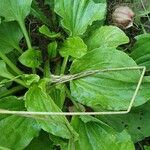
Plantago rugelii
American plantain · Rugel's plantain · Pale plantain · Blackseed plantain · RED-STALKED PLANTAIN
Description
Source: leafsnapPlantago rugelii, commonly known as Rugel's plantain, is a perennial herbaceous plant in the Plantaginaceae family. Native to North America, it thrives in various habitats such as prairies, meadows, and open woods. The plant features a basal rosette of lance-shaped leaves with prominent veins. These green leaves can grow up to 20 cm long and 5 cm wide. The plant’s erect stem bears small greenish-white flowers that bloom from May to September. Rugel's plantain has been utilized for medicinal purposes for centuries, particularly by Native Americans who used it as a poultice for wounds and insect bites due to its anti-inflammatory properties. Additionally, the plant is an important food source for wildlife like deer and rabbits, which feed on its leaves. In summary, Plantago rugelii is a significant native species with ecological importance. It provides essential food for wildlife and possesses valuable medicinal properties.
🌳 Besides its better-known uses, blackseed plantain serves an interesting but often overlooked purpose as a bioindicator. Its growth patterns can indicate aspects of soil health, including pH balance and certain nutrient levels. The plant’s presence, abundance, and condition can provide valuable information, making blackseed plantain a logical option for environmental monitoring and ecological studies.
🎭 Recovery, Defense, Power
Care Guide
💧 Water Every 7 days
The blackseed plantain thrives in moist, fertile environments and needs regular watering without becoming waterlogged. It is best watered on a weekly basis. This plant is well-suited to temperate climates, flourishing with balanced soil moisture and ambient humidity. These conditions make it robust and ideal for outdoor growth.
How should I water my Blackseed plantain plant?
When watering the Blackseed plantain, it is best to use filtered water at room temperature. Tap water may have harmful particles, so filtered water is a safer choice. The plant prefers warm environments, so it is important to avoid cold water, which can be a shock to its system. Additionally, overhead watering should be avoided to prevent foliage problems. Instead, water the plant by applying filtered, room temperature water directly to the soil until it is soaked. This helps the roots to spread and collect nutrients more effectively.
What should I do if I give too much or too little water to my Blackseed plantain?
Overwatering is a common issue that can harm your Blackseed plantain. This occurs when the plant receives too much water, causing wilting and yellowing of stems and leaves. If the overwatering continues for a long time, it can lead to diseases like root rot, mold, and mildew, which can be fatal for the plant. Underwatering, on the other hand, is less common for the Blackseed plantain, as it can tolerate drought fairly well. However, it is still possible, and in such cases, the leaves may become brittle and brown. To care for your Blackseed plantain, it's important to recognize the signs of overwatering early on. Diseases like root rot are difficult to reverse if left unaddressed. If you notice signs of overwatering, reduce your watering schedule immediately. Additionally, check the quality of the soil and replace it with a well-draining potting mix if it doesn't drain properly. If your Blackseed plantain shows signs of receiving too little water, simply increase your watering frequency until the signs improve.
How often should I water my Blackseed plantain?
If your Blackseed plantain is in a pot, the most precise way to determine if it needs water is by checking the moisture in the soil. Simply stick your finger into the soil and if the top two to three inches are dry, it's time to water. If you have planted your Blackseed plantain outdoors in the ground, you can use the same method to test the soil. When you find that the top few inches of soil are dry, it's time to water. Typically, during spring and early fall, watering once a week is sufficient. However, when it gets very hot, you may need to water twice or more per week. It's important to note that mature, well-established Blackseed plantains are quite resilient and can tolerate drought well.
How much water does my plantain plant need?
When watering your Blackseed plantain, don't be afraid to give it a generous amount of water. Make sure the top two to three inches of soil are dry before watering. It's important to thoroughly soak the soil, allowing excess water to drain through the bottom of the pot. If you don't see any excess water draining, you may have not watered enough. However, be careful not to let water accumulate in the soil, as this can harm the plant. If you notice poor drainage, it's best to avoid watering too much. For outdoor plants, about 1 inch of rainfall per week is enough.
How should I water my Blackseed plantain at different times as it grows?
The water requirements of the Blackseed plantain can vary depending on different growth stages. In the early years and when recently transplanted, the plant will need more water. This is because during these stages, the plant focuses on developing new roots to support future growth, and these roots require more moisture. As the plant matures over a few seasons, it will need less water. Additionally, during the bloom period, when the plant is producing flowers, it may require extra water as flower development uses a significant amount of moisture.
☀️ Light Full sun
Blackseed plantain grows best with uninterrupted direct sunlight throughout the day, yet it is also tough enough to survive in lower light. Excessive or insufficient light can harm the plant, impairing its healthy growth and development.
What are the sunlight requirements for Blackseed Plantain (Plantago rugelii)?
Blackseed Plantain requires full sun, defined as above 6 hours of sunlight daily, for optimal growth. It can also grow in partial sun, which is about 3-6 hours of sunlight. The plant thrives best when exposed to unobstructed solar rays throughout the day but is resilient enough to tolerate reduced lighting conditions. It is essential to monitor the sunlight exposure in your garden carefully and choose planting spots that offer a good balance between light and shade, ensuring the plant's healthy growth and development.
How does artificial lighting benefit indoor Blackseed Plantain, and what are the recommendations?
Artificial lighting is crucial for indoor Blackseed Plantain, especially in conditions where natural sunlight is insufficient, like during winter or in less sunny spaces. For optimal growth, indoor plants require adequate lighting. LED lights are recommended because they can provide specific wavelengths needed by the plants. Full sun plants need 30-50W/sq ft, partial sun plants require 20-30W/sq ft, and full shade plants need 10-20W/sq ft of artificial light. The light source should be placed 12-36 inches above the plant, mimicking natural sunlight, and it's advised to provide 8-12 hours of light per day to match the plant's needs.
What are the symptoms of inadequate or excessive light exposure in Blackseed Plantain?
Symptoms of inadequate light exposure in Blackseed Plantain include smaller new leaves, leggy or sparse growth, faster leaf drop, slower or no new growth, and lighter-colored new leaves. Excessive sunlight can lead to chlorosis (leaves turning yellow), sunscald (damage from intense sunlight), leaf curling (to reduce surface area exposed to sunlight), wilting (from increased water loss), and leaf scorching (brown, dry edges on leaves). These symptoms indicate the plant's struggle with either too much or too little light, affecting its health and development.
What solutions can help Blackseed Plantain with light-related issues?
For indoor plants, gradually moving them to a location with at least 6 hours of direct sunlight daily or using artificial lighting can address insufficient light exposure. A south-facing window is preferable, and if the plant is large, investing in professional grow lights can be beneficial. Outdoors, plants should be gradually moved to sunnier spots to avoid shock and sunburn. Removing obstructions like tree branches can increase sunlight exposure. For plants struggling with too little or too much sunlight, transplanting during the dormant period to a location with better light conditions and drainage can be helpful. While parts of the plant affected by poor light may not recover, new growth should be healthy after adjusting the light exposure.
🌡️ Temperature 0–35°C
Native to temperate zones with temperature ranges of 68 to 95 °F (20 to 35 ℃), blackseed plantain prefers these conditions. To help it thrive, raise the temperature in summer and lower it in winter when necessary.
What are the ideal temperature conditions for growing Blackseed plantain?
Blackseed plantain thrives in temperate zones, preferring temperatures between 68 to 95 °F (20 to 35 °C). During summer, it's beneficial to slightly increase the temperature, whereas in winter, a decrease is advisable to match its natural habitat conditions. The plant exhibits strong cold resistance, making special frost protection measures unnecessary in most cases. However, in extreme cold where temperatures are expected to drop below -35°C, providing some form of cold protection such as covering the plant with soil or straw is recommended. Additionally, watering the plant abundantly before the first freeze in autumn helps keep the soil moist and prevents drought and water scarcity for the plant during the colder months.
How does Blackseed plantain react to low temperatures, and what should be done?
Blackseed plantain is quite tolerant to cold conditions and prefers temperatures to remain above 0°C during winter. While it can survive low temperatures, it may not sprout or show significantly reduced sprouting if temperatures fall below -35°C. In such cases, there may not be any noticeable changes during the winter, but the decreased sprouting will become evident in springtime. To manage this, it is recommended to remove any parts of the plant that have failed to sprout as a solution to encourage healthy growth.
What are the implications of high temperatures on Blackseed plantain and how can they be mitigated?
During the hotter summer months, it's crucial to keep the temperature below 35°C for Blackseed plantain. Exceeding 38°C can cause the leaves to lighten in color, become prone to curling, suffer from sunburn, and, in severe cases, cause the entire plant to wilt and dry out. To mitigate these issues, trim away any sunburned and dried-up parts of the plant. Relocate the plant to a shaded area away from direct midday and afternoon sun or use a shade cloth to protect it. Ensuring the soil remains moist by watering the plant in the morning and evening is also effective in preventing these high temperature stresses.
💨 Humidity
🪴 Soil 5-7
🌱 Fertilizer
One fertilizer application in spring is typically enough for Blackseed plantain, though repeated feedings can maximize growth. Apply fertilizer roughly every month to month and a half. Fertilizing improves the leaves' appearance and function, encouraging even color and a healthy texture. It also promotes root development and nutrient uptake, supporting the plant's long-term health.
🪴 Pot & Repot
✂️ Pruning
🌿 Propagating
🐛 Diseases & pets
☠️ Toxicity
Characteristics
- Plant Type
- Herb
- Life Cycle
- Perennial, Annual
- Genus
- Plantago
- Family
- Plantaginaceae
- Hardiness Zone
- 3-9
- Mature Height
- 8 cm to 30 cm
- Mature Spread
- 30 cm
- Leaf Color
- Green, Blue
- Leaf Type
- Deciduous
- Flower Color
- White
- Flower Size
- 2.54 cm
- Bloom Time
- Late spring, Early summer, Mid summer
- Planting Time
- Autumn, Winter
- Harvest Time
- Early summer, Mid summer