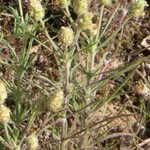
Plantago scabra
Branched Plantain · Glandular Plantain · Sand plantain · Whorled plantain · Psyllium
Description
Source: leafsnapPlantago indica, commonly known as branched plantain, sand plantain, or black psyllium, is a flowering plant in the plantain family Plantaginaceae, and is one of a few species in the Plantago genus under the common name psyllium. The plant is native to parts of Africa, Europe, Russia, and Asia, and has been naturalized in many other areas such as Australia and North America. The plant can be found mostly in dry inland areas, such as those that are sandy, and has also naturalized on roadsides and in meadows. The plant is not used broadly as a food source, but has been cultivated for its seeds which serve a medicinal use as a laxative.
Care Guide
💧 Water
☀️ Light Full sun
Plantago arenaria subsp. arenaria is a sun-loving perennial herbaceous plant that originates in open habitats and frequently thrives in meadows and grasslands. It prefers full sun but can also tolerate partial sun.
🌡️ Temperature 5–35°C
Plantago arenaria subsp. arenaria can tolerate a broad range of temperatures, but its distribution may still be limited by various combinations of water and heat conditions. It grows best in warm summer climates with sufficient rainfall or watering. Prolonged periods of cloudy, rainy weather or extended high temperatures can raise the chance of Plantago arenaria subsp. arenaria dying. In winter, adequate protection against cold can improve the plant’s survival.
💨 Humidity
🪴 Soil 6-8
🌱 Fertilizer
Usually one fertilizer application in spring is enough for Plantago arenaria subsp. arenaria, though repeated feedings can boost growth. Feed every month to six weeks. Fertilizing improves the leaves' appearance and function, maintaining even color and a healthy texture. It also encourages root development and nutrient uptake for long-term plant health.
🪴 Pot & Repot
✂️ Pruning
🌿 Propagating
🐛 Diseases & pets
☠️ Toxicity
Characteristics
- Plant Type
- Herb
- Life Cycle
- Perennial
- Genus
- Plantago
- Family
- Plantaginaceae
- Hardiness Zone
- 5-9
- Mature Height
- 10 cm to 30 cm
- Mature Spread
- 15 cm to 25 cm
- Leaf Color
- Green, Dark Green
- Leaf Type
- Deciduous
- Flower Size
- 0.20 cm to 0.25 cm
- Bloom Time
- Summer
- Planting Time
- Spring, Summer, Autumn
- Harvest Time
- Late summer, Early fall, Mid fall
- Native Area
- Libya, Egypt, Turkey, Austria, Czech Republic, Slovakia, Montenegro, Bulgaria, Armenia, Greece, Croatia, Slovenia, Serbia, Hungary, Germany, Kyrgyzstan, Kazakhstan, Italy, Spain, Iran, Albania, Azerbaijan, Romania, France