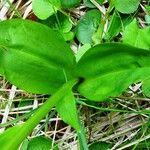
Platanthera chlorantha
Butterfly Orchid · Greater butterfly orchid
Description
Source: leafsnapPlatanthera chlorantha, commonly known as greater butterfly-orchid, is a species of orchid in the genus Platanthera. It can be found throughout Europe and Morocco. The name Platanthera is derived from Greek, meaning "broad anthers", while the species name, chlorantha, means "green-flowered". Greater butterfly-orchid is similar to lesser butterfly-orchid, Platanthera bifolia, which is about the same size, but with smaller flowers. Greater butterfly-orchid is a herbaceous perennial of medium height. Its leaves are broad, shiny and elliptical, with a large pair at the base, and much smaller, more lanceolate leaves up the stem. The flowers are greenish-white, scented of vanilla, with spreading sepals and petals. The lip of the flower is long, narrow and undivided. The flower has a very long spur. The flowers form a rather loose spike. The pollen masses diverge to touch both sides of the pollinating insect. Flowering in Britain is in June to July, but earlier in the south of Europe. The plant is found in woods, open scrub, and grassland including on chalk.Its world distribution is broadly endemic to Europe: from the British Isles in the west to European Russia and the Caucasus in the east; and from the coastal region of Norway to 65°N, down to the whole of Italy and the Balkans excluding most of Greece. There are scattered outliers in Spain, Turkey, and North Africa. (Codes)
Care Guide
💧 Water
The greater butterfly orchid originates from damp woodlands and thrives in high humidity, though it can also tolerate moderate drought. For the best growth results, water the plant weekly and ensure the surrounding humidity remains high, particularly during its active growth cycle. This is especially important when the orchid is grown indoors.
How should I water my Greater butterfly orchid?
The watering method for the Greater butterfly orchid depends on whether the plant is in an active growth phase or not. During growth, you should water the soil and occasionally water overhead if the weather is warm. In contrast, during winter or cool and wet weather, stick to watering the soil, without overhead watering. Signs that the orchid needs more water include thin and dry roots and leaves, or discoloration. Overwatering will make the orchid mushy and limp. It's important to use a pot with good drainage and water the orchid multiple times per week during the growing season. The amount of water depends on the pot size, with larger pots needing less frequent watering. The best water to use is rainwater or distilled water, and it should ideally match the temperature of the air.
What should I do if I give too much or too little water to my Greater butterfly orchid?
To keep your Greater butterfly orchid healthy, avoid keeping the soil too moist for extended periods. These plants require frequent watering during growth, but they also need well-draining soil. Overwatering can lead to root rot, causing the plant to become mushy. If you notice any signs of rot, use sterile pruning shears to remove affected roots and then repot the orchid in a container with proper drainage and fast-draining potting mix. However, excessive repotting isn't recommended for this plant, so it's important to find the right watering rate. If the orchid starts to shrivel and feel dry to the touch, it might be underwatered. In this case, increase the watering frequency as the soil might be drying out faster than expected.
How frequently should I water my Greater butterfly orchid?
To ensure the healthy growth of your Greater butterfly orchid, it is recommended to water it once or twice per week during the active growth stage (spring and summer). However, if it's extremely hot and dry, you may need to increase the frequency to three times per week or more. In the winter months, watering is still necessary but not as often. A frequency of two to three times per month should suffice to keep the orchid alive during the coldest period. Keep in mind that if you keep the orchid indoors during winter, the soil may dry out faster than usual, so you might need to water it more frequently. To transition from the summer watering schedule to the reduced winter schedule, gradually decrease the watering frequency during the fall season.
What things do I need to think about when watering my Greater butterfly orchid at different times of the year and stages of growth?
To plan the watering schedule for your Greater butterfly orchid, you should consider two important growth phases. The first phase is the active growth period, which occurs in spring and summer. During this time, the plant needs to be watered multiple times per week. The second phase is the rest period, which lasts for about two to three months in winter. During this period, the orchid requires much less water and fertilization. Watering once or twice per month is sufficient. To prepare for winter, gradually reduce the watering frequency from multiple times per week in fall to the appropriate rate for winter.
If I grow my Greater butterfly orchid indoors, how should I water it differently?
The Greater butterfly orchid needs a humid growing environment. Unfortunately, most indoor locations lack the necessary air moisture, causing the plant and soil to dry out faster compared to outdoor growth. To address this, adding a humidifier to the room where you grow the orchid can help. You may also need to water it more often. However, while humidity is important, proper air circulation is also necessary to avoid excessive moisture and associated diseases. Therefore, consider using a fan in the room to maintain good air circulation.
☀️ Light Full sun
The greater butterfly orchid does best in full sun all day, though it can also survive when sunlight is partly blocked. Its native habitats typically receive a significant amount of solar radiation. Both excessive exposure and insufficient light can impede its growth and overall health.
What are the sunlight requirements for the Greater Butterfly Orchid?
The Greater Butterfly Orchid requires full sun exposure, which means it needs more than 6 hours of sunlight daily to thrive optimally. However, it can also survive in partial sun conditions, receiving about 3-6 hours of sunlight. It's essential to observe how sunlight moves through your garden to find the perfect spot that provides a balance of light and shade. This ensures the plant receives the appropriate amount of sunlight for its health.
How does the Greater Butterfly Orchid respond to artificial lighting?
When natural sunlight is insufficient, especially during winter or in less sunny locations, artificial lighting becomes crucial for the Greater Butterfly Orchid's growth. The right type of artificial light, such as LED lights, can be customized to provide specific wavelengths needed by the plant. The intensity of the artificial light should mimic natural sunlight conditions: 30-50W/sq ft for full sun plants, 20-30W/sq ft for partial sun, and 10-20W/sq ft for full shade plants. Additionally, the light source should be placed 12-36 inches above the plant, keeping it on for 8-12 hours per day to imitate the natural daylight cycle.
What are the symptoms of incorrect lighting for the Greater Butterfly Orchid?
The Greater Butterfly Orchid shows several symptoms when exposed to inadequate lighting. These include smaller new leaves, leggy or sparse growth, faster leaf drop, slower or no new growth, lighter-colored new leaves, chlorosis (yellowing of leaves), sunscald, leaf curling, wilting, and leaf scorching. Each of these symptoms indicates either over-exposure or insufficient light, affecting the plant's health and ability to photosynthesize effectively.
What solutions can be employed to correct lighting issues for the Greater Butterfly Orchid?
To address lighting issues for the Greater Butterfly Orchid, one can gradually move the plant to a sunnier location over several weeks, ensuring it receives at least 6 hours of direct sunlight daily. When indoor conditions prevent natural sunlight exposure, using artificial lights like desk lamps or professional plant grow lights for at least 8 hours a day can help. For outdoor plants, gradual adaptation to sunnier spots is crucial to prevent sunburn. Minimizing obstructions and considering transplanting during the plant’s dormant period can also enhance light access. It's important to realize that while parts of the plant affected by poor lighting might not recover, new growth can still be healthy with improved lighting conditions.
🌡️ Temperature 5–25°C
The greater butterfly orchid is indigenous to cool to temperate climates, flourishing in temperatures ranging from 41 to 77 °F (5 to 25 ℃). Seasonal modifications might be necessary for its ideal development, especially during the summer and winter periods.
What is the native environment and optimal growing temperature for the Greater Butterfly Orchid?
The Greater Butterfly Orchid is native to cool to temperate environments and thrives in temperatures ranging from 41 to 77 °F (5 to 25 °C). To ensure optimal growth, seasonal adjustments may be necessary, especially during the summer and winter months. This orchid is highly cold-tolerant and generally does not require additional frost protection measures during winter. However, it is recommended to water the plant generously before the first freeze in autumn to keep the soil moist and ensure it enters a frozen state, which helps prevent drought and water scarcity.
How should I care for a Greater Butterfly Orchid in low temperature conditions?
The Greater Butterfly Orchid is extremely cold-tolerant and can withstand winter temperatures above -25°C (-13°F). If the temperature drops below this threshold, while there may not be any noticeable change during the winter, sprouting in the spring might decrease or not occur at all. In the spring, it's advisable to remove any parts of the plant that have failed to sprout as part of its care regimen.
What care should be taken for a Greater Butterfly Orchid in high temperature conditions?
Greater Butterfly Orchids are not tolerant of high temperatures. Growth will stop and the orchid becomes more susceptible to rot when temperatures exceed 25°C (77°F). To protect the plant, trim away sunburned and dried-up parts, move it to a shaded location away from the midday and afternoon sun, or use a shade cloth. Additionally, watering the plant in the morning and evening will help keep the soil moist and reduce stress on the orchid.
What is the botanical name of the Greater Butterfly Orchid?
The botanical name of the Greater Butterfly Orchid is Platanthera chlorantha.
💨 Humidity
🪴 Soil 6-7
🌱 Fertilizer
The optimal period to feed a Greater butterfly orchid is during the early spring, when it transitions from dormancy to active growth. Fertilization gives essential nutrients necessary for robust growth. Despite the lower feeding requirements of the Greater butterfly orchid, feeding it once a year can boost its longevity and foster superior, more enduring blooms.
🪴 Pot & Repot
✂️ Pruning
Prune the greater butterfly orchid from early to late spring to enhance blooming. Focus on removing dead stems while preserving the plant's natural shape. Use clean, sharp tools to prevent disease. Proper pruning encourages healthier growth and more abundant flowers, ensuring the greater butterfly orchid maintains its beauty throughout the growing season.
🌿 Propagating
🐛 Diseases & pets
☠️ Toxicity
Characteristics
- Plant Type
- Herb
- Life Cycle
- Perennial
- Genus
- Platanthera
- Family
- Orchidaceae
- Hardiness Zone
- 5
- Mature Height
- 25 cm to 61 cm
- Mature Spread
- 15 cm
- Leaf Color
- Green
- Leaf Type
- Deciduous
- Flower Color
- White
- Flower Size
- 1.02 cm to 2.03 cm
- Bloom Time
- Late spring, Early summer
- Planting Time
- Spring
- Harvest Time
- Mid summer, Late summer