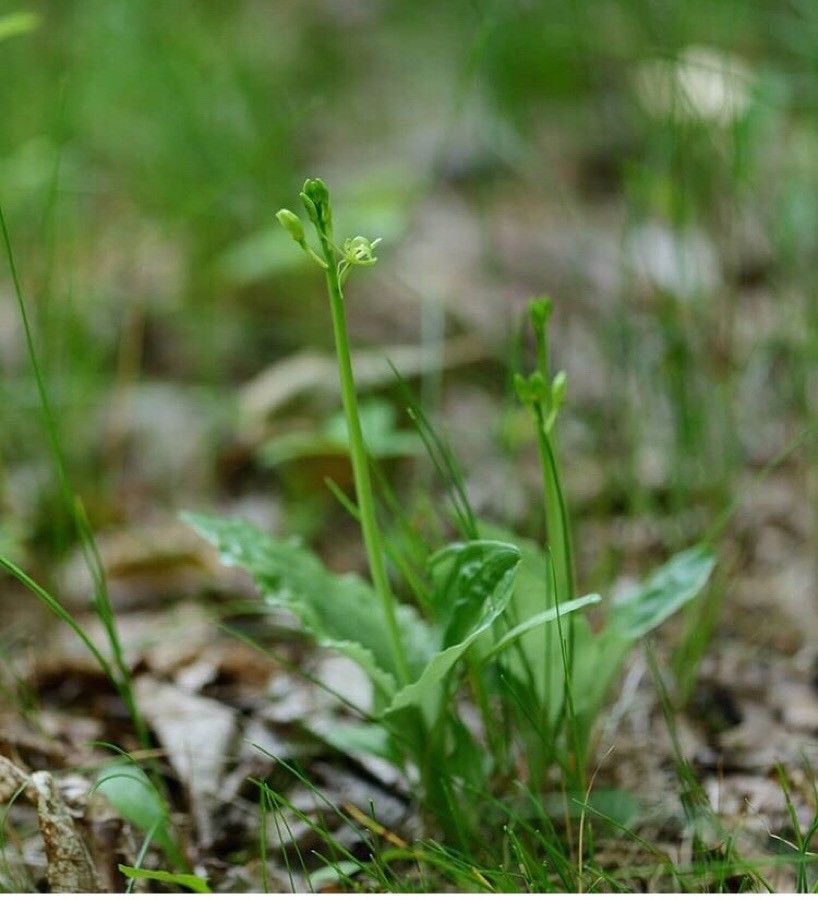
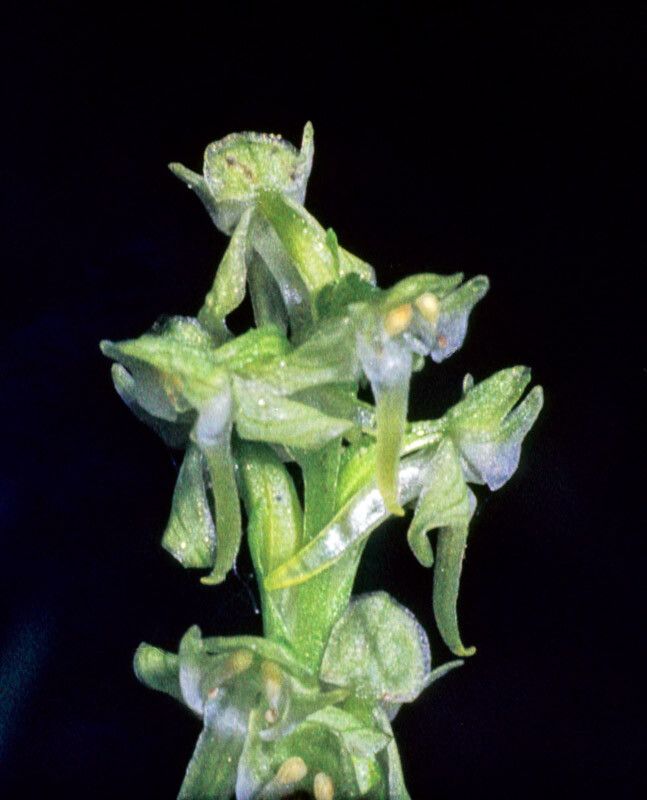
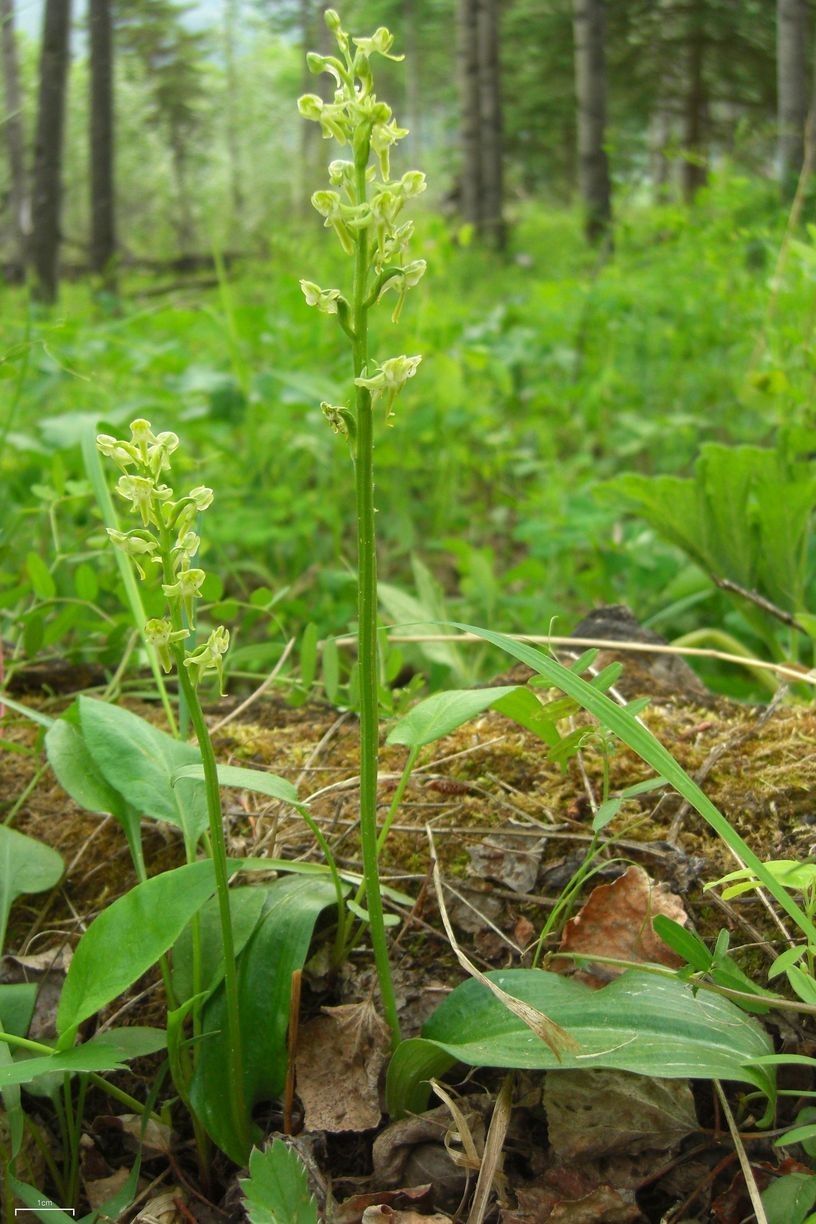
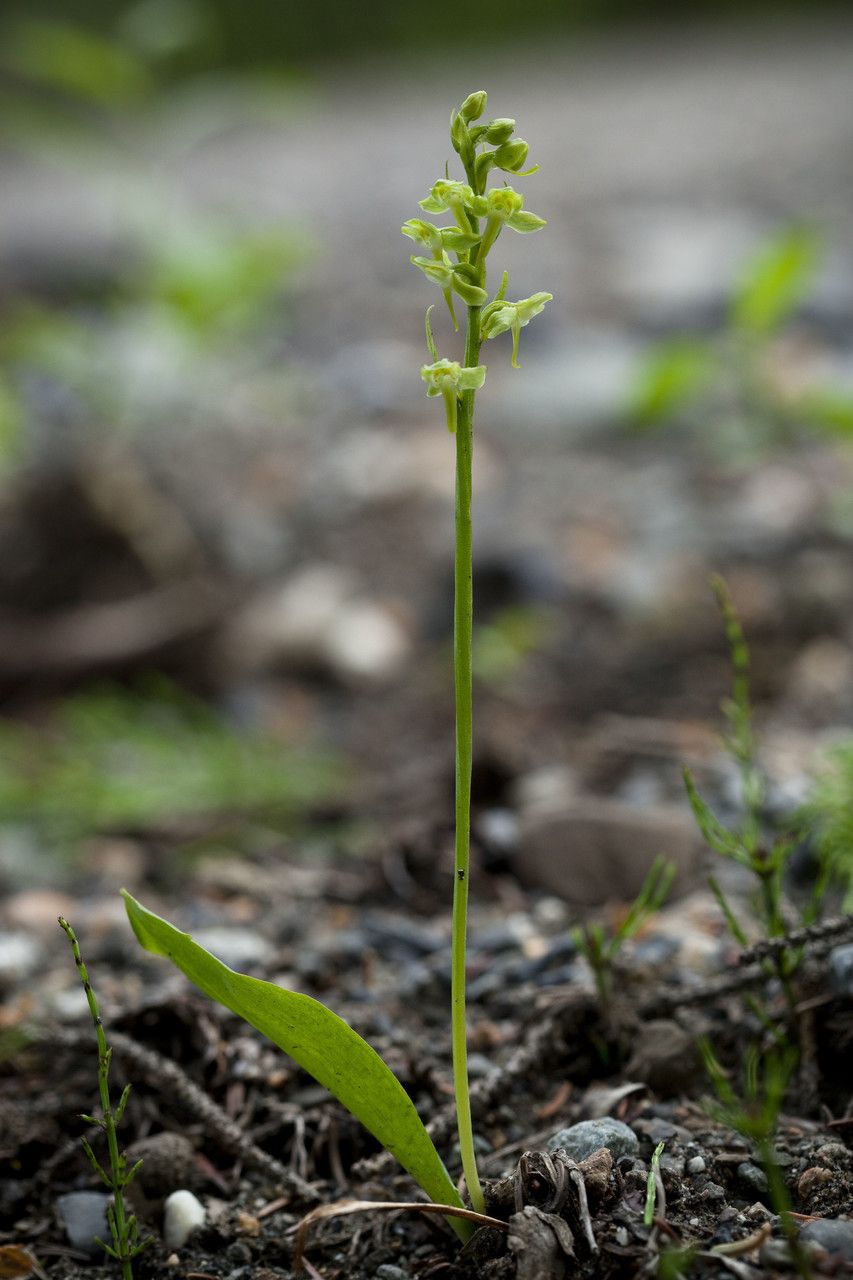
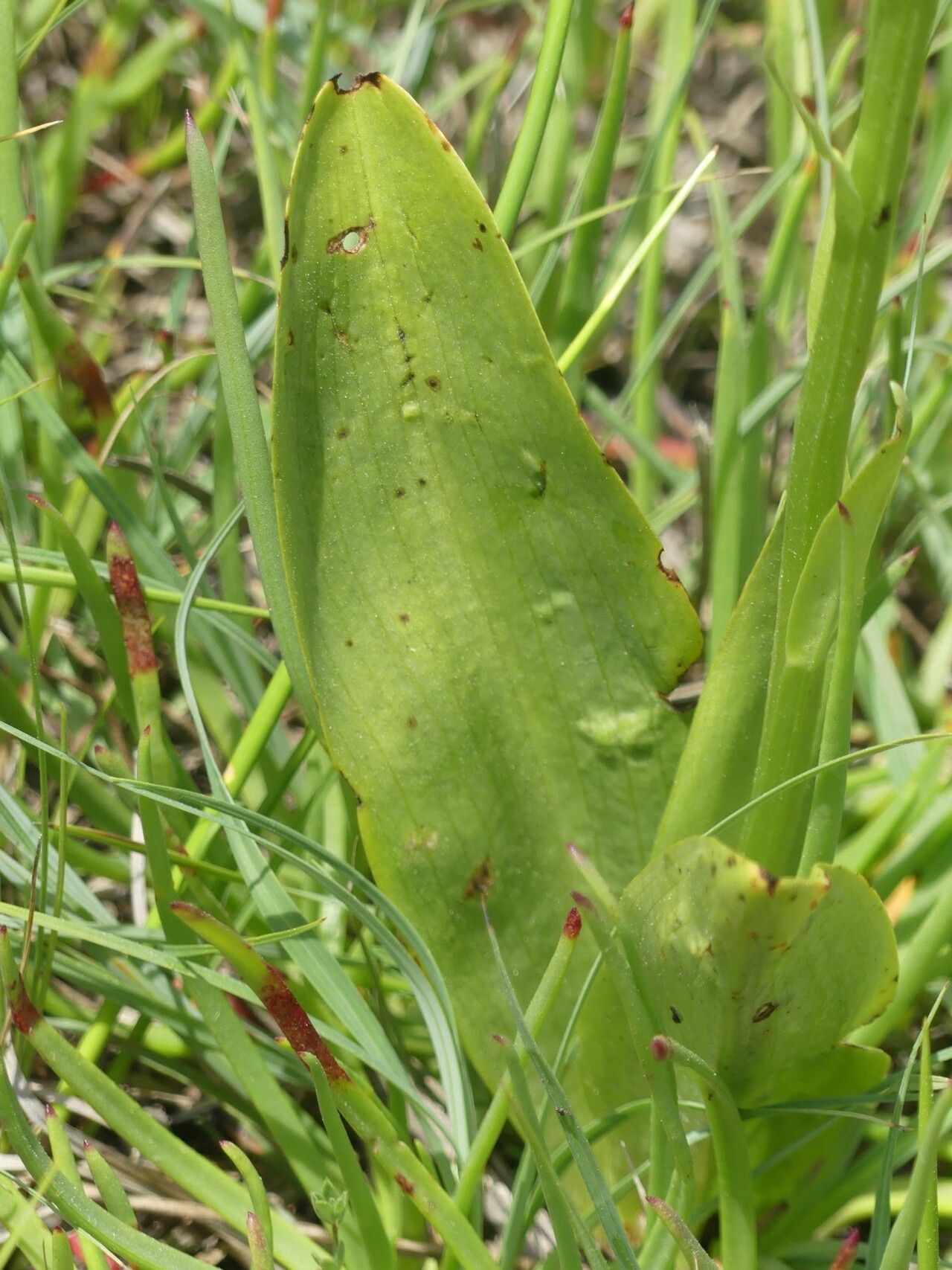
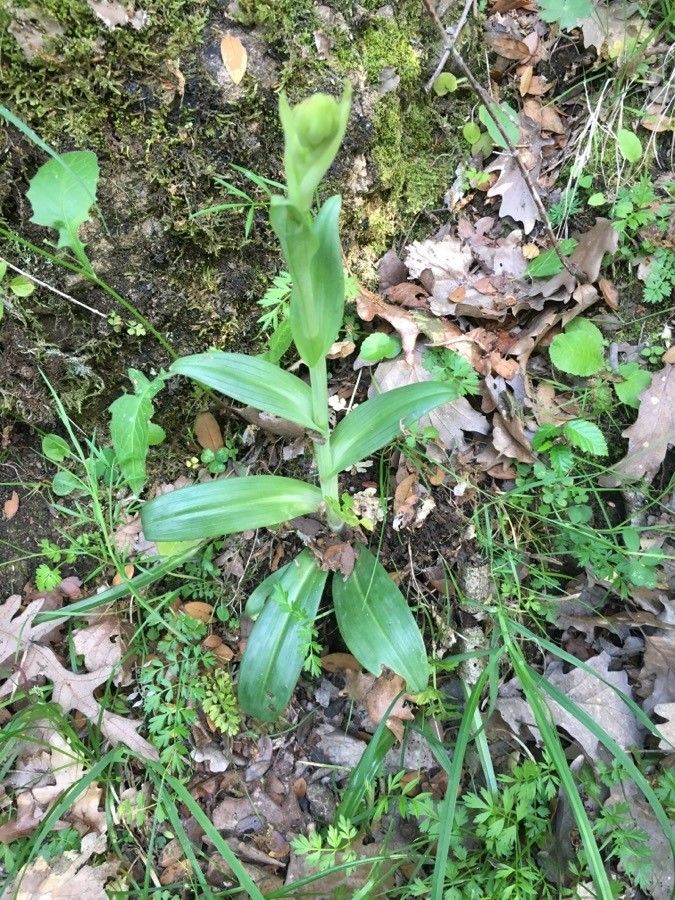
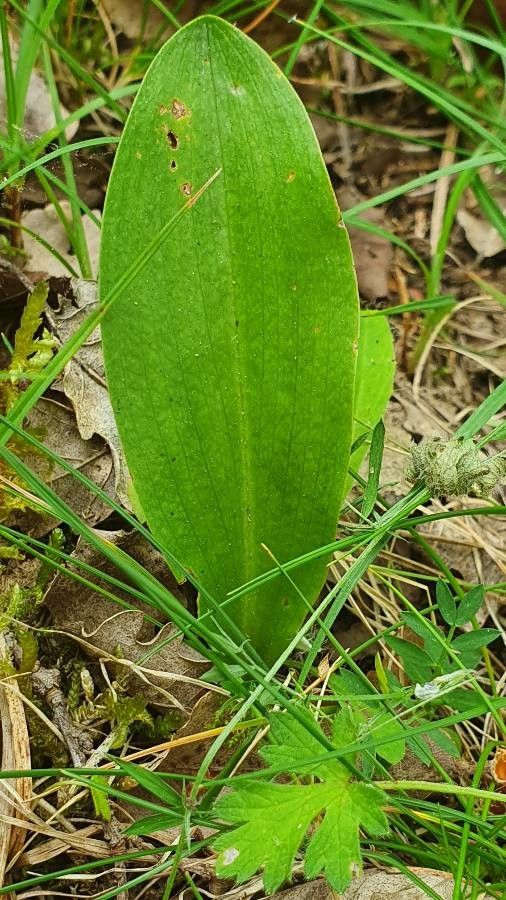
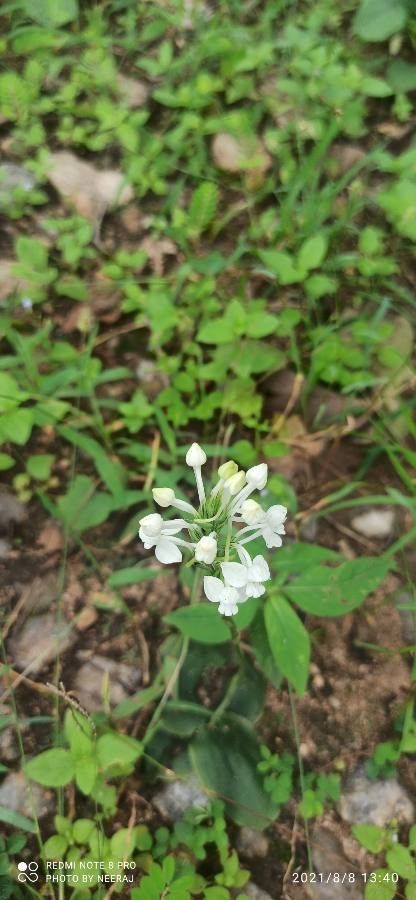
Platanthera obtusata, common name blunt-leaved orchid or small northern bog orchid, is a small species of orchid in the genus Platanthera. It widespread across much of the colder regions of the Northern Hemisphere, though rare in some parts of its range. Two subspecies are recognized:
Platanthera obtusata subsp. obtusata - Alaska (including the Aleutians), much of Canada (all 13 provinces and territories), south along the Rocky Mountains to northern New Mexico; the Great Lakes States, the Adirondacks and northern New England; St. Pierre & Miquelon. Platanthera obtusata subsp. oligantha (Turcz.) Hultén - Norway, Sweden, Finland, Siberia and the Russian Far EastIt is pollinated by several species of mosquito as well as by other insects.
Blunt-leaved orchid typically has good disease resistance and is affected by relatively few insect pests. Its care is considered difficult, because it needs a high-humidity yet well-ventilated environment with few harmful pathogens. Excessive watering can cause root rot. Growing Blunt-leaved orchid is suitable for everyone, but keeping it healthy and getting it to flower again requires more cultivation experience.
How to keep Platanthera Obtusata.
Light
Blunt-leaved orchid is a sun-loving, perennial herbaceous plant native to open habitats and often thriving in meadows and grasslands. It prefers full sun but can also tolerate partial sun.
Water
The blunt-leaved orchid thrives in environments with consistent moisture levels, rather than extreme wetness or dryness. To support its growth, water the plant weekly and use well-draining soil to prevent root rot. This is especially important for indoor plants. By mimicking its naturally moist environment, you can promote optimal growth for your orchid.
Temperature
The blunt-leaved orchid does well in cold areas and at high altitudes. It favors cool temperatures, good air circulation, and a moist environment. In summer, measures should be taken to keep it cool, because it is very sensitive to heat and can easily die from it. Dry conditions can also damage the plant. In winter, no particular cold protection is required, but the soil should be kept moist.
Fertilizer
One application of fertilizer in spring is generally sufficient for Blunt-leaved orchid, but multiple feedings can maximize growth. Feed once every month to a month and a half. Fertilization improves leaf appearance and function, promoting even color and a healthy texture. It also stimulates root growth and nutrient absorption, supporting long-term plant health.
Pruning
The blunt-leaved orchid has rounded leaves and delicate flowers, and it requires light pruning mainly from early to late spring. To promote growth and blooming while preventing disease, remove any dead foliage and spent flower spikes. Be sure to sterilize your tools to prevent infections.
Botanical profile.
- Plant Type
- Herb
- Life Cycle
- Perennial
- Genus
- Platanthera
- Family
- Orchidaceae
- Hardiness Zone
- 2-7
- Mature Height
- 8 cm to 28 cm
- Leaf Type
- Deciduous
- Flower Color
- White, Yellow, Green
- Bloom Time
- Spring, Summer, Fall
Other names.
Reader questions.
What are the sunlight requirements for Blunt-leaved orchid?
Blunt-leaved orchid thrives in areas with full sun, which means it requires more than 6 hours of sunlight daily, but it can also grow well under partial sun conditions, receiving about 3-6 hours of sunlight. Monitoring the movement of sunlight through your garden helps in choosing ideal spots that provide the right balance of light and shade, ensuring optimal growth and health of your plants.
What are the essential care requirements for a Blunt-leaved orchid?
The Blunt-leaved orchid, or Platanthera obtusata, flourishes in cold regions and high-altitude areas. It has a strong preference for cool temperatures, ample ventilation, and a consistently moist environment. To ensure its health during the warmer summer months, it's crucial to implement cooling measures as the plant is highly sensitive to heat, which can lead to its demise. Dry conditions are detrimental to its well-being. Although it is very tolerant of cold and doesn't require special frost protection in winter, it's important to keep the soil moist. Before the onset of winter's first freeze, a generous watering is recommended so the soil can freeze while moist, preventing drought and water scarcity for the plant during the colder season.
How can artificial lighting support the growth of Blunt-leaved orchid indoors?
When natural sunlight is insufficient, especially in winter or less sunny spaces, artificial lighting can be crucial for the growth of indoor Blunt-leaved orchids. LED lights, being customizable to specific wavelengths, are recommended. Full sun plants need 30-50W/sq ft of artificial light, partial sun plants 20-30W/sq ft, and full shade plants 10-20W/sq ft. Position the light source 12-36 inches above the plant, mimicking natural sunlight as closely as possible, and ensure the plant receives 8-12 hours of artificial light per day for healthy growth.
How does the Blunt-leaved orchid react to low temperatures?
The Blunt-leaved orchid showcases remarkable cold tolerance. It can withstand winter temperatures as low as -40°C without the need for additional protection. However, if temperatures fall below this threshold, there may not be any visible damage during the winter, but the plant might experience a reduction in or complete lack of sprouting during the following spring. To aid recovery, any parts of the plant that fail to sprout in spring should be removed.
What are the signs of light deficiency in Blunt-leaved orchid?
Symptoms of insufficient light in Blunt-leaved orchids include smaller new leaves, leggy or sparse growth, premature leaf drop, halted or no new growth, and paler new leaves. These signs indicate a struggle due to poor lighting conditions. Conversely, excessive sunlight can cause chlorosis, sunscald, leaf curling, wilting, and leaf scorching, which are detrimental to the plant's health and photosynthetic capability.
What should I do if the Blunt-leaved orchid experiences high temperatures?
The Blunt-leaved orchid does not fare well in high temperatures. Growth halts and the plant becomes prone to rot when temperatures exceed 32°C. To mitigate damage from excessive heat, it's advised to trim away any sunburned or dried parts of the plant. Relocating the plant to a spot with afternoon shade or using a shade cloth can protect it from intense sun exposure. Maintaining soil moisture is essential, so water the plant during the cooler mornings and evenings.
What are the solutions for Blunt-leaved orchid suffering from light deficiency or excess sunlight?
To address light deficiency, gradually move plants to sunnier locations to ensure they receive at least 6 hours of direct sunlight daily. Indoor plants can benefit from artificial light, keeping lights on for a minimum of 8 hours daily. Outdoor plants should be moved to better-lit areas gradually to avoid sunburn. Reducing obstructions, such as pruning trees or relocating plants to sunnier spots, can also improve sunlight access. Note that while damaged parts might not recover, new growth will be healthy with adequate light.