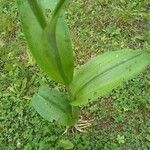
Platanthera psycodes
Small purple Fringed orchid · Pride-of-the-Peak · Lesser Purple Fringed Orchid · Small Butterfly Orchid
Description
Source: leafsnapPlatanthera psycodes, commonly called lesser purple fringed orchid or small purple-fringed orchid, is a species of orchid, genus Platanthera, occurring from eastern Canada (from Manitoba to Newfoundland) to the east-central and northeastern United States (Great Lakes Region, Appalachian Mountains, and New England). It is imperiled in Illinois, Tennessee, North Carolina, and Kentucky. The specific epithet psycodes is a misspelling of psychodes, which means "butterfly-like", probably alluding to the shape of the flowers. Like many other orchids it is a plant of wet habitats: sedge meadows, flatwoods, sphagnum bogs, cedar or alder swamps, on stream edges or the moist edges of coniferous forests. It is occasionally found in wet swales adjoining freshwater sandy beaches. Preferring cooler habitats, its range is being pushed northwards as global temperatures warm. Correll refers to locations of 1,500-foot (460 m) altitudes in Vermont, 4,000-foot (1,200 m) altitudes in Virginia and 6,500-foot (2,000 m) altitudes in North Carolina and Tennessee. It is often confused with its relative, Platanthera grandiflora, which generally has larger flowers (lip or labellum 10 to 25 millimetres (1⁄3 to 1 in) long), and has a circular nectary opening, compared to P. psycodes which has smaller flowers (the labellum measuring from 5 to 13 millimetres (1⁄4 to 1⁄2 in) long) and an oblong or almost rectangular opening. The most important characteristic separating the two species is the shape of the column and relative placement of the pollinia on the pollinators. In P. psycodes the column is shaped such that the pollinia are attached to the proboscis of the pollinator whereas in P. grandiflora the column is larger and the viscidia of the pollinia are widely spaced and outwardly rotated. This results in the pollinia being placed on the eyes of the pollinator. P. grandiflora has a much more restricted range and where the two species do overlap in range, they are phenotypically separated, with P. grandiflora typically blooming from late June through early July while P. psycodes blooms from late July through early August.
🎭 Affection, Attractiveness
Care Guide
💧 Water
The lesser purple fringed orchid flourishes in moist environments and performs best with regular watering, ideally once a week. While it can withstand short periods of dryness, increasing the humidity around the plant is helpful. This simulates its natural tropical habitat and supports its delicate flowering process.
How should I water my Lesser purple fringed orchid?
The watering needs of the Lesser purple fringed orchid will depend on its growth phase. During active growth, water should be applied to the soil and occasional overhead watering can be done if the weather is warm. However, in winter or cool and wet weather, it is best to stick to watering the soil directly. Signs that the plant needs more water include thin and dry roots and leaves, or discoloration. Overwatering can cause the plant to become mushy and limp. To ensure proper drainage, grow the orchid in a pot with excellent drainage using a potting mix. During the growing season, water the plant multiple times per week, but make sure the water drains quickly. The size of the pot will impact the frequency of watering, with larger pots needing less frequent watering. Rainwater and distilled water are ideal, and it is best if the water temperature matches the air temperature as closely as possible.
What should I do if I give my Lesser purple fringed orchid too much or too little water?
To avoid killing your Lesser purple fringed orchid, make sure the soil is not too moist for too long. These plants need frequent watering during active growth, but they also need well-draining soil. If overwatered, the plant will become mushy and get root rot. In that case, use sterile pruning shears to remove rotting roots and repot the orchid in a container with drainage holes and fast-draining potting mix. However, the orchid doesn't respond well to excessive repotting, so it's important to find the right watering rate. If the orchid starts to shrivel and feel dry to the touch, it may be underwatered. Increase the watering frequency if the soil is drying out too quickly.
How often do I need to water my Lesser purple fringed orchid?
To keep your Lesser purple fringed orchid healthy during its active growth stage in spring and summer, water it once or twice a week. If it's hot and dry for a long period, increase watering to three times a week. In winter, water it less frequently, about two to three times a month. However, if you keep it indoors during winter, the soil may dry out faster, so you may need to water it more often. Use the fall season to gradually decrease watering from multiple times a week to the reduced winter schedule.
What do I need to think about when watering my Lesser purple fringed orchid at different times of the year and during growth periods?
When planning the watering schedule for your Lesser purple fringed orchid, it is important to take into account two growth phases. The first phase is the active growth period, which occurs in spring and summer. During this time, the plant requires watering multiple times per week. The second phase is the rest period, which occurs during winter and lasts for about two to three months. During this period, the orchid needs significantly less water and fertilization. Once or twice a month is sufficient. To transition from the active growth period to the rest period, gradually reduce the watering frequency from multiple times per week in fall to the appropriate once or twice a month rate for winter.
If I grow my Lesser purple fringed orchid indoors, how should I change the way I water it?
The Lesser purple fringed orchid thrives in a relatively humid environment, which is not commonly found indoors. As a result, this plant and its soil tend to dry out faster when grown indoors compared to outdoors. To counteract this, you can use a humidifier in the room where you grow the orchid and water it more frequently. However, while humidity is important, it's also crucial to ensure sufficient air circulation to prevent excessive moisture buildup and potential diseases. To achieve this, consider adding a fan in the room where you grow the orchid.
☀️ Light Partial sun
The lesser purple fringed orchid does best in places with moderate sunlight, though it can tolerate areas with lower light. Commonly found in wooded habitats, it is able to adjust to shadier conditions. Too much or too little sun can hinder its growth and flowering.
What are the sunlight requirements for the Lesser purple fringed orchid?
The Lesser purple fringed orchid requires partial sun, about 3-6 hours of sunlight, but it can also grow in full shade, which is less than 3 hours of sunlight. Observing how sunlight moves through your garden is crucial for choosing the best spots that provide a balance of light and shade, essential for the plant's well-being.
What are the essential conditions for growing Lesser purple fringed orchid?
Lesser purple fringed orchid thrives best in moderate sunlight and can adapt to shadier environments, typically found in woody areas. However, its growth and flowering might be affected by either too much or too little sunlight. If natural sunlight is insufficient, especially during winter or in spaces with less sun, artificial lighting can be a viable solution to ensure optimal growth. LED lights are recommended for indoor plants, with different wattage requirements based on the plant's sunlight needs: 30-50W/sq ft for full sun plants, 20-30W/sq ft for partial sun, and 10-20W/sq ft for full shade plants. Proper distance and duration under artificial light mimic natural sunlight conditions and are crucial for healthy plant growth.
What are the symptoms of insufficient light in Lesser purple fringed orchid?
Symptoms of insufficient light in Lesser purple fringed orchid include smaller new leaves, leggy or sparse growth, faster leaf drop, halted or no new growth, and lighter-colored new leaves. These symptoms indicate the plant is struggling due to poor light conditions. Additionally, excessive sunlight can cause chlorosis, sunscald, leaf curling, wilting, and leaf scorching, which negatively affect the plant's health and ability to photosynthesize.
What solutions are available for light-related issues in Lesser purple fringed orchid?
To address light-related issues in Lesser purple fringed orchid, indoor plants can be gradually moved to sunnier spots each week until they receive 3-6 hours of direct sunlight daily or use artificial lights for at least 8 hours a day if moving the plant isn't feasible. For outdoor plants, a gradual relocation to sunnier locations is recommended to avoid sunburn. Pruning trees or transplanting smaller plants during their dormant period to sunnier locations with better drainage can help outdoor and grounded plants respectively. Note that parts of the plant damaged by insufficient light may not recover, but new growth can thrive with increased light exposure.
🌡️ Temperature 0–32.2°C
Lesser purple fringed orchid originates from cooler habitats and prefers temperatures of 32 to 89.6 °F (0 to 32 ℃). In winter, avoid exposing it to very low temperatures. Likewise, summer conditions should be managed carefully to prevent overheating.
What is the preferred temperature range for the Lesser purple fringed orchid?
The Lesser purple fringed orchid, botanically known as Platanthera psycodes, thrives in cooler environments with a preferred temperature range of 32 to 89.6 °F (0 to 32 °C). It is highly cold-tolerant and does not require additional frost protection measures during winter. However, to prepare for winter, it's recommended to water the plant generously before the first freeze in autumn to ensure the soil is moist when it enters a frozen state, which helps prevent drought and water scarcity for the plant during the colder months.
How does the Lesser purple fringed orchid respond to low temperatures?
The Lesser purple fringed orchid is extremely cold-tolerant and can withstand winter temperatures as long as they stay above -40°C. If the temperatures drop below this threshold, there may not be noticeable changes during the winter, but a decrease in sprouting or complete absence of sprouting can occur in the spring. In such cases where parts of the plant fail to sprout, it's advised to remove those parts when spring arrives.
What are the effects of high temperatures on the Lesser purple fringed orchid and how can they be mitigated?
The Lesser purple fringed orchid does not tolerate high temperatures well. Growth will halt and the plant becomes more prone to rot if temperatures exceed 32°C. To mitigate the effects of high temperatures, it's recommended to trim any sunburned or dried-up parts of the plant. Moving the plant to a shaded location or using a shade cloth to protect it from the midday and afternoon sun can also help. Additionally, watering the plant in the morning and evening can keep the soil moist and cool, further aiding in its survival and health during hot weather.
💨 Humidity
🪴 Soil 5-6
🌱 Fertilizer
The best time to fertilize a Lesser purple fringed orchid is in early spring, when it is coming out of dormancy and starting active growth. Fertilization supplies essential nutrients for healthy development. Although the Lesser purple fringed orchid has relatively low fertilizer needs, an annual feeding can boost its survival and encourage better, longer-lasting flowers.
🪴 Pot & Repot
✂️ Pruning
The lesser purple fringed orchid, known for its fringed purple flowers, benefits significantly from pruning between early and late spring. To encourage healthy growth and better air circulation—which helps minimize the risk of disease—remove spent flower stalks and any dead foliage. Ensure you use clean, sharp tools for this maintenance, and consult reliable sources for specific techniques tailored to this plant.
🌿 Propagating
🐛 Diseases & pets
☠️ Toxicity
Characteristics
- Plant Type
- Herb
- Life Cycle
- Perennial
- Genus
- Platanthera
- Family
- Orchidaceae
- Hardiness Zone
- 2-7
- Mature Height
- 0.3 m to 1.52 m
- Mature Spread
- 10 cm to 30 cm
- Leaf Color
- Green, Dark Green
- Leaf Type
- Deciduous
- Flower Color
- Purple, White, Pink, Red, Lavender
- Flower Size
- 2.54 cm
- Bloom Time
- Early summer, Mid summer
- Planting Time
- Spring
- Harvest Time
- Late summer, Early fall