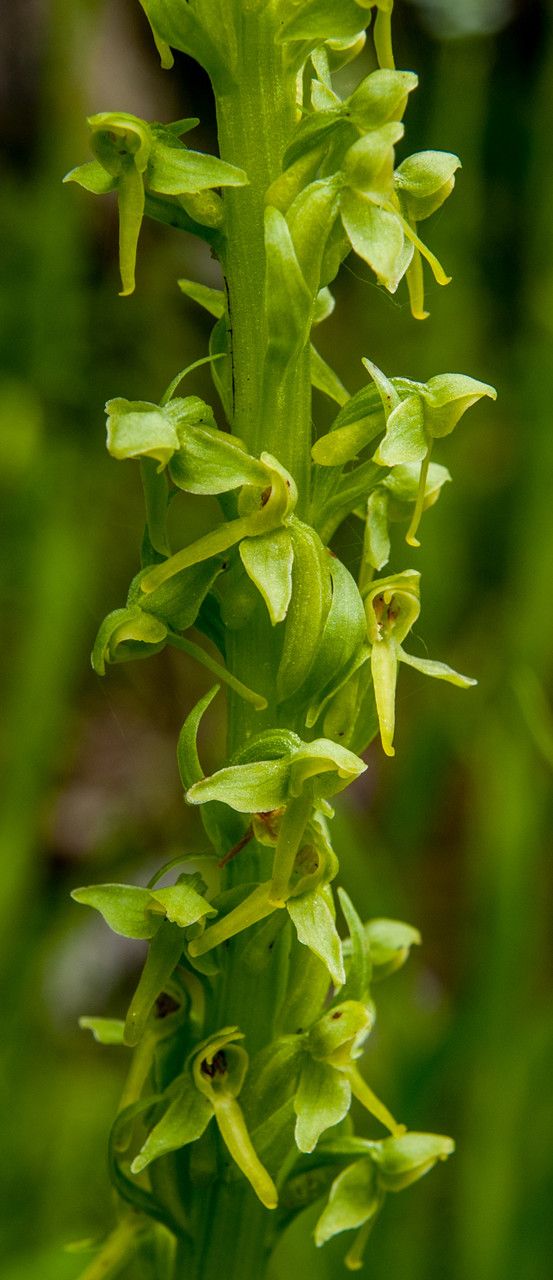
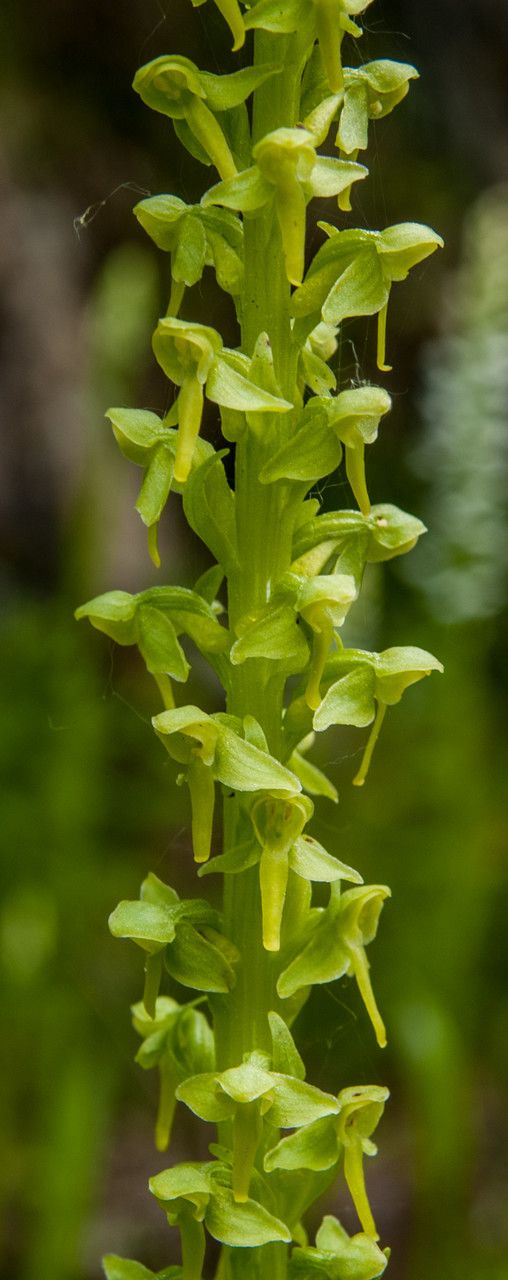
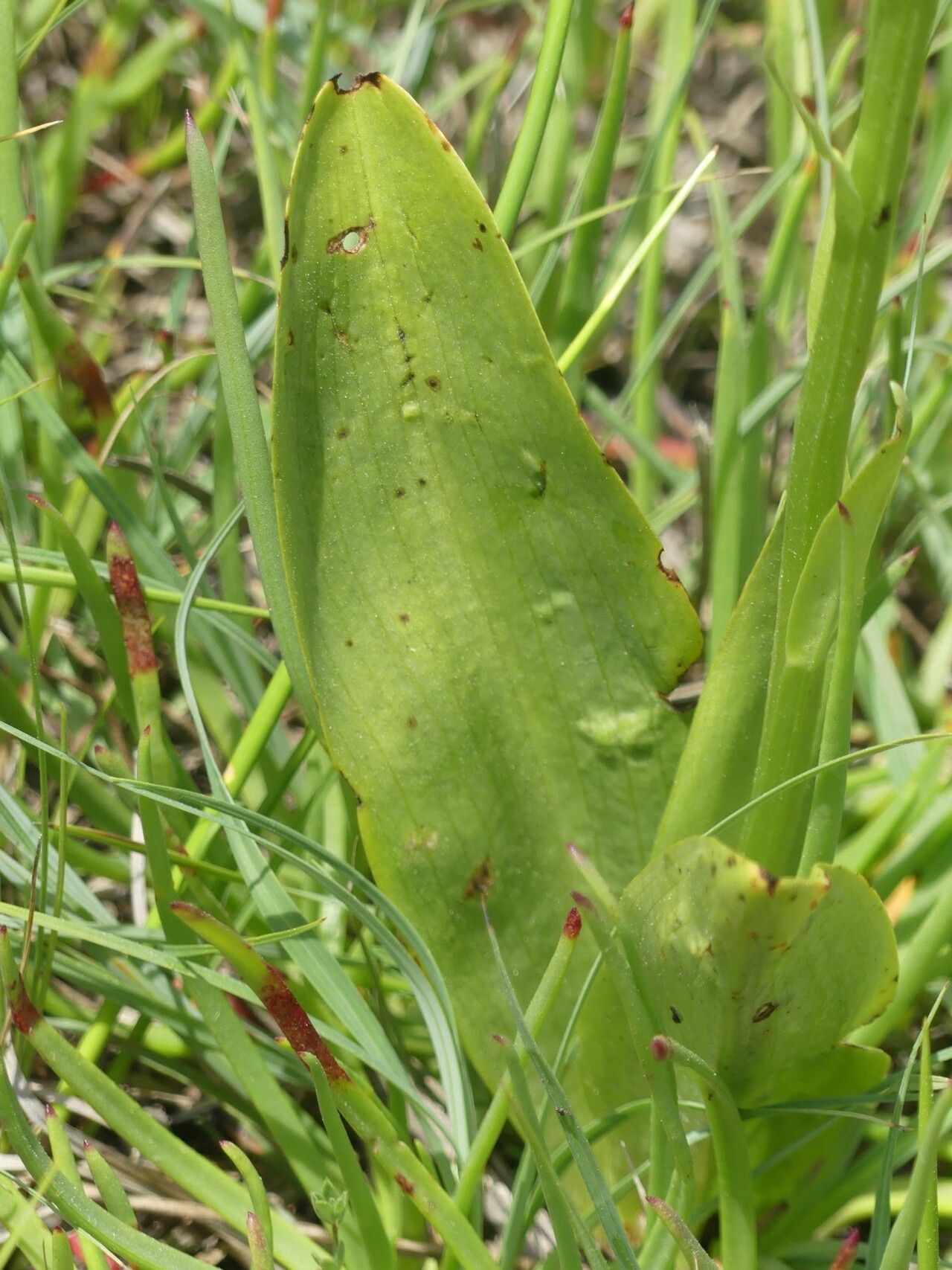
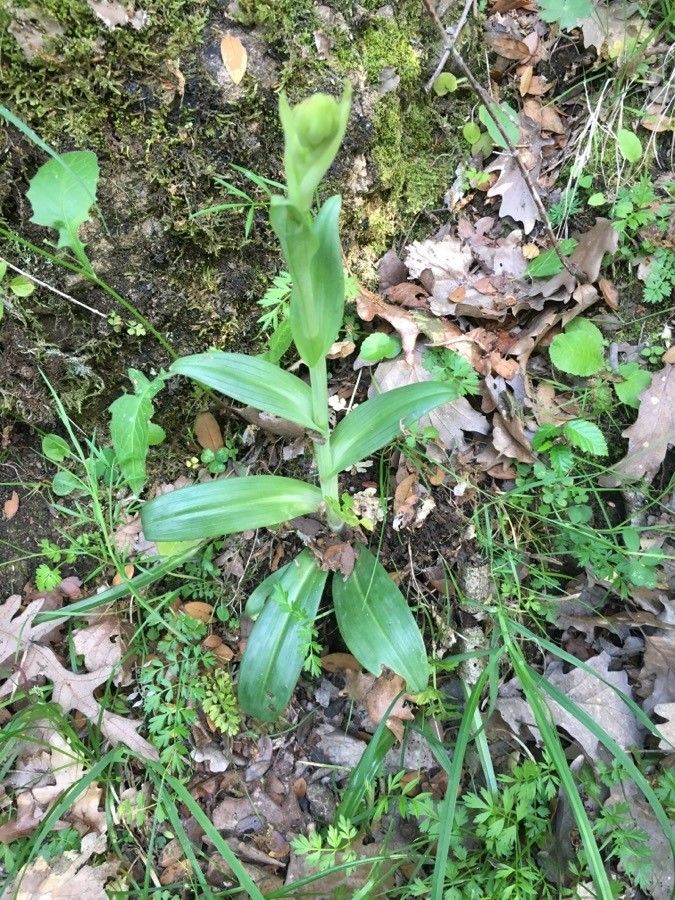
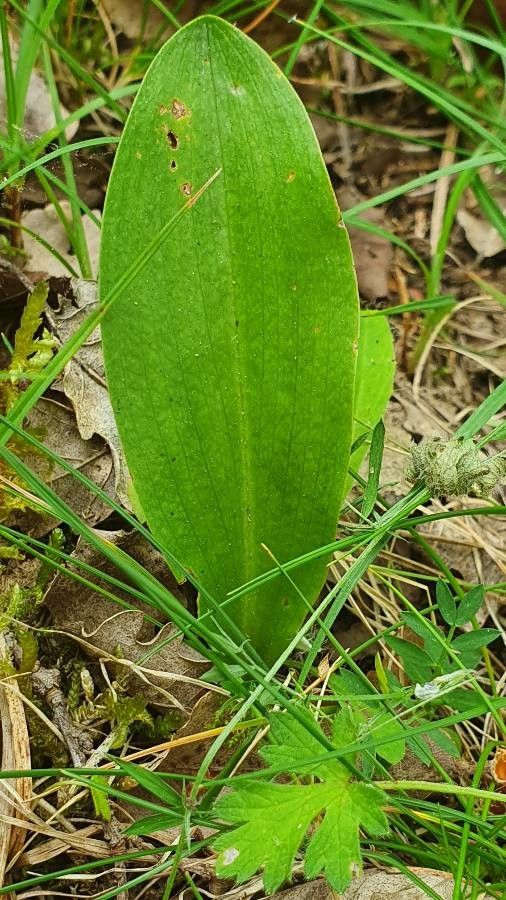
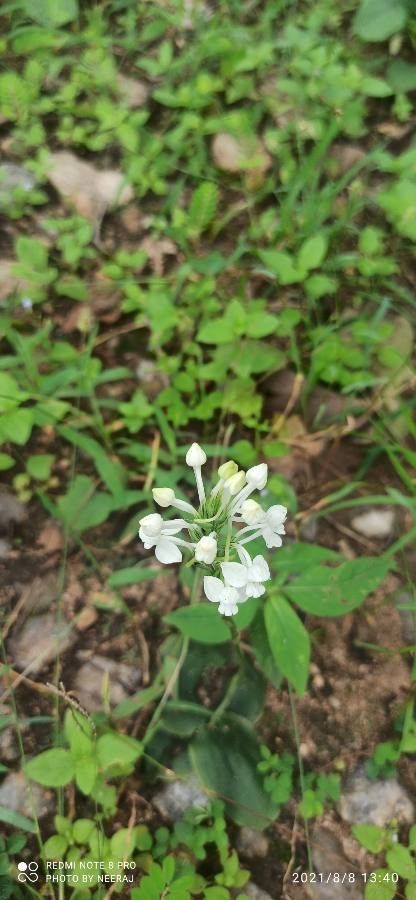
Platanthera stricta is a species of orchid known by the common name slender bog orchid. It is native to western North America from Alaska and Yukon south to Utah and northern California.Platanthera stricta grows in wet areas, such as shady forest meadows. It produces a slender, erect flowering stem up to about 80 centimetres (31 in) tall. The longest leaves near the base of the stem are up to 11 centimetres (4+1⁄3 in) long by 2.5 centimetres (1 in) wide. The inflorescence has widely spaced green flowers, sometimes tinged red or purple. The sepals and petals are around one-half centimetre (1⁄4 in) long and each flower has a club-shaped spur.
The Slender bog orchid is generally disease-resistant and is affected by relatively few insect pests. Its care is considered challenging because it requires high humidity along with good ventilation and a low presence of harmful pathogens. Overwatering can cause root rot. While anyone can grow the Slender bog orchid, maintaining its health and getting it to bloom again takes more growing experience.
How to keep Platanthera Stricta.
Light
Slender bog orchid naturally grows in habitats such as forest understories or rocky sites, where it receives natural shade. It prefers partial sun but can tolerate full sun or full shade, illustrating its versatile and hardy nature.
Water
The slender bog orchid thrives with adequate moisture but can tolerate occasional drought. In summer, water the plant once a week, and in fall and winter, water it every ten days. To maintain humidity, mist the orchid regularly, especially in dry conditions. Use water with a neutral pH. If you're using tap or rainwater, let it sit for a while to neutralize before applying it to the plant.
Temperature
Slender bog orchid can tolerate a wide range of temperatures, but its distribution may still be restricted by different combinations of moisture and heat. It does best in warm summer conditions with sufficient rainfall or watering. Extended periods of cloudy, rainy weather or prolonged high temperatures can raise the chance of Slender bog orchid dying. In winter, adequate protection from cold can increase the plant's survival rate.
Fertilizer
The best time to fertilize a Slender bog orchid is in early spring, as it comes out of dormancy and starts active growth. Fertilization supplies essential nutrients needed for healthy growth. While the Slender bog orchid has relatively low fertilizer requirements, applying fertilizer annually can improve its survival and encourage better, longer-lasting blooms.
Pruning
The slender bog orchid is characterized by its delicate green flowers and elegant, thin shape, requiring only minimal pruning. To promote growth and maintain its health, it's best to remove any damaged stems in early spring. This practice aligns with its blooming cycle, enhancing its visual appeal in wetland habitats.
Botanical profile.
- Plant Type
- Herb
- Life Cycle
- Perennial
- Genus
- Platanthera
- Family
- Orchidaceae
- Hardiness Zone
- 3-8
- Mature Height
- 20 cm to 91 cm
- Mature Spread
- 10 cm to 20 cm
- Leaf Color
- Green
- Leaf Type
- Deciduous
- Flower Color
- White
- Flower Size
- 0.51 cm to 1.02 cm
- Bloom Time
- Early summer, Mid summer
- Planting Time
- Spring, Summer
- Harvest Time
- Late summer, Early fall
Other names.