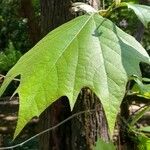
Platanus mexicana
Description
Source: leafsnapPlatanus mexicana is a species of plane tree that is native to Northeast and Central Mexico. It is also known as the Mexican sycamore.
🌳 The Arizona sycamore may not be well known for a wide range of uses, but its characteristically peeling bark is an important resource for local wildlife. The bark sheds in large patches, creating ideal spots where certain birds and insects can nest and feed. Notably, it provides a distinctive habitat for the endangered southwestern willow flycatcher, which often builds nests in the sycamore’s branches. Its substantial limbs also support plants such as wild grapevines, contributing to richer local biodiversity.
🎭 This tree symbolizes growth, persistence, and strength.
Care Guide
💧 Water
Native to Mexico, the Mexican sycamore thrives in humid environments and has moderate drought tolerance. For optimal growth and leaf health, water the tree twice a week and regularly mist it when grown indoors to maintain the necessary humidity.
☀️ Light Full sun
The Arizona sycamore grows best when it receives sunlight all day, though it also performs well in places with moderate light. Coming from a habitat with abundant sun, it needs a considerable amount of light for optimal development. Excessive or insufficient light can disturb its healthy growth.
What are the sunlight requirements for Mexican sycamore (Platanus mexicana)?
The Mexican sycamore (Platanus mexicana) thrives under specific sunlight conditions to ensure its growth and happiness. It requires full sun, which means it needs above 6 hours of sunlight daily. However, it can also adapt to partial sun, needing about 3 to 6 hours of sunlight. It's crucial to observe how sunlight moves through your garden throughout the day to choose the best spot that offers an ideal balance of light and shade for your Mexican sycamore.
🌡️ Temperature 15–35°C
Arizona Sycamore is a temperate woody plant that requires temperatures between 59 to 95 ℉ (15 to 35 ℃) for optimal growth. It naturally occurs in environments that are well suited to its temperature requirements. In summer, it is advisable to adjust irrigation to provide adequate moisture, since it prefers cooler temperatures for growth.
What is the botanical name of the Mexican sycamore?
The botanical name of the Mexican sycamore is Platanus mexicana. This tree is known for its distinct characteristics and falls under the category of sycamores, which are valued for their shade and ornamental qualities.
💨 Humidity
🪴 Soil 5-6
🌱 Fertilizer
To encourage healthy growth, fertilize your Arizona Sycamore in early spring. Regular feeding boosts the tree’s overall health, leading to vigorous growth, improved tolerance of difficult conditions, and increased resistance to pests and disease. Keep a consistent fertilization schedule for your Arizona Sycamore to maintain foliage that is vibrant, richly colored, and lush.
🪴 Pot & Repot
✂️ Pruning
The Mexican sycamore is known for its broad leaves and rapid growth. To maintain its health, prune it in early spring. Focus on removing dead wood and thinning out crowded branches to enhance air circulation. Be careful not to cut more than one-third of the foliage at a time. Proper pruning promotes the tree’s health and reduces the risk of pests.
🌿 Propagating
🐛 Diseases & pets
☠️ Toxicity
Characteristics
- Plant Type
- Tree
- Life Cycle
- Perennial
- Genus
- Platanus
- Family
- Platanaceae
- Hardiness Zone
- 7-9
- Mature Height
- 24.99 m
- Mature Spread
- 16.46 m
- Leaf Color
- Green
- Leaf Type
- Evergreen
- Flower Color
- Green, Yellow
- Flower Size
- 1.27 cm
- Bloom Time
- Mid spring, Late spring
- Planting Time
- Spring
- Harvest Time
- Mid summer, Late summer
- Native Area
- Mexico