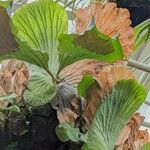
Platycerium angolense
Elephant's-ear fern
Care Guide
💧 Water
☀️ Light Full shade
The Angola staghorn fern hails from habitats such as forest understories or stony regions, which naturally provide shade. Although it thrives best in full-shade sunlight conditions, it can also withstand partial sun.
🌡️ Temperature 20–37.8°C
The Angola staghorn fern is native to the tropics, where the usual climate is both warm and moist. Therefore, it is well-equipped for hot and humid conditions. It doesn't react well to abrupt changes in temperature, preferring a consistently stable temperature setting, so keeping a steady indoor temperature is crucial. This plant generally cannot withstand low temperatures and needs relatively high temperatures to grow. If the temperature of its surroundings falls excessively, the plant's growth may stop, or it may even perish.
💨 Humidity
🪴 Soil 6-7
🌱 Fertilizer
🪴 Pot & Repot 2-3 years
When transplanting the Angola staghorn fern, select a pot that is 1-2 inches (2.5-5 cm) larger and has plenty of drainage. Utilize a potting mix that drains well. Carry out the repotting during spring or autumn, making sure that the root ball is marginally below the edge of the plant pot. Once transplanted, water it completely and position it in a cozy location with diffuse sunlight.
✂️ Pruning
🌿 Propagating
🐛 Diseases & pets
☠️ Toxicity
Characteristics
- Plant Type
- Fern
- Life Cycle
- Perennial
- Genus
- Platycerium
- Family
- Polypodiaceae
- Hardiness Zone
- 10-12
- Mature Height
- 0.61 m to 1.22 m
- Mature Spread
- 61 cm to 91 cm
- Leaf Color
- Light Green, Forest Green
- Leaf Type
- Evergreen
- Planting Time
- Spring, Autumn
- Native Area
- Malawi, Angola, Zambia, Sudan, Rwanda, Nigeria, Guinea, Gabon, Kenya, Uganda, Tanzania, Central African Republic, Benin, Sierra Leone, Cameroon, Liberia, Mozambique, Burundi, Togo, Ghana, Senegal, Ethiopia, Côte d'Ivoire, Congo (DRC), Congo