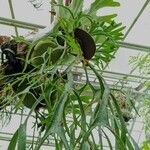
Platycerium coronarium
Elkhorn fern · Antler fern · Crown staghorn fern
Description
Source: leafsnapPlatycerium coronarium is an epiphytic species of staghorn fern in the genus Platycerium. It is found in maritime Southeast Asia and Indochina. and throughout the East Indies. It produces two kinds of leaves: Foliage leaves which are broad and upright in habit, and spore bearing leaves which are narrow, pendulous, dichotomously lobed and up to fifteen feet (4.6 meters) in length.
Care Guide
💧 Water
Platycerium coronarium thrives in the humid and moist conditions of tropical rainforests, and it benefits from being watered twice a week. As an epiphyte, it can tolerate occasional dryness, but it prefers a consistently moist environment. To keep its fronds lush and vibrant indoors, regular misting helps maintain the humidity it needs year-round.
☀️ Light Full shade
Platycerium coronarium is native to habitats such as forest understories or rocky sites that provide natural shade. It prefers Full Shade but can tolerate Partial Sun.
What are the sunlight requirements for Platycerium coronarium?
Platycerium coronarium, also known by its botanical name Platycerium coronarium, thrives under specific sunlight conditions. For those areas that receive less than 3 hours of sunlight, full shade is necessary. Meanwhile, spaces that get about 3 to 6 hours of sunlight are considered to have partial sun. It's essential to observe how sunlight moves through your garden throughout the day. By doing so, you can select the optimal spots that provide a balanced mix of light and shade, guaranteeing a happy and healthy environment for your plants.
🌡️ Temperature 20–37.8°C
Platycerium coronarium is native to tropical areas, where the climate is generally warm and humid. Consequently, it is well suited to high temperatures and moisture. The plant is sensitive to sudden temperature shifts and prefers a consistent temperature, so indoor temperature swings should be avoided. It typically cannot withstand cold conditions and needs warmer temperatures to grow. If the ambient temperature falls too low, growth can halt or the plant may die.
💨 Humidity
🪴 Soil 6-7
🌱 Fertilizer
🪴 Pot & Repot 2-3 years
When repotting Platycerium coronarium, pick a pot 1-2 inches (2.5–5.1 cm) larger with plenty of drainage. Use a well-draining potting mix. Repot in spring or fall, making sure the root ball sits slightly below the rim of the flower pot. Water thoroughly after repotting and keep it in a warm place with indirect sunlight.
✂️ Pruning
The Platycerium coronarium is known for its distinctive staghorn-like fronds. To keep it healthy, prune the plant in early spring by removing any dead or damaged fronds. This will improve air circulation and help prevent disease. Be careful not to over-prune. Regularly remove old fronds to enhance the plant's appearance and vitality while preserving its unique shape.
🌿 Propagating
🐛 Diseases & pets
☠️ Toxicity
Characteristics
- Plant Type
- Fern
- Life Cycle
- Perennial
- Genus
- Platycerium
- Family
- Polypodiaceae
- Hardiness Zone
- 10-12
- Mature Height
- 3.05 m
- Mature Spread
- 1.52 m
- Leaf Color
- Green
- Leaf Type
- Evergreen
- Planting Time
- Spring, Summer, Autumn
- Native Area
- Malaysia, Indonesia, Cambodia, Vietnam, Myanmar, Philippines, Singapore, Laos, Thailand