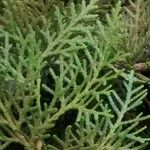
Platycladus orientalis
سرو خمره ای · Oriental Arbor-vitae · Chinese Thuja · Chinese-arborvitae · Oriental-arborvitae
Description
Source: leafsnapPlatycladus orientalis, commonly known as Oriental arborvitae or Chinese thuja, is a coniferous evergreen tree from the Cupressaceae family. Native to China, Korea, and Japan, it has been widely cultivated around the world for its ornamental value. This tree can grow up to 20 meters tall, forming a conical or columnar shape with dense, scale-like green foliage. Its bark, which matures to a reddish-brown color, features deep fissures. Platycladus orientalis thrives in well-drained soil and full sun but can tolerate partial shade. It is drought-tolerant once established but requires regular watering during its early growth stages. The tree serves various purposes. Its attractive foliage and shape make it popular for ornamental landscaping. It is also effective as a windbreak due to its dense growth habit. Additionally, it has been used in traditional medicine to treat ailments such as coughs, asthma, and bronchitis. In summary, Platycladus orientalis is a visually appealing evergreen tree that offers both aesthetic and functional benefits, making it an excellent choice for gardens and landscape design projects.
💡 The Oriental arborvitae holds significant importance in Buddhist culture. Its wood is commonly used for burning incense in temples. Additionally, in Chinese Buddhism, the Oriental arborvitae symbolizes longevity and health, likely due to its long lifespan. Some specimens near Buddhist temples are over 1,000 years old.
🌳 Oriental arborvitae shows unexpected versatility beyond ornamental horticulture. It is used for bonsai because of its adaptability and attractive appearance. It can also act as a bioindicator for certain heavy metals in soil, helping to evaluate environmental pollution and soil health. Its leaves have been used to produce natural dyes, revealing a lesser-known but valuable use of the plant.
🎭 Forbearance, fortitude, longevity, everlasting friendship
Care Guide
💧 Water Every 7 days
Adapted to semi-arid conditions, the Oriental arborvitae thrives on minimal water, requiring watering only every 1-2 weeks. It prefers well-draining soil to prevent root rot, making it ideal for outdoor cultivation in areas where these conditions are met.
When Should I Water My Oriental Arborvitae?
Timely watering is critical for the well-being of oriental arborvitae. The optimal times for watering are identified by several indicators including leaf color, soil moisture, leaf turgor, and root health. Leaves turning pale green or yellow suggest under-watering, while brown or scorched leaves may indicate overwatering. The soil should be moist but not saturated, and if it feels dry at a depth of 2 inches, it's a sign to water the plant. Furthermore, if the foliage appears droopy or shriveled, it indicates a need for water. It's also beneficial to observe the root health; brown, slimy roots suggest overwatering, while dry, brittle roots indicate a need for more water. Keep in mind the risks of incorrect watering, as too much or too little water can have serious consequences including plant death.
How Should I Water My Oriental Arborvitae?
Oriental arborvitae, being drought-tolerant, thrives with a good soak-and-dry method, meaning watering heavily but infrequently to ensure water reaches deeper into the soil. This method supports healthier root growth. A soaker hose is ideal as it delivers water directly to the base, minimizing evaporation. A moisture meter can be essential in preventing overwatering by ensuring the soil is appropriately dry before the next watering session. When watering, concentrate on the soil around the base of the plant to avoid waterlogging and disease. If using a watering can, pour water slowly at the base to allow thorough absorption, preferably early in the morning or late in the evening to reduce evaporation.
How Much Water Does Oriental Arborvitae Really Need?
The water needs of oriental arborvitae hinge on maintaining a moderately moist soil, considering factors such as pot size and plant size. Overwatering and underwatering should be avoided to prevent root rot and stress, respectively. Generally, a mature plant might require around 1 to 2 liters per watering, ensuring the water reaches the root zone. Properly hydrated plants showcase green, lush foliage with firm stems. Key signs of over or underwatering include yellowing or browning leaves and soggy or dry soil. Utilizing well-draining soil and applying mulch can help regulate moisture, and it's recommended to adjust watering during various seasons and according to the weather.
What Kind of Water is Best for Oriental Arborvitae?
Oriental arborvitae thrives on rainwater or distilled water but can tolerate tap water if it's not heavily chlorinated or fluoridized. Letting tap water stand for 24 hours allows chlorine to evaporate, making it more suitable for the plant. Excessive chlorine or fluoride can cause leaf discoloration or tip burn, so dechlorinating water is advisable. The plant is somewhat tolerant of various minerals, but hard water users should flush the soil regularly to prevent mineral buildup. Oriental arborvitae prefers lukewarm to slightly cool water, avoiding extremes in temperature. Ensuring the soil is consistently moist but well-drained is key for optimal growth.
How Do Oriental Arborvitae's Watering Needs Change with the Seasons?
Oriental arborvitae's watering needs vary with the seasons. In spring, during its active growth phase, regular watering is essential to keep the soil evenly moist. Summer's higher temperatures demand deeper and more frequent watering, possibly aided by mulch to retain soil moisture. As autumn approaches and the plant prepares for dormancy, gradually reduce watering, keeping the soil lightly moist. Winter requires minimal watering, allowing the topsoil to dry out more between waterings to avoid root rot. Adjusting the watering schedule according to the season and your region's climate helps maintain plant health.
☀️ Light Full sun
Oriental arborvitae needs plenty of sunlight and performs best in locations with abundant sun. It can tolerate spots where sunlight is occasionally filtered. Light is essential for its growth, supporting its health and vigor. However, too much or too little light can harm it, causing damage or slowing its growth.
What are the sunlight requirements for Oriental arborvitae?
Oriental arborvitae requires full sun, which means it thrives best with more than 6 hours of sunlight daily. It can also grow well in partial sun, getting about 3-6 hours of sunlight a day. It's important to watch how sunlight moves through your garden to choose spots that offer a good balance of light and shade, ensuring the plants' optimal growth and happiness.
What are the essential needs for Oriental arborvitae regarding sunlight?
The Oriental arborvitae craves abundant sun exposure and does best in environments where sunlight is plentiful, although it can withstand areas with intermittent sun rays. Sunlight is crucial for its growth, health, and vigor. However, both excessive and insufficient light can harm the plant, causing damage or stunted growth. For indoor plants, artificial lighting can be used to supplement natural sunlight, especially in winter or less sunny spaces. It's advised to choose the right type of artificial light, determine the appropriate distance from the plant, and the duration of exposure, mimicking natural daylight conditions as closely as possible.
What symptoms indicate light deficiency in Oriental arborvitae and how can it be affected by too much sunlight?
Light deficiency in Oriental arborvitae may present symptoms such as smaller leaves, leggy or sparse growth, faster leaf drop, slower or halted new growth, lighter-colored new leaves, and symptoms of too much sunlight exposure like chlorosis, sunscald, leaf curling, wilting, and leaf scorching. These symptoms indicate the plant's struggle with inadequate or excessive sun exposure, affecting its health and appearance.
What solutions are recommended for Oriental arborvitae to receive optimal sunlight?
To ensure Oriental arborvitae receives optimal sunlight, gradually acclimate the plant to sunnier locations, aiming for at least 6 hours of direct sunlight daily. Use south-facing windows for indoor plants and keep curtains open during sunlight hours. Consider using artificial light for additional support. Outdoors, progressively move the plants to sunnier spots, avoiding sudden changes to prevent sunburn. Reduce obstructions like overhanging branches to increase sunlight penetration. For smaller plants, consider transplanting during their dormant period to a location with ample sunlight and good drainage. It's essential to note that areas of the plant affected by insufficient sunlight might not recover, but new growth will be healthy after adjusting light exposure.
🌡️ Temperature 5–35°C
The Oriental arborvitae's native growing environment is suitable between 23 and 77 ℉ (-5 to 25 ℃). It can tolerate colder conditions down to 5 ℉ (-15 ℃), but prefers a comfortable range of 41 to 95 ℉ (5 to 35 ℃). In winter, avoid high humidity and extreme cold. In summer, provide some shade to protect it from the hot sun.
What is the ideal temperature range for Oriental arborvitae?
The Oriental arborvitae thrives in a native growth environment with temperatures ranging from 23 to 77°F (-5 to 25°C), though it can tolerate colder temperatures down to 5°F (-15°C). For optimal growth, a comfortable temperature range of 41 to 95°F (5 to 35°C) is preferred. It's known for its strong cold resistance, but care should be taken to provide some shade during hot summers to protect it from the sun.
What special care does Oriental arborvitae require in winter?
In winters, it's crucial for the Oriental arborvitae to avoid high humidity and extreme cold temperatures. Though it has strong cold resistance, if temperatures are expected to drop below -30°C, it's important to provide cold protection. This can be achieved by wrapping the trunk and branches with non-woven fabric or cloth. Additionally, watering the plant abundantly before the first freeze in autumn is recommended to ensure the soil remains moist and enters a frozen state, which helps prevent drought and water scarcity during winter and early spring.
How does Oriental arborvitae respond to low temperatures, and what are the recommended solutions?
Oriental arborvitae is cold-tolerant and thrives best when temperatures are above 5°C. However, during winter, it should be kept above -25°C to avoid damage. If temperatures fall below -30°C, the branches may become brittle and dry by spring, and no new shoots will emerge. To address this, it's recommended to prune away any dead branches that have failed to produce new leaves in the spring.
What should be done if Oriental arborvitae is exposed to high temperatures?
During summer, it's crucial to keep Oriental arborvitae below 35°C to prevent heat stress. Exposure to temperatures above 38°C can result in lighter colored leaves, dry and withered tips, and increased susceptibility to sunburn. To mitigate these issues, trim away the sunburned and dried-up parts of the plant. Moving the plant to a location that offers shade during the midday and afternoon sun, or creating shade with a cloth, can provide protection. Additionally, watering the plant in the morning and evening helps keep the soil moist and supports plant health.
💨 Humidity normal (40-60%)
This plant will thrive in moderate humidity, which is probably the level in your home. However, misting it a few times a week can be very beneficial. Make sure the room has good ventilation.
🪴 Soil 6-8
🌱 Fertilizer
Oriental arborvitae has particular nutrient needs and does not require heavy fertilization. Spring is the best time to fertilize for optimal growth. Supplying nutrients improves its vigor, enhances resistance to pests and diseases, and supports its long lifespan.
Why should I put fertilizer on my Oriental arborvitae?
In order to promote healthy growth in Oriental arborvitae, it is recommended to fertilize them in the spring. These plants have a long lifespan and require support to thrive. Adding nutrients to the soil not only enhances their overall health but also helps them withstand common pests and diseases, which can otherwise hinder their growth or shorten their lifespan.
What is the best time to put fertilizer on my Oriental arborvitae plants?
The growing medium may not always provide enough nutrients for healthy growth. However, Oriental arborvitae is not like your typical garden plants that need a lot of extra nutrients. It actually requires very little. If you want to fertilize your Oriental arborvitae, the best time to do so is in the spring, before new growth starts.
When is the best time to not use fertilizer on my Oriental arborvitae?
While some plants benefit from regular monthly or weekly fertilization, Oriental arborvitae is not one of them. It does not require excessive amounts of nutrients and can actually start dying back if given too much fertilizer. Therefore, it is recommended to only apply fertilizer in the spring and refrain from using any in the summer, fall, and winter. Additionally, it is important to avoid adding any organic matter to the soil during these seasons as well.
What kind of fertilizer does my Oriental arborvitae tree need?
When selecting a fertilizer for your Oriental arborvitae, it's important to consider the age of your plant. While these plants don't need a lot of extra nutrients, it is beneficial to use a balanced plant food to support healthy root development and growth. However, avoid fertilizers with high nitrogen contents.
How can I add nutrients to my Oriental arborvitae plant to help it grow healthier?
To successfully fertilize Oriental arborvitae, it is important to consider both the method and timing. In the spring, apply the fertilizer around the plant's base, making sure to avoid the trunk. If you are using granulated fertilizer, cover the pellets with a thin layer of soil to promote proper absorption into the soil.
🪴 Pot & Repot 2-3 years
When repotting Oriental arborvitae, select a pot 1–2 inches (2.5–5.1 cm) larger with ample drainage. Use a well-draining potting mix. Repot in spring or fall, making sure the root ball is slightly lower than the rim of the flower pot. Water thoroughly after repotting and place in a warm spot with indirect sunlight.
✂️ Pruning
Oriental arborvitae is a slow-growing evergreen conifer that needs careful pruning from early to late winter. To keep the plant healthy, trim damaged branches and improve airflow with sharp tools for precise cuts. Be sure not to prune excessively, as this can cause stress and sap leakage, hindering optimal growth.
🌿 Propagating
🐛 Diseases & pets
☠️ Toxicity
Characteristics
- Plant Type
- Tree
- Life Cycle
- Perennial
- Genus
- Platycladus
- Family
- Cupressaceae
- Hardiness Zone
- 4-9
- Mature Height
- 14.94 m to 20.12 m
- Mature Spread
- 6.1 m
- Leaf Color
- Green, Blue, Yellow
- Leaf Type
- Evergreen
- Flower Color
- Green, Yellow
- Flower Size
- 0.20 cm
- Bloom Time
- Early spring, Mid spring
- Planting Time
- Spring, Autumn
- Harvest Time
- Mid summer, Late summer, Early fall
- Native Area
- China