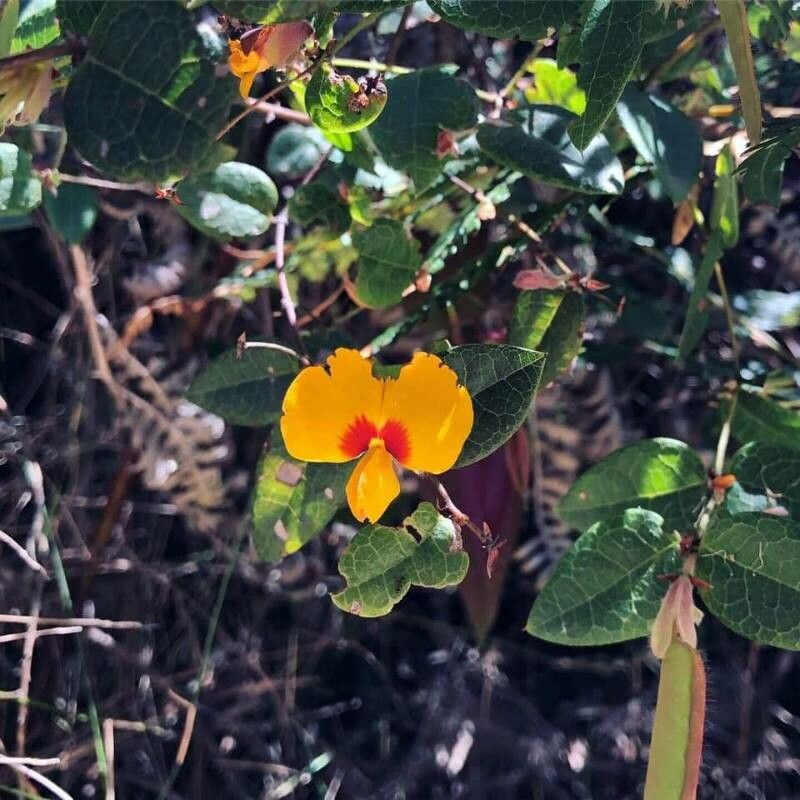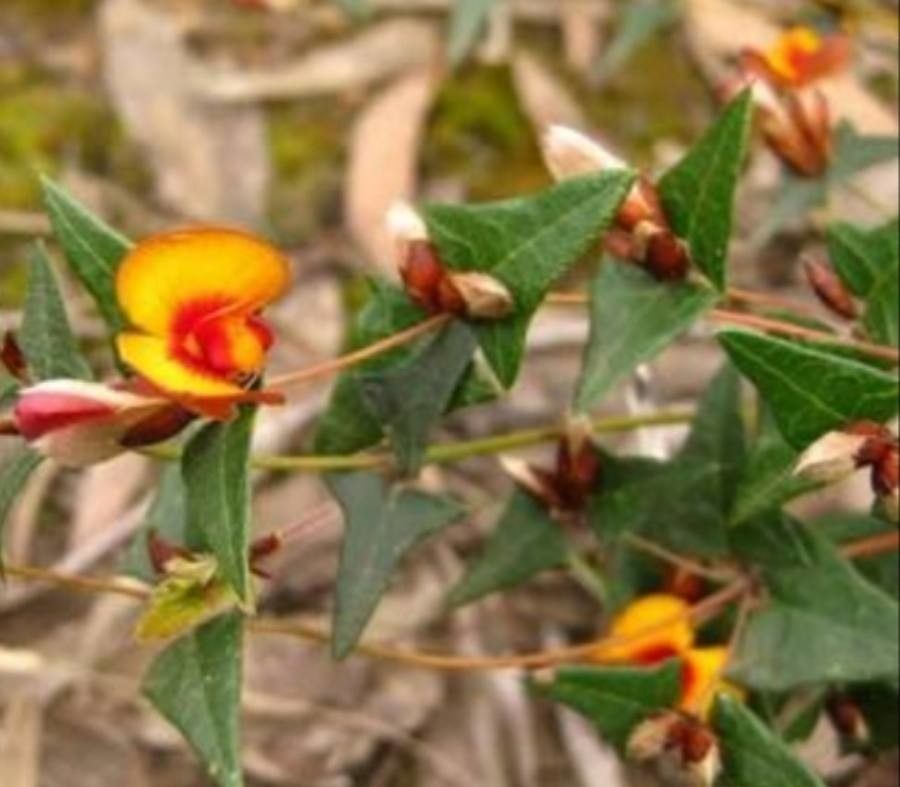
Platylobium obtusangulum, commonly known as the blunt-leaf flat-pea, is a flowering plant species in the Fabaceae family. Native to Australia, it thrives in a variety of habitats, including heathlands, woodlands, and forests. The plant typically grows up to 1 meter tall and features a woody stem and small, oval-shaped leaves with blunt tips. Its flowers, which bloom from late winter to early spring, are yellow or orange. The fruit is a flat pod containing several seeds.
Platylobium obtusangulum plays a crucial role in its ecosystem by providing food for various animals such as birds, insects, and mammals. Moreover, it has medicinal properties that indigenous Australians have utilized for centuries.
The plant requires well-drained soil with moderate moisture levels and prefers full sun or partial shade. It can be propagated through seeds or cuttings, though patience is necessary as it may take several years to reach maturity.
Overall, Platylobium obtusangulum is an attractive native Australian species that offers ecological benefits and holds cultural significance due to its medicinal properties, which have been used by indigenous Australians for generations.
Common flat-pea is disease-resistant and generally not susceptible to illnesses. Regarding care, this plant is fairly low-maintenance. When grown outdoors it needs minimal watering, and larger plants typically do not require pruning. Smaller plants, however, should be pruned after they have bloomed. Common flat-pea is appropriate for anyone with outdoor space, such as a garden or a deck, and does not demand a lot of gardening experience.
How to keep Platylobium Obtusangulum.
Light
Common flat-pea is native to well-lit environments, like sunny fields and the outskirts of forests, that offer plenty of sunshine. It flourishes in conditions of full sun, yet it can also endure partial sun, demonstrating its adaptability to different levels of sunlight.
Water
Common flat-pea thrives in consistently moist conditions but can also adapt to both wet and dry environments. For optimal growth, it should be watered weekly. Being an evergreen, the common flat-pea retains its foliage year-round, so it needs regular hydration indoors or can depend on natural rainfall when grown outdoors.
Temperature
The common flat-pea plant is well adaptable to diverse weather conditions, be it boiling hot summers or freezing cold winters. Nevertheless, there is a preferred temperature scope for its growth. If the temperature gets exceedingly high, the plant is susceptible to stress from heat and moisture, leading to its possible death. In areas where the temperature nears the plant's cold limit, it is crucial to use insulation methods to safeguard the plant.
Fertilizer
It is essential to apply fertilizer to Common flat-pea at the right time. Start fertilizing in the early days of spring and continue this on a monthly basis until the onset of early summer. The role of the fertilizer is to induce beautiful blooms and supply energy during both active and resting growth stages.
Pruning
The common flat-pea is appreciated for its distinctive flat, pea-like flowers. To maintain its health and appearance, prune the plant from early to late winter. This will help remove dead branches, maintain its shape, and improve airflow. Proper pruning encourages growth and blooming while reducing the risk of disease. Be sure to use clean, sharp tools for effective pruning and to minimize stress on the plant.
Botanical profile.
- Plant Type
- Shrub
- Life Cycle
- Perennial
- Genus
- Platylobium
- Family
- Fabaceae
- Hardiness Zone
- 9-11
- Mature Height
- 91 cm
- Mature Spread
- 49 cm to 91 cm
- Leaf Color
- Green, Dark Green
- Leaf Type
- Evergreen
- Flower Color
- Red, Gold
- Flower Size
- 1.52 cm to 2.03 cm
- Bloom Time
- Mid fall, Late fall, Early winter
- Planting Time
- Spring, Summer
- Harvest Time
- Mid winter, Late winter, Early spring
Other names.
Reader questions.
What are the sunlight requirements for Common flat-pea (Platylobium obtusangulum)?
The Common flat-pea, or Platylobium obtusangulum, thrives in various sunlight conditions. For 'Full sun' exposure, it requires above 6 hours of sunlight daily to flourish. If it is planted in an area with 'Partial sun,' it should receive about 3-6 hours of sunlight. It's important to observe the movement of sunlight throughout your garden carefully, choosing locations that offer an ideal mix of light and shade. This careful selection ensures your Common flat-pea plants grow happy and healthy.