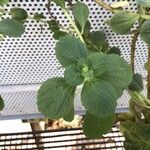
Plectranthus caninus
Dog-be-gone · Pee-off plant · Scaredy cat plant · Broad Leaf Thyme
Description
Source: leafsnapColeus caninus, synonym Plectranthus caninus, is a herb from the mint family Lamiaceae, native to southern and eastern Africa from Angola to Sudan and to India and Myanmar.A plant sold under the name "Coleus canina" or "scaredy cat plant" is supposed to scare off cats and dogs. An attempt to register "Coleus canina" to receive plant variety protection failed as it was considered to be only a clone of Coleus comosus (synonym Plectranthus ornatus).These plants root easily from cuttings and tolerate mild drought conditions and full sun. Both the leaves and flowers of the plant are sticky to the touch and have an odor similar to Eucalyptus that some animals find unpleasant, deterring both insect infection and grazing by larger animals.
Care Guide
💧 Water Once a week
The pee-off plant, which originates from tropical underbrush, needs consistent moisture to thrive. It grows best in soil that remains evenly moist but not waterlogged. To ensure healthy growth, it should be watered weekly. This is particularly important in outdoor settings with high humidity, where natural rainfall patterns help support its foliage and growth.
☀️ Light Partial sun
The Pee-off plant is native to habitats like forest understories or rocky areas, where it experiences natural shade. It prefers partial sun but can adapt to full sun or full shade, demonstrating its versatility and hardiness.
🌡️ Temperature 20–35°C
Pee-off plant originates from areas where temperatures range from 68 to 95 °F (20 to 35 ℃). As a heat-loving species, it favors warmer climates, especially during growing seasons. In colder months, it is recommended to increase indoor temperature to meet its needs.
💨 Humidity
🪴 Soil 6-7
🌱 Fertilizer
The best time to fertilize a Pee-off plant is in early spring, when it is coming out of dormancy and starting active growth. Fertilization supplies essential nutrients for healthy development. Although the Pee-off plant has relatively low fertilizer requirements, giving it fertilizer annually can improve its survival and encourage better, longer-lasting flowers.
🪴 Pot & Repot 2-3 years
When repotting a Pee-off plant, select a pot 1-2 inches (2.5–5.1 cm) larger that provides good drainage. Use a well-draining potting mix. Repot in spring or fall, making sure the root ball sits slightly below the rim of the pot. Water thoroughly after repotting and place the plant in a warm spot with indirect sunlight.
✂️ Pruning
Pruning the pee-off plant from early to late spring encourages bushier growth, enhances its repellent properties, and improves its appearance. Trim overgrown stems and remove dead foliage, making sure to cut above the leaf nodes to maintain the plant's vigor. With regular care, the pee-off plant becomes both a valuable ornamental and a functional addition to your garden.
🌿 Propagating
🐛 Diseases & pets
☠️ Toxicity
Characteristics
- Plant Type
- Herb
- Life Cycle
- Perennial
- Genus
- Plectranthus
- Family
- Lamiaceae
- Hardiness Zone
- 10
- Mature Height
- 40 cm
- Mature Spread
- 30 cm
- Leaf Color
- Green
- Leaf Type
- Evergreen
- Flower Color
- White
- Flower Size
- 1.02 cm to 1.52 cm
- Bloom Time
- Mid summer, Late summer, Early fall, Mid fall
- Planting Time
- Spring, Summer, Autumn
- Harvest Time
- Fall, Early winter
- Native Area
- Africa, India