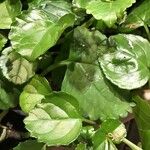
Plectranthus parviflorus
Cockspur-flower · Little spurflower · Swedish ivy · Silver dollar plant · Coleus australis
Description
Source: leafsnapPlectranthus parviflorus, commonly known as the small-flowered spurflower, is a perennial herbaceous plant belonging to the mint family. Native to South Africa, it thrives in a variety of habitats, including grasslands, savannas, and forests. This plant has an upright growth habit and can reach heights of up to 1 meter. Its leaves are ovate or elliptic in shape, featuring serrated edges, and are arranged oppositely on the stem. When crushed, the leaves release a distinct minty aroma. Plectranthus parviflorus produces small white or pale blue flowers, which bloom from late summer through autumn. These flowers are arranged on spikes that emerge from the leaf axils. Traditionally, indigenous people of South Africa have used this plant for medicinal purposes to treat various ailments such as coughs, colds, headaches, fevers, and stomach disorders. In cultivation, Plectranthus parviflorus is an easy-to-grow plant that prefers well-drained soil and moderate watering. It can be propagated by stem cuttings or seed sowing. Overall, Plectranthus parviflorus is an attractive ornamental herb with medicinal properties, making it a valuable addition to any garden or herbal medicine cabinet.
Care Guide
💧 Water Every 7 days
The little spurflower originates from woodland understories and thrives in dappled sunlight and consistently moist soil. While it can tolerate brief periods of dryness, it is important to water it weekly and maintain adequate humidity indoors to support its evergreen growth, as this plant retains its foliage throughout the year.
How should I water my Little spurflower?
To properly water the Little spurflower, use filtered water at room temperature or slightly warmer. Tap water may contain harmful particles. The plant is used to warm environments, so avoid using cold water as it can shock it. Instead of overhead watering, apply filtered room temperature water directly to the soil until it is completely soaked. This benefits the plant by moistening the roots and promoting nutrition absorption.
What should I do if I give my Little spurflower too much water or too little water?
Overwatering and underwatering can both harm your Little spurflower, but overwatering is more commonly a problem. When this plant gets too much water, its stems and leaves may wilt and turn yellow. Overwatering for a long period can also cause diseases like root rot, mold, and mildew, which can be fatal. Little spurflowers generally tolerate drought well, so underwatering is less likely but still possible. When underwatering occurs, the leaves become brittle and brown. It's important to recognize the signs of overwatering early to prevent irreversible damage. If you notice these signs, reduce your watering immediately and check the soil's drainage. Replace poorly draining soil with loose, well-draining potting mix. If you find signs of underwatering, simply water more regularly until the signs disappear.
How often should I give water to my Little spurflower?
If your Little spurflower is in a pot, the most precise way to determine if it needs water is to check the soil by sticking your finger into it. If the top two to three inches of soil are dry, it's time to water it. If you're growing your Little spurflower outdoors in the ground, you can use the same method to test the soil. When the top few inches of soil are dry, it's time to add water. Generally, during the spring and early fall, watering once a week is sufficient. However, when it gets very hot, you may need to water it twice or more per week. Nevertheless, mature and well-established Little spurflowers can tolerate drought well.
How much water does my Little spurflower plant need?
When you water your Little spurflower, don't be afraid to give it plenty of water. Make sure the top two to three inches of soil are dry, then give it a good, thorough watering. You want the water to soak the soil completely. If you see excess water draining out of the pot's drainage holes, that means you've added enough water. If you don't see any excess water, then you probably didn't give it enough water. Just be careful not to let water accumulate in the soil, as that can harm the plant. Also, if the water isn't draining properly from the pot, it could mean the soil isn't draining well either, which can negatively affect the plant's health. If the plant is outside, it should be fine with about an inch of rain per week.
How should I water my Little spurflower as it grows?
The water needs of the Little spurflower can vary depending on its growth stages. When the plant is in its early years or if it has recently been transplanted, it will require more water than usual. During these stages, the plant focuses on developing new roots which will support future growth. These new roots perform best with a slightly higher level of moisture. As the plant matures over a few seasons, it will require less water. Additionally, during the bloom period, the Little spurflower may need more water due to the significant amount of moisture used for flower development.
☀️ Light Partial sun
Little spurflower is native to habitats like forest understories or rocky sites, where it grows in natural shade. It favors partial sun but can tolerate full sun or deep shade, showing its adaptable, hardy nature.
What are the sunlight requirements for Little Spurflower?
Little Spurflower, or Plectranthus parviflorus, thrives best under partial sun conditions, requiring about 3-6 hours of sunlight daily. Despite its preference for partial sun, it can also flourish in full shade, showcasing its versatility as a perennial herbaceous plant. It's important to monitor the movement of sunlight through your garden to find spots that offer a balanced environment for the plant, ensuring it receives the right amount of light and shade for optimal growth.
How can artificial lighting benefit indoor Little Spurflower plants?
For indoor Little Spurflower plants that don't get enough natural sunlight, especially in winter or less sunny spaces, artificial lighting can be a lifesaver. LED lights are ideal because they can be customized to provide the specific wavelengths needed for the plant's growth. Full sun plants generally require 30-50 watts per square foot of artificial light, partial sun plants need 20-30 watts, and full shade plants benefit from 10-20 watts. The light source should be placed 12-36 inches above the plant to emulate natural light conditions optimally, with the plants needing 8-12 hours of light per day to mimic the natural daylight hours they would receive outdoors.
What are the signs of insufficient light for indoor Little Spurflower?
Little Spurflower may exhibit several symptoms indicating insufficient light when grown indoors. New leaves might grow smaller, and the plant can develop a leggy or sparse appearance due to longer spaces between leaves or stems. Early leaf drop is another sign, as the plant attempts to conserve resources. Growth may slow down or stop entirely, and new leaves could appear lighter in color or with signs of chlorosis, where leaves lose their green hue. Too much sunlight, however, can cause symptoms like sunscald, leaf curling, wilting, and leaf scorching, indicating the plant's struggle with overexposure.
How can I optimize the growth of a Little Spurflower plant?
To ensure your Little Spurflower achieves optimal growth, gradually adapt it to more sunlight by moving it to sunnier spots weekly until it gets 3-6 hours of direct sunlight each day. For large or immobile indoor plants, supplementing with artificial light, such as keeping a lamp on for at least 8 hours daily or investing in professional grow lights, can provide necessary light. Outdoors, avoid abrupt changes in sunlight exposure to prevent sunburn. Removing obstructions like overhanging branches can also increase sunlight access. If necessary, transplant smaller plants during their dormant season to a sunnier location with ample sunlight and good drainage, ensuring new growth is healthy.
🌡️ Temperature 20–37.8°C
Little spurflower adapts well to temperature, tolerating heat and wide temperature fluctuations. In hot conditions, attention should be paid to watering and providing suitable shade to prevent sunburn. However, Little spurflower is not very tolerant of low temperatures. While it can endure some cold, excessively low temperatures can cause frost damage.
What is the name of the plant?
The name of the plant is Little spurflower.
What is the botanical name of the Little spurflower?
The botanical name of the Little spurflower is Plectranthus parviflorus.
💨 Humidity
🪴 Soil 6-8
🌱 Fertilizer Every 30 days
The best time to fertilize a Little spurflower is in early spring, as it emerges from dormancy and starts active growth. Fertilizing supplies essential nutrients for healthy development. Although Little spurflower has relatively low fertilizer requirements, an annual application can improve its survival and promote better, longer-lasting flowers.
🪴 Pot & Repot 2-3 years
Repot the little spurflower every 2 to 3 years in early spring, using a larger pot to give the roots more space. Keep the soil consistently moist and avoid exposing the plant to direct sunlight after repotting. This will help prevent stress and encourage healthy growth and delicate flowering.
✂️ Pruning
The little spurflower is a bushy perennial plant known for its fragrant leaves and delicate flowers. It thrives in shaded areas. To encourage bushy growth and maintain its shape, it is best to prune the plant from early to late spring. Pruning also helps to remove damaged stems and improves air circulation, reducing the risk of disease. Always use sterile tools to ensure clean cuts.
🌿 Propagating
🐛 Diseases & pets
☠️ Toxicity
Characteristics
- Plant Type
- Herb
- Life Cycle
- Perennial
- Genus
- Plectranthus
- Family
- Lamiaceae
- Hardiness Zone
- 9-11
- Mature Height
- 30 cm to 61 cm
- Mature Spread
- 30 cm to 61 cm
- Leaf Color
- Green
- Leaf Type
- Evergreen
- Flower Color
- White
- Flower Size
- 0.51 cm to 0.76 cm
- Bloom Time
- Summer, Early fall, Mid fall
- Planting Time
- Spring, Summer, Autumn
- Harvest Time
- Late summer, Fall