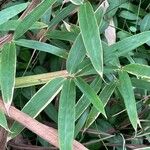
Pleioblastus viridistriatus
Dwarf green-stripe bamboo · Buddha Bamboo
Description
Source: leafsnapPleioblastus viridistriatus is a bamboo species native to Japan. This clumping bamboo can grow up to 6 feet tall and 3 feet wide. Its leaves are uniquely variegated with green and yellow stripes, enhancing its ornamental appeal. Preferring partial shade and moist, well-drained soil, Pleioblastus viridistriatus is versatile for garden use. It makes an excellent choice for screens or hedges due to its dense growth habit. Additionally, this bamboo is known for its ability to absorb air pollutants, making it beneficial for improving air quality in urban settings. Overall, Pleioblastus viridistriatus combines beauty and functionality, adding both aesthetic and environmental value to landscape designs.
🌳 Although commonly grown as an ornamental in gardens, dwarf greenstripe also has versatility beyond mere decoration. It not only enhances spaces with its variegated leaves, but its fibers have traditionally been used in Asia to make mats and baskets. The durable foliage likewise makes it a possible candidate for bioenergy, especially for biomass production because it grows rapidly. While these uses are not widely pursued at large scale, dwarf greenstripe remains an untapped resource with potential for a range of sustainable craft uses and possibly applications in renewable energy.
Care Guide
💧 Water Every 7 days
The dwarf greenstripe plant flourishes in humid environments, where it prefers consistently moist soil without becoming waterlogged. To maintain the right balance, water it weekly. When grown outdoors, keep a close eye on the soil's moisture levels, especially during the growing season, to ensure healthy, lush foliage and strong growth.
What should I do if I give too much or too little water to my Dwarf greenstripe?
Proper watering is essential for the growth and performance of this beautiful ornamental grass. When planted in the ground, watering issues can be resolved, but in a container, excessive or insufficient water can quickly result in the death of Dwarf greenstripe. Insufficient water can cause Dwarf greenstripe to stop growing, while overwatering leads to yellow leaves with brown tips. Underwatering can cause drooping leaves, weak seed head production, and browned leaves. If you suspect improper watering, the first step is to determine if there is too much or too little water. If there is excessive water, stop watering immediately and be patient as heavy soils may take weeks to dry out. Once new growth appears, test the soil moisture and decide if more water is needed. On the other hand, if there is insufficient water, simply give the grasses a deep drink to see if they perk up. Remember, it is always better to water deeply and infrequently as this encourages the growth of deep roots, making the grasses more resistant to drought and watering-related issues.
How frequently should I give water to my Dwarf greenstripe?
The watering needs of Dwarf greenstripe grass will vary depending on where it is planted. Generally, watering once a week is recommended. In hot climates, watering once or twice a week in the summer may be necessary. In moderate climates, watering once every seven days or more may be enough. It's important to note that grass in containers usually requires more frequent watering than grasses planted in the ground. Additionally, the location also matters - shaded grasses need to be watered less frequently than those in full sun. To determine when to water Dwarf greenstripe grass, there are a few key signs to look out for. You can press your finger a couple of inches into the soil to check if it is dry. For potted grass, you can weigh the pot to see how light it is or quickly feel if it is light from lack of water. When the roots lack sufficient water, the grass blades may appear folded along their centers and thinner than usual. Despite its drought tolerance, regular and deep waterings will reward you with a beautiful color. In its natural habitat of open scrubland, Dwarf greenstripe grass is subjected to extreme heat, bright sun, and intermittent rain. While it is drought-resistant, this grass still requires care and attention. It thrives best with consistent water. When first planted, Dwarf greenstripe grass will need more frequent watering until it has established deep roots. If growing in pots, be aware that the soil may dry out quickly, especially in hot and direct sun. Test the soil every 3 to 4 days and water only when it feels dry. When grown in the ground, the watering needs will depend on the type of soil. Heavy clay soil may feel dry at the surface but still retain moisture below, so watering less frequently is required. Sandy soils that drain quickly will need more frequent watering.
What do I need to watch out for when watering my Dwarf greenstripe in different seasons, climates, or during different stages of growth?
To determine if you are watering enough, you can look at the rate of growth of your grass. For example, Dwarf greenstripe typically doubles in size during the hottest months of the year. So if it's hot and the grass isn't growing quickly, you may need to adjust your watering schedule. During winter, you can potentially water only once a month, but it's still a good idea to check the soil for moisture. In general, the grass will require more water during its growth cycle in the warm months and less water during winter and cooler months. Remember that the soil should always be allowed to completely dry out before watering Dwarf greenstripe.
☀️ Light Full sun
Dwarf greenstripe performs best with unobstructed, continuous sunlight. In its native habitat the plant prospered where sunlight was plentiful throughout the day. It can tolerate less-than-ideal light, but this may impair its healthy growth and could result in stunted, weakened characteristics.
What are the sunlight requirements for Dwarf greenstripe?
Dwarf greenstripe thrives best in full sunlight, needing above 6 hours of sunlight daily to maintain healthy growth. It can also survive in partial sun, which is about 3-6 hours of sunlight, but optimal growth occurs under unobstructed, continual exposure. The plant has adapted to flourish in conditions where sunlight is abundant throughout the day in its native habitat. However, in less than optimal sunlight exposure, the plant's growth may be stunted, leading to weaker and smaller features. It's important to observe the movement of sunlight through your garden to find spots that provide a balance of light and shade, ensuring your plants remain happy.
How can artificial lighting support Dwarf greenstripe indoors?
When Dwarf greenstripe is grown indoors where natural sunlight is insufficient, artificial lighting becomes a crucial solution. For its optimal growth indoors, adequate lighting should mimic natural sunlight conditions as closely as possible. LED lights are recommended due to their customizability, providing specific wavelengths of light needed by plants. Full sun plants require 30-50W/sq ft, partial sun plants 20-30W/sq ft, and full shade plants 10-20W/sq ft of artificial light. The light source should be placed 12-36 inches above the plant, and the duration should mimic natural daylight hours, typically 8-12 hours per day, to promote faster, healthier plant growth.
What are the symptoms of insufficient light in Dwarf greenstripe?
Symptoms of insufficient light in Dwarf greenstripe include smaller new leaves, leggy or sparse growth, faster leaf drop, slower or no new growth, and lighter-colored or irregularly patterned new leaves indicating a lack of chlorophyll. Additionally, chlorosis may occur, where leaves lose their green color and turn yellow, reflecting a breakdown of chlorophyll. Sunscald, leaf curling, wilting, and leaf scorching are symptoms related to excessive sunlight, with damages appearing as pale, bleached, or necrotic areas, curled leaves, drooping plants, and brown crispy leaf edges, respectively.
What solutions can help Dwarf greenstripe get adequate sunlight?
To ensure Dwarf greenstripe receives adequate sunlight, gradually transitioning it to a sunnier location can be effective. Indoor plants can benefit from being placed by a south-facing window or using artificial grow lights for at least 8 hours a day. Outdoors, plants should be moved weekly to steadily adapt them to brighter conditions, avoiding sudden light intensity changes to prevent sunburn. Removing obstructions and considering transplanting smaller plants during their dormant period can also enhance sunlight exposure. Although parts of the plant affected by insufficient light might not recover, new growth will be healthy with improved light conditions.
🌡️ Temperature 10–35°C
Dwarf greenstripe comes from habitats with moderate temperatures. It does best at about 50 to 95 °F (10 to 35 ℃). In colder months, keeping indoor temperatures higher or adding insulation can help it stay healthy.
What is the ideal temperature range for Dwarf greenstripe?
Dwarf greenstripe, scientifically known as Pleioblastus viridistriatus, is best suited to environments with middle-range temperatures. It thrives most optimally in temperatures ranging from 50 to 95 °F (10 to 35 °C). To ensure the plant's healthy growth, especially in colder seasons, it's important to maintain higher indoor temperatures or provide insulation.
How does Dwarf greenstripe handle cold weather?
Dwarf greenstripe has a strong resistance to cold and typically does not require special frost protection measures during winter. However, if temperatures are expected to drop below -25°C, it is crucial to provide cold protection. This can be done by insulating the plant with soil or straw. Additionally, watering the plant abundantly before the first freeze in autumn to keep the soil moist can help prevent drought and water scarcity during winter and early spring.
What are the symptoms and solutions for Dwarf greenstripe when exposed to low temperatures?
Dwarf greenstripe is cold-tolerant and fares best when the temperature remains above 10°C. During winter, it's important to keep it above -15°C. If temperatures fall below -25°C, there may not be noticeable changes during the winter, but a decrease in sprouting or a complete lack of sprouting might occur in the spring. To address this, remove any parts of the plant that have failed to sprout in the spring.
How should Dwarf greenstripe be cared for in high temperatures?
In the summer, it's crucial to keep the Dwarf greenstripe plant's environment below 35°C. Exceeding 41°C may cause the leaves to lighten in color, become prone to curling, and susceptible to sunburn, which can lead to the entire plant wilting and drying out in severe cases. To manage this, trim away the sunburned and dried parts. Move the plant to a shadier location or use a shade cloth to protect it from the midday and afternoon sun. Additionally, watering the plant in the morning and evening helps keep the soil moist and the plant healthy.
💨 Humidity
🪴 Soil 6-6
🌱 Fertilizer
Dwarf greenstripe needs extra nutrients to encourage healthy new growth. In spring, applying compost around the plant’s base can effectively supply the nutrition it requires. Fertilizing helps support vigorous growth and assists the plant in resisting diseases and pests.
Why should I put fertilizer on my Dwarf greenstripe?
Fertilizing Dwarf greenstripe is important for a few reasons. First, your plant needs the extra nutrients to promote healthy new growth. Secondly, these additional nutrients also contribute to the overall health of the existing growth, making the plant more resistant to diseases and pests.
When should I fertilize my Dwarf greenstripe plant?
To ensure the survival of Dwarf greenstripe in your garden, it is important to know when to fertilize. This plant does not require a lot of additional nutrients when it is dying back. While you can use diluted fertilizer at the beginning of the growing season, it is not advisable. Instead, it is recommended to apply mulch or compost around the base of the plant.
When is it best to not put fertilizer on my Dwarf greenstripe?
If you're not using packaged fertilizers, there's no need to worry about when to stop feeding Dwarf greenstripe. Simply apply a layer of compost or mulch in the spring, and that will suffice to keep Dwarf greenstripe happy all year round. During the winter, when the plant is dormant, there's no need to be concerned about mulching or composting.
What kind of fertilizer does my Dwarf greenstripe need?
Instead of rushing to the garden center for fertilizer, you can provide the necessary nutrients for dwarf greenstripe by adding a layer of compost in the spring. Additionally, by mulching your garden annually, the bark will help keep your plant well-nourished and content.
How should I fertilize my Dwarf greenstripe plant?
To easily follow the steps for Dwarf greenstripe, whether you choose mulch or compost, begin by placing a layer of the chosen material, ensuring it covers the base of the plant. If you decide to use both, decrease the amount of compost. Additionally, adding a layer of mulch serves a dual purpose: it retains moisture in the soil and provides nutrients to your plant.
🪴 Pot & Repot 2-3 years
Repot dwarf greenstripe plants every 2 to 3 years in early spring. Use a slightly larger container with good drainage. After repotting, keep the soil consistently moist and place the plant in indirect light to help it recover and maintain its vibrant green-striped foliage.
✂️ Pruning
The Dwarf Greenstripe is known for its striking green and yellow striped foliage. To help it thrive, prune it in early spring. This practice encourages denser growth, improves air circulation, and prevents overcrowding. Regular pruning is essential for maintaining the plant's health and vibrancy throughout the growing season.
🌿 Propagating
🐛 Diseases & pets
☠️ Toxicity
Characteristics
- Plant Type
- Grass
- Life Cycle
- Perennial
- Genus
- Pleioblastus
- Family
- Poaceae
- Hardiness Zone
- 6-10
- Mature Height
- 0.91 m to 1.83 m
- Mature Spread
- 0.91 m to 1.52 m
- Leaf Color
- Green, Yellow, Gold
- Leaf Type
- Evergreen
- Bloom Time
- Early summer, Mid summer
- Planting Time
- Spring, Summer, Autumn
- Harvest Time
- Late summer, Early fall
- Native Area
- Japan