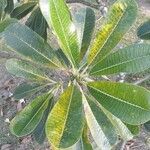
Plumeria obtusa
Frangipani · Singapore graveyard flower · Pagoda tree · Singapore plumeria · Temple tree
Description
Source: leafsnapPlumeria obtusa, commonly known as the Singapore Plumeria or White Frangipani, is a small tree or shrub belonging to the Apocynaceae family. Native to Southeast Asia, it is commonly found in countries such as Singapore, Malaysia, Indonesia, and Thailand. This plant has a slow growth rate and can reach a height of up to 10 meters. It features thick stems with smooth grey bark that exudes a milky sap when cut. The leaves are glossy green, oval-shaped, and have pointed tips. One of the most distinctive features of Plumeria obtusa is its fragrant flowers, which bloom in clusters at the ends of branches from late spring through summer. The flowers are white with yellow centers and have five petals that form a star shape. Plumeria obtusa prefers full sun exposure but can also tolerate partial shade. It thrives in well-draining soil and requires moderate watering during its growing season, though it should be kept dry during winter dormancy. In traditional medicine, various parts of Plumeria obtusa have been used for their medicinal properties, such as treating skin infections, reducing fever, and providing pain relief. Overall, Plumeria obtusa is an attractive plant renowned for its fragrant flowers. It is popular among gardeners worldwide for ornamental purposes and is often used as cut flowers due to their long-lasting nature when placed in water vases, both indoors and outdoors.
💡 The Singapore graveyard flower is commonly planted in cemeteries because its blossoms, which fall during the night, are considered by some Muslims and Buddhists to be offerings to the deceased. In the Pacific Islands, wearing a Plumeria flower also carries cultural significance: a flower behind the right ear indicates that a woman is single, while a flower behind the left ear signifies that she is married.
🌳 Aside from its typical floral display, singapore graveyard flower fulfills several roles in local life. Its blooms are central to traditional lei-making, contributing fragrance and beauty to ceremonial garlands. The plant's latex is also used as a waterproofing material in traditional crafts, and its wood, though uncommon, has been used to produce small artisanal items. Moreover, singapore graveyard flower gives off a scent in the evening that attracts sphinx moths for pollination, showing its ecological role beyond simple ornamentation.
🎭 They mainly symbolize beauty, charm, and grace, but can also signify new beginnings, birth, creation, immortality, shelter, and protection. Ancient Indians believed Frangipani symbolizes the infinite life of our soul.
Care Guide
💧 Water Every 7 days
The Singapore graveyard flower thrives in environments that are consistently moist. To ensure its healthy growth, it's important to maintain a careful balance between hydration and drainage. This plant prefers stable humidity levels. You should water it every 1-2 weeks, allowing the soil to dry slightly between waterings. Thanks to its waxy leaves, the plant retains moisture more effectively, which means you can reduce the frequency of watering during cooler months.
How should I water the flowers in my Singapore graveyard?
To water your Singapore graveyard flower, you can use any common watering tool like watering cans, hoses, or even cups. It's important to water the soil directly and make sure all areas are evenly moistened to provide water to the entire root system. Using filtered water is recommended to avoid harmful particles from tap water. It's also best to use water at room temperature or slightly above, as very cold or hot water can be a bit of a shock to the plant. However, the Singapore graveyard flower generally does well with any type of water.
What should I do if I give too much or too little water to my Singapore graveyard flower?
Outdoor plants, especially newly planted ones or seedlings, are prone to lack of watering. It is important to remember to water them enough for the first few months, while the tree is still small or newly planted. Once the roots are established, these plants can rely on rain most of the time. When it comes to Singapore graveyard flowers planted in pots, overwatering is often a problem. If you accidentally overwater your plant, it is important to act quickly. Stop watering the plant immediately to minimize the effects of overwatering. Take the plant out of its pot to inspect the roots. If none of the roots have developed root rot, you can return the plant to its container. However, if you find signs of root rot, trim away any affected roots and consider applying a fungicide to prevent further damage. Finally, repot the Singapore graveyard flower in well-draining soil. On the other hand, underwatering is a simple issue to fix. If you notice that the plant's leaves are drooping, drying out, and falling off, it means the plant is not getting enough water. Correct the watering frequency by giving the plant more frequent waterings. The leaves will quickly regain their fullness after sufficient watering. Make sure to adjust your watering schedule as soon as you notice underwatering happening.
How frequently should I give water to my Singapore graveyard flower?
Growing most outdoor plants naturally relies on rainfall for watering. However, if your area lacks rainfall, there are specific watering guidelines to follow. During the spring and fall, watering every two weeks should be sufficient. In the summer, more frequent watering is necessary. During the winter, when plants need less water due to slower growth, it's best to water them sparingly, and sometimes no additional watering is needed. If you have a young or newly planted Singapore graveyard flower, more frequent watering is recommended to help it establish and grow into a more adaptable and drought-tolerant plant. For potted plants, there are two main approaches to determine watering frequency. One option is to follow a predetermined watering schedule, such as once a week or every other week. However, this may not account for the unique conditions of your Singapore graveyard flower's growing environment. Another option is to base watering frequency on soil moisture. It's generally best to wait until the top two to four inches of soil (about ⅓ to ½ the depth of the pot) have completely dried out before watering again. This approach allows you to adjust the watering frequency based on the specific needs of your plant, considering factors like seasonal changes in water requirements.
How much water does my flower in the Singapore graveyard need?
When watering your Singapore graveyard flower, you may be surprised to learn that it doesn't always require a lot of water. If only a few inches of soil have dried since your last watering, giving it about five to ten ounces of water will promote healthy growth. You can also determine the amount of water needed based on the moisture in the soil. Keep track of how many inches of soil have dried out between waterings. To ensure your Singapore graveyard flower gets enough moisture, water it until all the dry soil layers from the previous watering are moistened. If more than half of the soil has dried out, consider giving it more water. In such cases, keep adding water until you see excess water draining from the pot's drainage holes. If your Singapore graveyard flower is planted in an area with plenty of rain, it may not need additional watering. When the flower is young or still establishing, it should receive 1-2 inches of rain per week. As it grows, it can rely solely on rainwater except during hot weather without rain for 2-3 weeks, then it may need a full watering to prevent stress.
How can I know if I'm giving my Singapore graveyard flower enough water?
Overwatering is a common issue for the Singapore graveyard flower and there are signs to watch for. An overwatered plant will have yellowing leaves and may drop some leaves. Overwatering can also cause the plant to shrivel and lead to root rot. On the other hand, an underwatered plant will start to wilt and have brown and brittle leaves. Whether you see signs of overwatering or underwatering, it's important to take action and restore the plant's health.
☀️ Light Full sun
The singapore graveyard flower does best when given abundant light similar to that found in its native, sunlit habitats. Too little light can result in weaker growth, sparse flowering, or leaf drop. By contrast, excessive light can scorch the foliage. Therefore, maintaining moderate light levels is important.
What are the sunlight requirements for the Singapore graveyard flower?
The Singapore graveyard flower, also known by its botanical name Plumeria obtusa, thrives under specific sunlight conditions to emulate its native, light-drenched ecosystems. Full sun exposure, defined as more than 6 hours of direct sunlight a day, is ideal for its robust growth, whereas partial sun, about 3-6 hours of sunlight, is also tolerable. It's essential to watch how sunlight moves through your garden to ensure you plant your Singapore graveyard flower in a spot that offers the right balance of light and shade, ensuring the plant's happiness.
What are the consequences of incorrect light exposure for the Singapore graveyard flower?
Inadequate or excessive light exposure can have significant adverse effects on the health of the Singapore graveyard flower. Insufficient sunlight may lead to less vigorous growth, fewer flowers, or leaves dropping, while too much direct light can cause foliage scorching. To support growth in less sunny spaces or during winter, artificial lighting like LED lights can provide the necessary wavelengths of light. These lights should be placed 12-36 inches above the plant and kept on for 8-12 hours a day to mimic natural sunlight conditions.
What are the symptoms of inadequate light exposure in Singapore graveyard flowers?
Singapore graveyard flowers exhibit several symptoms when they don't receive enough light, such as new leaves growing smaller, longer spaces between leaves or stems leading to leggy or sparse growth, and early leaf drop to conserve resources. Growth may slow down or stop, new leaves can appear lighter in color or yellow due to chlorosis, and the plant may suffer from sunscald, leaf curling, wilting, or leaf scorching if exposed to too much direct sunlight. These symptoms help identify the need for adjusting the plant's exposure to light.
How can I address the Singapore graveyard flower's light exposure issues?
To combat issues arising from inadequate light exposure for your Singapore graveyard flower, consider gradually moving it to a location that receives at least 6 hours of direct sunlight daily. This could involve using a south-facing window indoors or adjusting the outdoor planting spot to minimize sudden changes in light intensity. If moving the plant is not possible, supplementing with artificial light, like keeping a lamp on for at least 8 hours or using professional grow lights, can also be beneficial. For outdoor plants, gradual relocation and minimizing obstructions such as branches that block sunlight or transplanting smaller plants to sunnier spots can aid in recovery, though it's important to note that parts of the plant already affected by insufficient light may not recover, but new growth should be healthy.
🌡️ Temperature 20–37.8°C
The Singapore graveyard flower grows well in its native tropical habitat, needing warm temperatures between 68 and 100°F (20 to 38℃). During cooler seasons it may require extra warmth from indoor heating or grow lamps.
What temperature is best for the flowers in Singapore graveyards?
To help your tropical plants thrive, it's best to maintain a temperature range of 75℉ to 90℉ (25-32℃). While different species can tolerate temperatures outside this range, sticking within a few degrees of these limits will ensure optimal growth. However, there are extreme temperature limits to be aware of. Anything below 50℉ (10℃) or above 95℉ (35℃) can hinder growth and cause issues with the leaves and stems. Low temperatures are particularly damaging, as even a light frost can lead to the death of your tropical plants. In fact, cellular death can occur rapidly, with some species dying within 12 to 24 hours.
Does the Singapore graveyard flower need different temperatures at different stages of growth?
The Singapore graveyard flower can grow in different phases without needing temperature changes. However, it is important to maintain consistency and avoid wild temperature fluctuations, as this can slow down its growth. It is recommended to keep the plant in a controlled environment, within the optimal temperature range of 75℉ to 90℉ (25-32℃), preferably above the lower limit. While going above 90℉ (32℃) is not ideal, the plant, being tropical, can handle it. On the other hand, exposing the plant to temperatures below 50℉ (10℃), especially below 40℉ (5℃), can cause direct damage to this heat-loving species.
Does the Singapore graveyard flower require varying temperatures for each season?
The Singapore graveyard flower is a low-maintenance plant that doesn't require different temperatures for different seasons. The key to caring for this plant is to keep it in an environment with optimal temperatures, which is why it's recommended to keep it indoors. This allows you to control the temperature regardless of the outdoor climate. Another important aspect for tropical species like this flower is light. It prefers a partial side level of sun exposure, meaning it should receive dappled or filtered light indoors. Bright but indirect light is the best option to promote healthy growth. Exposing the plant to too much direct sunlight can have a negative impact on its leaves and growth potential.
What temperatures should you keep your Singapore graveyard flower at to keep it healthy?
Here are three tips to help you take care of your plants: 1. Keep your plants away from windows during colder months: Cold air can leak into your home through cracks in the windows, and any plants placed near them will be affected. Move tropical plants to an area with bright but indirect light, while avoiding potential drafts. 2. Watch out for dry patches, which may indicate too much sunlight or heat: If you notice white or scorched leaves, your plant may be getting too much heat or sunlight. This can lead to dehydration and hinder growth. Dry spots can spread and eventually cause your plants to die if left unaddressed. 3. Be cautious of frost: Colder temperatures and frost can damage plants by disrupting their water circulation. This can lead to a lack of moisture in the stems and leaves. Look out for signs of hydrosis (a water-soaked appearance) and if the issue persists, the plant may shrivel and turn dark brown or black, eventually leading to death.
How can I make sure my Singapore graveyard flower stays at the right temperature?
To maintain the right temperature range for Singapore graveyard flower, it's important to consider both the climate and humidity. It's recommended to keep each species in a room with climate control to mimic its natural habitat. Pay attention to the humidity levels, as they can affect the temperature. To increase humidity, you can use a humidifier or mist the leaves with water. If you plan to grow this species outdoors, it may be challenging to maintain the optimal temperature and humidity. If it gets too cold or dry, it's best to bring your plant indoors to a space where you can control the climate more effectively. This will help your plant thrive.
💨 Humidity
🪴 Soil 6-7
🌱 Fertilizer
The best time to fertilize a Singapore graveyard flower is in early spring as it breaks dormancy. This encourages overall growth and the development of blooms. Fertilization enhances the foliage, stems, and branches and promotes flowers that are large, vibrant, and long-lasting. It also helps transport nutrients from the roots to the flowers and improves the plant’s health and resistance to disease.
Why should I put fertilizer on my Singapore graveyard flower?
Fertilization plays a crucial role in maintaining the health and well-being of a Singapore graveyard flower. It ensures that the plant receives the necessary energy and nutrients for healthy foliage growth and the development of strong stems and branches. The flowers of the Singapore graveyard flower are highly valued by gardeners, and fertilization contributes to their quality. By supplying the right fertilizer, the plant can efficiently transfer nutrients from its roots to its flowers, resulting in large, vibrant, and long-lasting blooms. Proper fertilization also enhances the overall health of the plant, making it more resistant to diseases.
When should I fertilize my flowers in a Singapore graveyard?
To ensure the optimal growth and blooming of a Singapore graveyard flower, it is best to fertilize during early spring as it transitions out of dormancy and begins to produce buds. This timing provides the plant with ample energy to support its overall development. However, it is worth noting that fertilizing during this period is not the only opportunity to nourish the plant. A second feeding in the fall, although smaller in scale, can still be beneficial. It is also worth mentioning that some gardeners opt to fertilize their Singapore graveyard flower during planting, but this step may not always be necessary.
When is the best time to not use fertilizer on my Singapore graveyard flower?
Like many plants, you don't need to fertilize your Singapore graveyard flower during winter. This is because the flower is in a phase called dormancy, and it doesn't require much energy from the soil to grow. If you do fertilize during winter, there's a higher chance of negative effects from overfertilization. The best times to feed your Singapore graveyard flower are early spring and fall. During most of spring and summer, the plant won't need fertilizer. It's also a good idea to avoid feeding if the plant is exposed to hot or dry conditions.
Which fertilizer is best for my Singapore graveyard flower?
If you're tending to flower plants in a Singapore graveyard, it's best to use a specific type of fertilizer rather than a general-purpose one. The most important nutrients for these flowers are nitrogen and phosphorus, so the fertilizer you use should have higher levels of these compared to potassium. A fertilizer with an N-P-K ratio of 10-10-8 or similar should be effective. Additionally, it can be beneficial to use organic material like compost for at least one of your annual feedings. If you do choose to use fertilizer, granular fertilizer is the most common option for these flowers.
How can I give nutrients to my Singapore graveyard flower?
Applying fertilizer to your Singapore graveyard flower is an easy task, even for inexperienced gardeners. To feed your flower with granular fertilizer, simply sprinkle it on the soil after moistening it with water. If you wish to improve the soil further, you can add organic material like compost or manure. To incorporate these amendments, place them on top of the soil and gently work them into the first few inches using a hand rake without disturbing the roots.
🪴 Pot & Repot 2-3 years
To ensure optimal growth for the Singapore graveyard flower, a medium-sized shrub, repot it every two years during the spring. Choose a pot that is 2-3 inches larger in diameter. After repotting, place the plant in bright, indirect light and water it regularly. These steps will help the plant acclimate and maintain its health.
✂️ Pruning
The Singapore graveyard flower is known for its striking white blossoms and glossy leaves. For optimal growth, pruning should be conducted during its dormant phase, from early to late winter. This involves removing dead branches and thinning the inner growth to improve the plant's health, vigor, and the abundance of blooms. For detailed pruning techniques, consult reputable horticultural guides.
🌿 Propagating
🐛 Diseases & pets
☠️ Toxicity
Characteristics
- Plant Type
- Tree
- Life Cycle
- Perennial
- Genus
- Plumeria
- Family
- Apocynaceae
- Hardiness Zone
- 10-12
- Mature Height
- 3.05 m to 7.62 m
- Mature Spread
- 3.05 m to 7.62 m
- Leaf Color
- Green, Brown
- Leaf Type
- Evergreen, Semi-evergreen
- Flower Color
- White, Yellow
- Flower Size
- 4.06 cm
- Bloom Time
- Summer
- Planting Time
- Spring, Autumn
- Harvest Time
- Mid summer, Late summer, Early fall
- Native Area
- Bahamas, Belize, Cuba, Honduras, Mexico, Guatemala, Jamaica