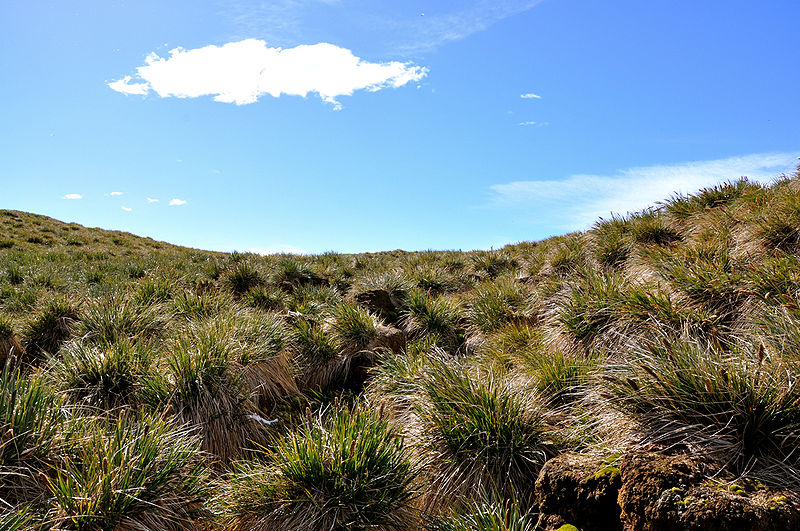
Poa flabellata
Tussac grass · Tussock grass
Description
Source: leafsnapPoa flabellata, commonly known as tussac grass or just tussac, is a tussock grass native to southern South America, the Falkland Islands, South Georgia and other islands in the South Atlantic. There are also two isolated records from the herbarium at the French Muséum national d'histoire naturelle for the Île Amsterdam in the Indian Ocean.It was introduced to Shetland, Scotland for basket making in 1844, and possibly as a source of fodder because of its ability to grow in hostile conditions.. It grows in dense clumps, usually about 2 metres (6 ft 7 in) high (although they can be much taller), on wet coastal land and is a dominant feature of much of the landscape.
Care Guide
💧 Water
☀️ Light Full sun
Tussac grass is a perennial herbaceous plant that flourishes in open habitats and adores sunlight, frequently thriving in meadows and grasslands. It has a preference for full sunlight but can also withstand conditions of partial sun.
🌡️ Temperature 15–35°C
Tussac grass can acclimate to diverse temperature conditions, yet its proliferation can still be restricted by various sets of water and heat circumstances. It flourishes optimally in balmy climates amid the summer, provided there's ample rain or irrigation. Lengthy spells of overcast and wet conditions, alongside sustained elevated temperatures, may raise the odds of Tussac grass perishing. During the winter season, adequate safeguard against frigid conditions can boost the plant's likelihood of survival.
💨 Humidity
🪴 Soil 6-7
🌱 Fertilizer
Tussac grass needs extra nourishment to encourage robust fresh development. During the spring season, applying compost near the plant's bottom can competently supply the essential nutrients it requires. Fertilization contributes to promoting active growth and assists the plant in fighting off diseases and pests.
🪴 Pot & Repot
✂️ Pruning
In early spring, prune tussac grass by removing any dead or damaged foliage. This promotes healthy growth and improves the plant's appearance. Pruning also enhances air circulation, reduces the risk of disease, and helps control its size. By doing this, you ensure that your tussac grass stays vibrant and well-groomed in your garden.
🌿 Propagating
🐛 Diseases & pets
☠️ Toxicity
Characteristics
- Plant Type
- Grass
- Life Cycle
- Perennial
- Genus
- Poa
- Family
- Poaceae
- Hardiness Zone
- 7-9
- Mature Height
- 0.91 m to 2.13 m
- Mature Spread
- 0.91 m to 1.52 m
- Leaf Color
- Dark Green
- Leaf Type
- Evergreen
- Flower Size
- 0.51 cm to 0.76 cm
- Bloom Time
- Mid winter, Late winter, Early spring
- Planting Time
- Summer, Autumn
- Harvest Time
- Spring
- Native Area
- Argentina, Chile