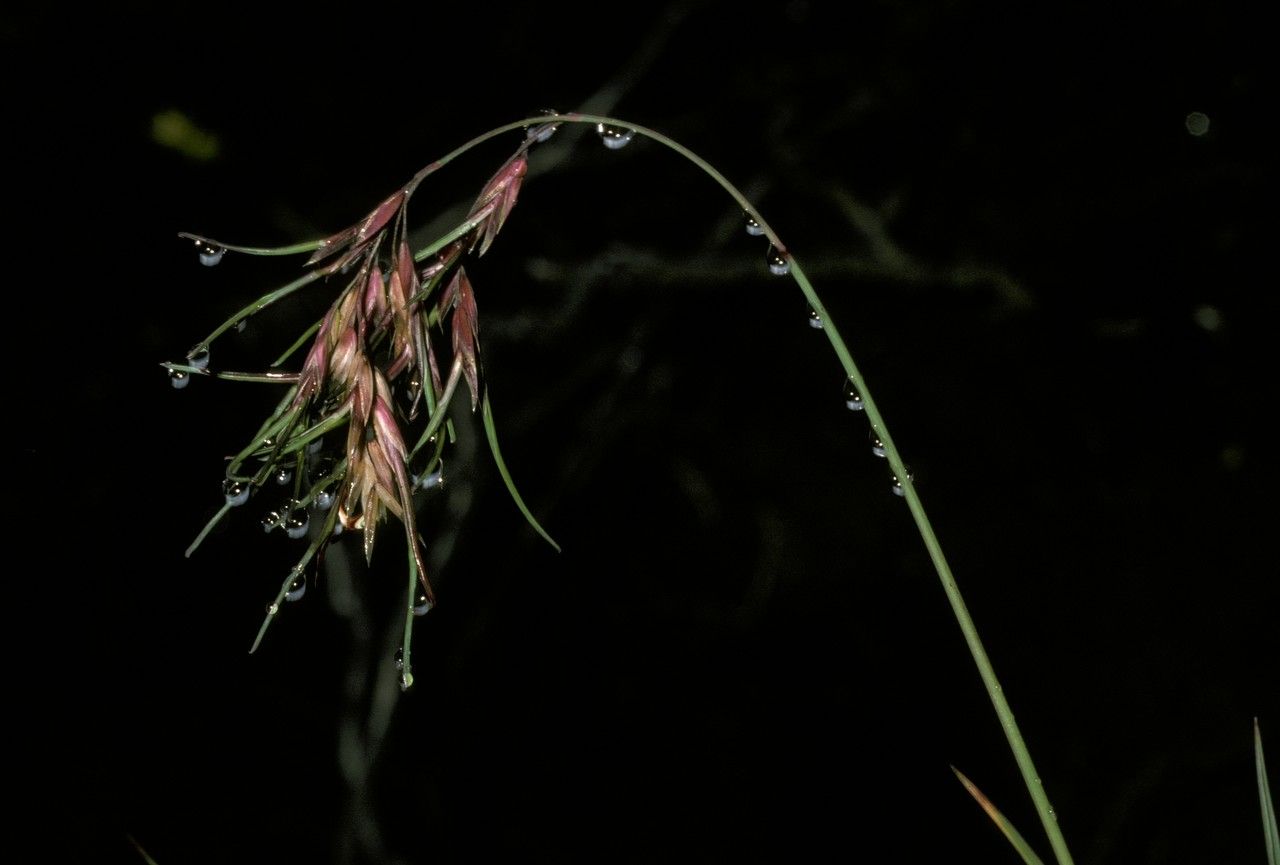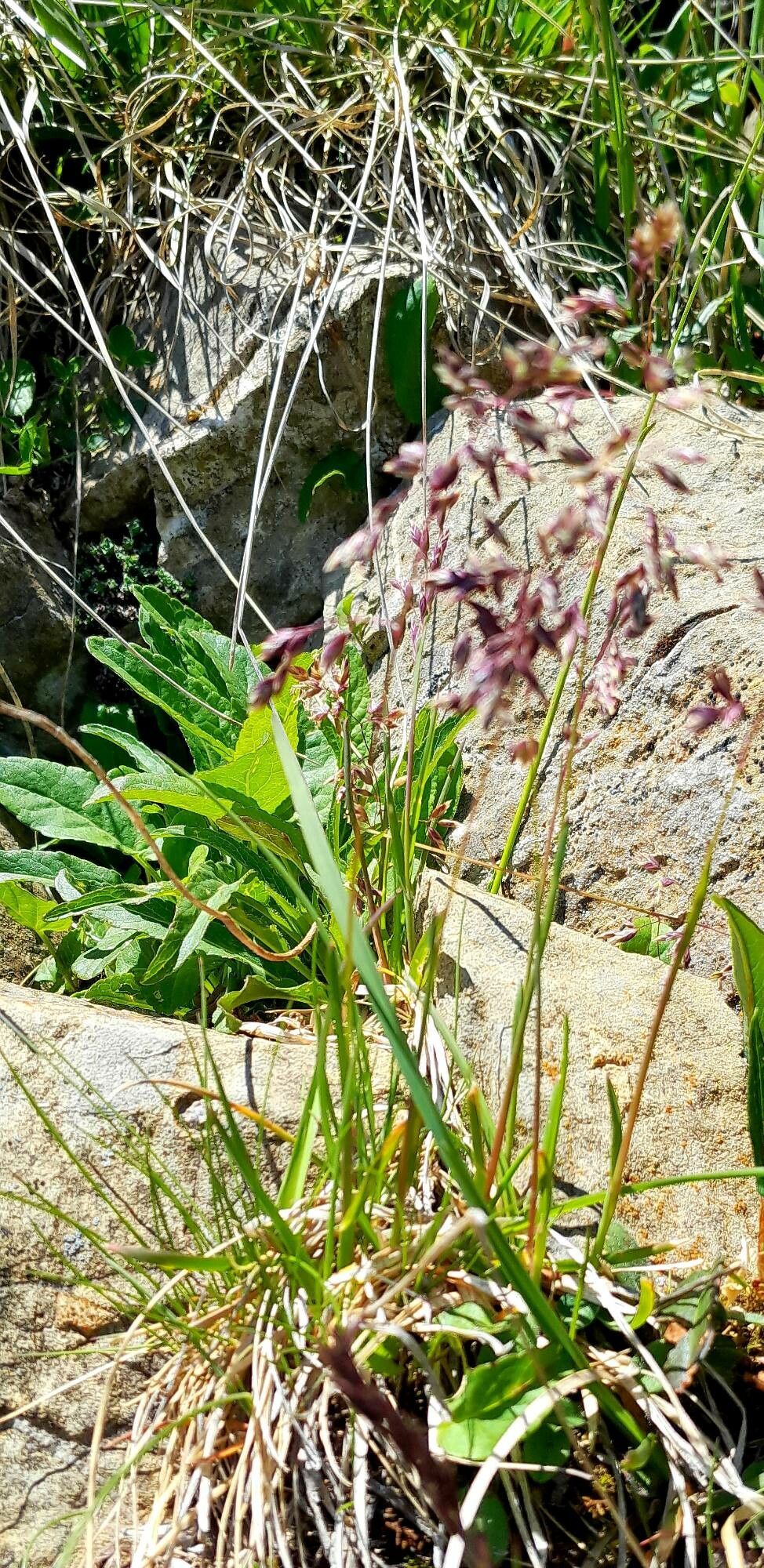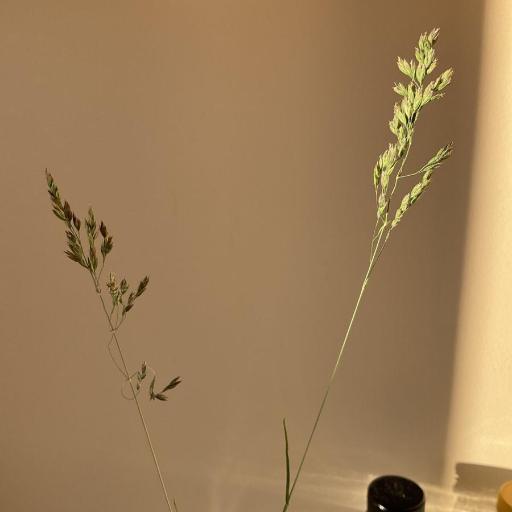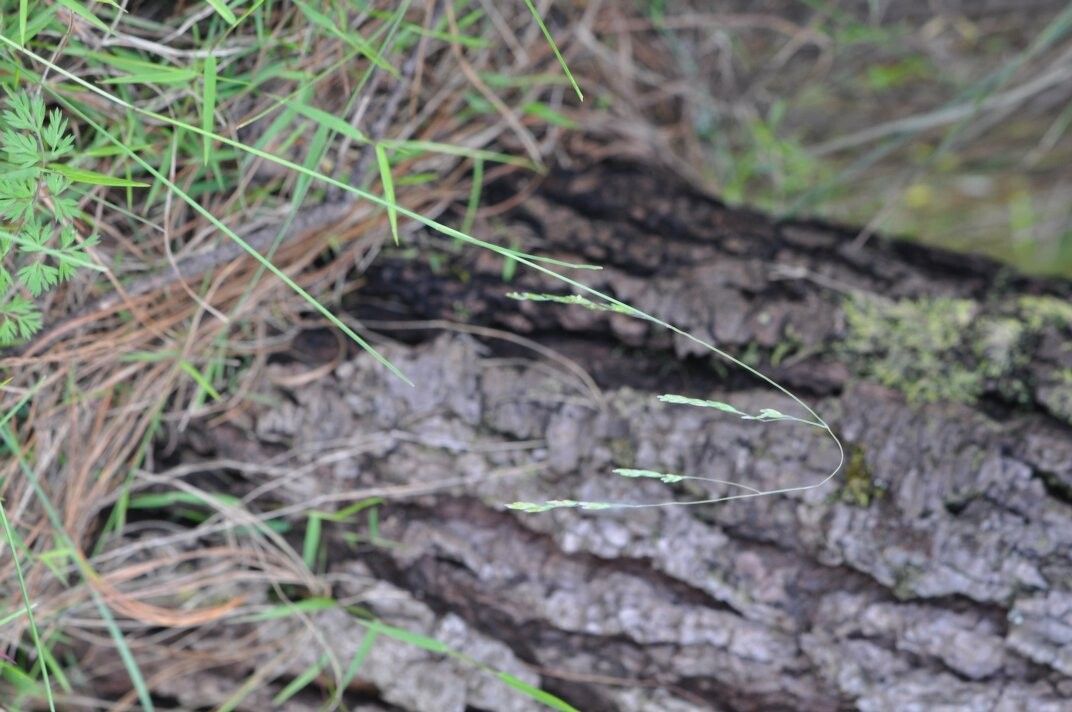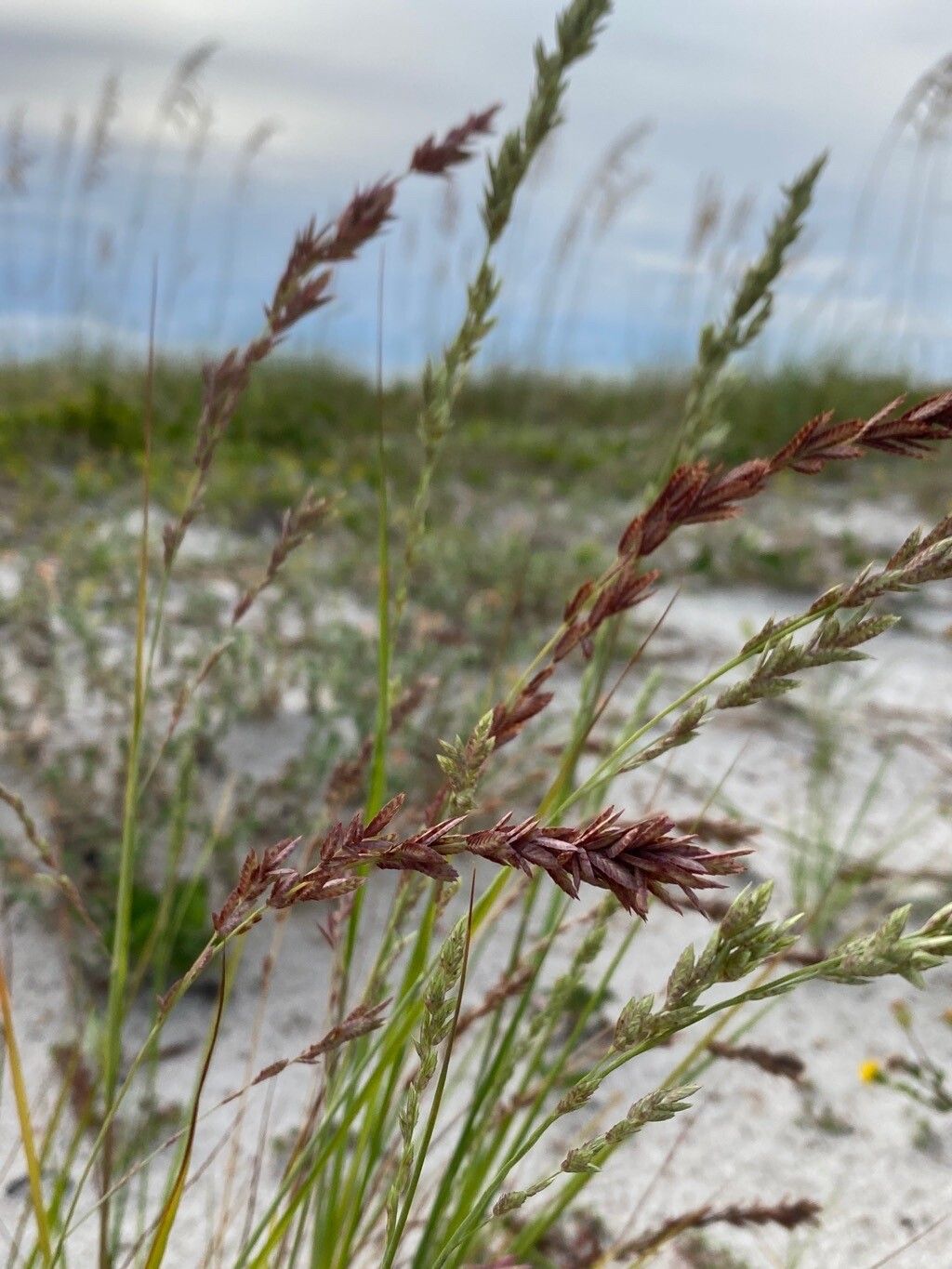
Poa secunda (variously known by the common names of Sandberg bluegrass, alkali bluegrass, big bluegrass, Canby's bluegrass, Nevada bluegrass, one-sided bluegrass, Pacific bluegrass, pine blugrass, slender bluegrass, wild bluegrass, and curly bluegrass) is a widespread species of perennial bunchgrass native to North and South America. It is highly resistant to drought conditions, and provides excellent fodder; and has also been used in controlling soil erosion, and as revegetator, often after forest fires. Cultivars include 'Canbar', 'Service', 'Sherman', and 'Supernova'. Historically, indigenous Americans, such as the Gosiute of Utah, have used P. secunda for food. It was originally described botanically in 1830 by Jan Svatopluk Presl, from a holotype collected from Chile by Thaddäus Haenke in 1790.
Sandberg's bluegrass is quite disease-resistant and generally does not experience many illnesses. In terms of care, the plant is fairly low-maintenance. Planted outdoors, it needs only light watering, and larger plants typically do not require pruning. Smaller plants, however, should be trimmed after they finish blooming. Sandberg's bluegrass is suitable for anyone with an outdoor area, such as a garden or a deck, and does not demand much prior plant-care experience.
How to keep Poa Secunda.
Light
Sandberg's bluegrass is a sun-loving, perennial herbaceous plant native to open habitats and commonly thriving in meadows and grasslands. It prefers full sun but can also tolerate partial sun.
Water
Sandberg's bluegrass is a resilient outdoor grass that thrives in arid conditions due to its excellent drought tolerance. It requires only weekly watering, which helps prevent over-saturation. This makes Sandberg's bluegrass an ideal choice for xeriscaping, as it remains hardy during dry periods while promoting efficient water conservation.
Temperature
Sandberg's bluegrass can tolerate a wide range of temperatures, but its distribution may nonetheless be constrained by different combinations of moisture and heat. It grows best in warm summer climates with sufficient rainfall or watering. Extended periods of cloudy, rainy weather or prolonged high temperatures can raise the chances of Sandberg's bluegrass dying. In winter, adequate protection from cold improves the plant's survival rate.
Fertilizer
Sandberg's bluegrass needs extra nutrients to encourage healthy new growth. In spring, adding compost around the plant's base can effectively supply the nutrition it requires. Fertilizing helps support vigorous growth and improves the plant's ability to withstand diseases and pests.
Pruning
Sandberg's bluegrass is a hardy bunchgrass that benefits from proper care. In the spring, pruning is essential to encourage growth and maintain its shape. Be sure to remove any dead material and thin out dense patches. This will improve air circulation, reduce the risk of disease, and prevent over-seeding. For the best results, consult local resources to learn about care practices specific to your region.
Botanical profile.
- Plant Type
- Grass
- Life Cycle
- Perennial
- Genus
- Poa
- Family
- Poaceae
- Hardiness Zone
- 3-8
- Mature Height
- 30 cm to 91 cm
- Mature Spread
- 5 cm to 15 cm
- Leaf Color
- Green, Blue
- Leaf Type
- Semi-evergreen
- Flower Size
- 0.20 cm to 0.51 cm
- Bloom Time
- Early spring, Mid spring
- Planting Time
- Spring, Summer, Autumn
- Harvest Time
- Late spring, Early summer
- Native Area
- Argentina, Mexico, Chile