Podocarpus latifolius
East African yellowwood · South African podocarpus · Podo · True yellowwood · Upright yellowwood
Description
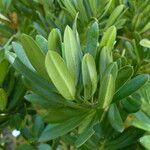
Source: leafsnapPodocarpus latifolius, commonly known as the yellowwood, is a large evergreen tree native to southern Africa. It can reach heights of up to 30 meters and features a dense crown of dark green foliage. The leaves are leathery, lance-shaped, and possess a glossy surface that reflects light. The yellowwood produces small male and female cones on separate trees. The female cones are green when young but turn brown as they mature, while the male cones are yellowish-brown. This tree is highly valued for its timber, which is used in furniture making, flooring, and construction. Furthermore, it has medicinal properties; the bark contains compounds that have been used to treat various ailments such as fever and stomach problems. Podocarpus latifolius prefers well-drained soils and thrives in full sun or partial shade. While it can tolerate some drought once established, it grows best in areas with mild temperatures ranging from 10-25°C (50-77°F) and can endure temperatures as low as -7°C (19°F). Overall, Podocarpus latifolius is an attractive evergreen tree with significant commercial and medicinal uses, making it an important species in southern Africa's ecosystem.
Care Guide
💧 Water Every 7 days
Real yellowwood thrives with a balanced watering schedule, ideally receiving water every 2 to 3 weeks. This schedule mimics the plant's natural habitat, which alternates between periods of rain and dryness. As an evergreen, real yellowwood keeps its leaves throughout the year and efficiently uses water, even during dry seasons.
☀️ Light Full sun
The real yellowwood flourishes with plentiful light, which supports its best growth. It naturally grows in habitats that receive abundant sunshine. If it does not get enough light, it may exhibit slowed or stunted growth. Conversely, excessive exposure can injure it, much like a sunburn.
What are the sunlight requirements for Real Yellowwood?
Real Yellowwood (Podocarpus latifolius) requires full sun, defined as more than 6 hours of sunlight daily, for optimal growth. It can also tolerate partial sun, which amounts to about 3-6 hours of sunlight. It's important to watch how sunlight moves through your garden to choose spots that provide the perfect balance of light and shade, ensuring the plants' happiness.
How does sunlight affect the growth of Real Yellowwood?
The growth of Real Yellowwood greatly benefits from an abundance of light, as it originates from habitats rich in sunlight. Inadequate light can retard its growth, whereas too much exposure might cause damage akin to sunburn. During winter or in less sunny spaces, artificial lighting can be used to supplement natural light, promoting healthier, more vigorous growth. For full sun plants, 30-50W/sq ft of artificial light is recommended; for partial sun plants, 20-30W/sq ft; and for full shade plants, 10-20W/sq ft.
What are common symptoms of improper lighting in Real Yellowwood?
Real Yellowwood shows clear signs of light deficiency when the lighting is inadequate. Symptoms include smaller new leaves, leggy or sparse growth, faster leaf drop, slower or halted new growth, lighter-colored new leaves, chlorosis, sunscald, leaf curling, wilting, and leaf scorching. These indicate either too little or too much light exposure, affecting the plant's health and development.
What solutions can help manage light issues for Real Yellowwood?
To manage lighting issues for Real Yellowwood, it's critical to adjust the light exposure gradually. For indoor plants, move the plant to a sunnier location each week until it receives at least 6 hours of sunlight daily and consider using artificial light if natural light is insufficient. For outdoor plants, ensure a gradual transition to sunnier areas to prevent sunburn. For plants in the ground, reduce obstructions like pruning trees that block sunlight or transplant smaller plants during their dormant period to a location with better light exposure and drainage. Remember, while affected parts of the plant may not recover, new growth should be healthy with proper light adjustment.
🌡️ Temperature 20–37.8°C
Real yellowwood is native to regions where temperatures range from 68 to 100.4 °F (20 to 38 °C). It prefers these warmer climates and may need adjustments in its care during colder seasons to recreate its natural conditions.
What is the native temperature range for Real yellowwood?
Real yellowwood is native to areas where the temperatures range between 68 to 100.4 °F (20 to 38 °C). It thrives in these warmer environments and may need care adjustments during the colder seasons to mimic its natural conditions. As a heat-loving plant, it suffers from cold temperatures, recommending that outdoor-grown Real yellowwood be brought indoors in autumn to be near a bright window, yet kept away from heaters. It's beneficial for the plant's growth to maintain temperatures above 20°C during winter, and it’s harmed by temperatures near 5°C.
How does low temperature affect Real yellowwood and what are the solutions?
Real yellowwood prefers warm temperatures and does not tolerate low temperatures well. It flourishes when the temperature remains above 20°C and should be kept above 5°C during winter months. Exposure to temperatures below 1°C can cause the leaves to lighten in color. Frost damage results in leaves gradually turning brown or black, and the plant may exhibit wilting and drooping. To counteract frost damage, trim off the frost-damaged parts and move the plant to a warmer indoor environment immediately. Position it near a south-facing window for ample sunlight but avoid placing it near heaters or air conditioning vents to prevent air dryness.
What is the effect of high temperature on Real yellowwood and how can it be mitigated?
During the summer, it's crucial to ensure that Real yellowwood's exposure to temperature remains below 38°C. When temperatures soar above 43°C, the plant's leaves might lighten in color, making it more prone to sunburn. In such situations, remove the sunburned and dried parts of the plant. Relocate it to a spot that provides shade from the intense midday and afternoon sun. Watering the plant in the morning and evening helps keep the soil moist, which is crucial for its health under high temperatures.
💨 Humidity
🪴 Soil 6-7
🌱 Fertilizer
True yellowwood has specific nutrient needs and does not require heavy fertilization. Fertilizing in spring is best for encouraging optimal growth. Providing nutrients improves its health, strengthens its resistance to pests and diseases, and helps sustain its long lifespan.
🪴 Pot & Repot
✂️ Pruning
Real yellowwood, characterized by its dense foliage, benefits from regular pruning. For optimal growth, prune the tree between early and late winter. During this time, remove any dead branches and thin out crowded areas to improve air circulation. These steps enhance both the tree's vitality and its visual appeal in gardens.
🌿 Propagating
🐛 Diseases & pets
☠️ Toxicity
Characteristics
- Plant Type
- Tree
- Life Cycle
- Perennial
- Genus
- Podocarpus
- Family
- Podocarpaceae
- Hardiness Zone
- 10-11
- Mature Height
- 29.87 m to 35.05 m
- Mature Spread
- 7.62 m to 10.36 m
- Leaf Color
- Dark Green
- Leaf Type
- Evergreen
- Flower Color
- Brown, Orange
- Bloom Time
- Mid spring, Late spring
- Planting Time
- Spring, Summer, Autumn
- Harvest Time
- Late summer, Early fall, Mid fall
- Native Area
- Lesotho, Angola, Cameroon, Mozambique, Zimbabwe, South Africa, Zambia, Eswatini, Sudan, Nigeria, Kenya, Congo (DRC), Uganda, Tanzania, Congo